

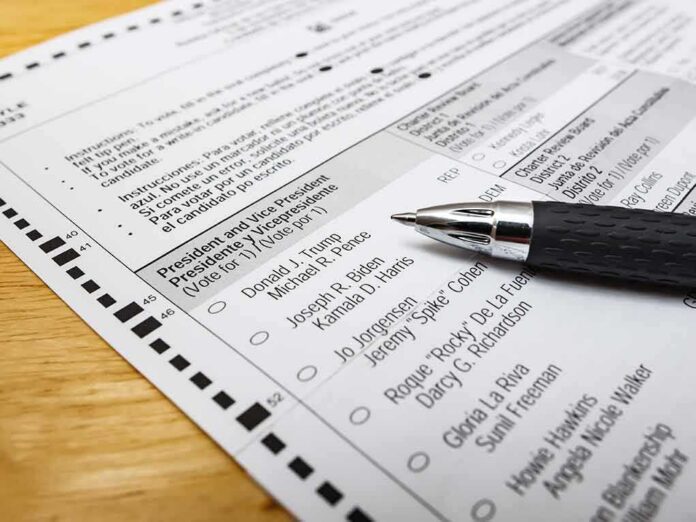
North Carolina just started the 2026 midterm vote by mailing the nation’s first absentee ballots, right on schedule.
At a Glance
- North Carolina county boards began mailing absentee ballots, starting the 2026 general election vote.
- The state’s calendar follows law and long-standing practice, not a special exception.
- Absentee and early voting have expanded nationwide for decades, becoming routine.
- Key dates and rules give voters clear guardrails for requesting and returning ballots.
North Carolina Opens The Midterm Calendar On Time
The North Carolina State Board of Elections said county boards would begin sending absentee ballots to voters who requested them, marking the start of voting in the 2026 general election and making North Carolina the first state to do so this cycle. State election law sets this timetable, and agencies followed it, as they have in prior elections. Local boards handle the mailings, confirm requests, and track ballots sent. This is standard administration, not a surprise move or a pilot program.
Voters who asked for ballots will receive their packets with clear instructions, a return envelope, and the steps to sign and verify the ballot. The state’s vote-by-mail page lists the request process, identity checks, and tracking tools like the BallotTrax system, which lets voters follow their ballot from mailing to receipt. This start date triggers a familiar rhythm: mail-out now, early in-person voting later in the fall, and Election Day in November. The cadence exists to give time for delivery, return, and review.
What “Voting Has Begun” Actually Means For Voters
“Voting has begun” means eligible voters with approved requests can fill out and return ballots today. It does not mean rules are loose or deadlines do not matter. Voters still must meet the request cutoff, complete the envelope certificate, and ensure the ballot arrives by the state’s receipt deadline. County sites and civic groups post those dates in plain language to cut down on mistakes that can cause rejections or delays. The goal is simple: start early so people have time to do it right.
Officials also built guardrails that align with common sense and conservative values: verify identity, keep clear chains of custody, and audit the process. North Carolina’s absentee process requires a signed voter certificate and strict handling by county boards. The state built secure portals to request ballots and to check status. These are practical checks, not theater, and they match the promise that every valid vote counts once and only once.
Why North Carolina Often Goes First
North Carolina often leads the calendar because its law fixes an early mail-out date. The state followed that again this year. Local notices and statewide calendars pointed voters to the early in-person window and to the last day to request a mail ballot well before Election Day. That consistency matters more than the noise around it. When rules are clear and posted early, voters make plans, and election offices can staff, train, and test systems with fewer surprises.
This early start does not stand alone. The pattern fits a decades-long shift where states added no-excuse absentee voting, expanded early in-person days, and gave voters more options to cast ballots before Election Day. Research from the Massachusetts Institute of Technology’s Election Lab traces that expansion since the 1980s and underscores that mail voting is now a normal feature of American elections, not an emergency patch. The routine here is the point: normal calendars build trust through repetition and results.
The Stakes: Time, Clarity, And Fewer Mistakes
Most ballot errors are preventable with time and clear steps. Starting mail-out now gives voters room to fix common problems, like missing a signature or using the wrong envelope. County boards can contact voters to cure issues if the ballot arrives with enough time to spare. That extra runway saves real votes. It also lowers the chance that a close race turns on easily avoided errors or on last-minute panics at polling places.
North Carolina begins the first phase of mail-in voting for this year's midterm elections today, Friday, as election boards in the state's 100 counties begin mailing absentee ballots to voters who have requested them.
North Carolina is the first state in the US to begin voting…
— Saad Abedine (@SaadAbedine) September 4, 2026
Some commentators claim early mail voting tips the scales. The best evidence says the method itself does not swing outcomes by itself. Studies of recent elections find that no-excuse absentee rules did not, on their own, produce big turnout spikes or a clear partisan edge; both parties adapted as voters used the options offered. That lines up with common sense. The system is a set of tools. The side that organizes, informs, and meets voters where they are tends to benefit.
How To Use This Window Well
Voters should request, complete, and return ballots early. Use the state portal, follow the instructions, sign where required, and track the ballot to ensure it is received. If plans change, voters in North Carolina can still vote in person, with the county marking the mail ballot as not returned. Campaigns should educate supporters on deadlines and verification steps, not just turnout slogans. Clear, early action beats rushed fixes every time in election work.
Sources:
insiderpaper.com, wral.com, vote.mecknc.gov, chathamcountync.gov, ncsbe.gov, electionlab.mit.edu
© whatnewsdaily.com 2026. All rights reserved.