
After tens of thousands rushed into Spain’s Ceuta in hours, President Trump warned that mass immigration could “ruin” Spain if borders stay open.
Story Snapshot
- Tens of thousands crossed from Morocco into Spain’s Ceuta in one to two days, overwhelming services.
- President Trump called the episode a warning about mass illegal migration and weak border control.
- Spain surged troops and police, coordinated with Morocco, and prioritized rapid returns.
- Spanish officials said about 70,000 of roughly 72,000 had already returned to Morocco within days.
What Happened In Ceuta And Why It Matters
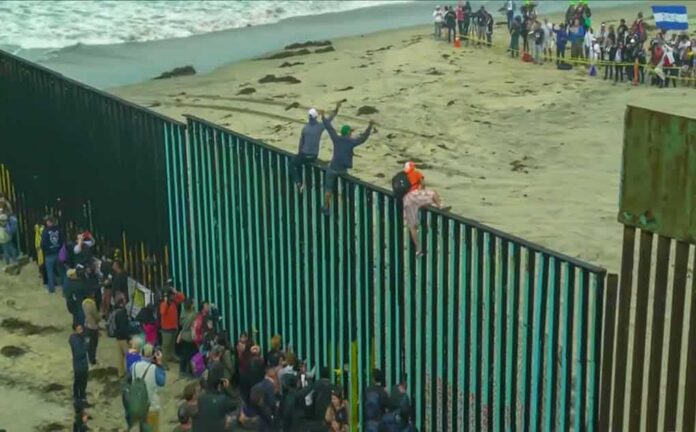
On July 30 and 31, tens of thousands of people crossed from Morocco into Ceuta, a small Spanish city in North Africa, in a sudden rush that overwhelmed local capacity. Spanish and European reports described a sharp, short window of crossings, followed by rapid returns. The scale shocked Europe and fueled a global debate over borders and state control. Border surges like this quickly become symbols. Many citizens on both right and left see moments like this as proof that leaders are not in control.
President Trump reacted by linking Ceuta to a broader warning. He argued that mass illegal migration, if not stopped, could “ruin” Spain, and used the images to press his case for strict border policy. This message resonated with Americans who believe elites ignore border chaos and public safety. It also drew pushback in Europe, where leaders tried to show that the surge was real but temporary. The clash showed how a local breach can ripple into global politics fast.
How Spain Responded On The Ground
Spain’s government deployed extra troops and police to Ceuta and pledged an “immediate response” with Moroccan and international partners. Officials called the surge a violation of Spain’s sovereignty and said most people who crossed headed back voluntarily within a day. Days later, Spain’s interior minister reported that about 70,000 of roughly 72,000 who entered had already returned to Morocco, signaling that the acute phase was easing. Madrid framed the effort as firm but lawful.
Spain also moved policy levers. The government requested emergency funding from the European Union to handle costs and crowding, and set a single command to speed returns while following Spanish law and human rights rules. Leaders weighed new barriers at sea to allow prompt returns that meet court limits, including a floating barrier plan designed to align with a Supreme Court ruling. These steps aimed to restore deterrence and prevent a repeat without breaking legal standards.
What Drove The Surge And The Larger Stakes
Analysts tied the rush to several forces at once. They cited border geography, the short sea gap, smugglers, and incentives shaped by court rulings and messaging online. Some experts argued that such large flows would be hard without weaker cooperation on the Moroccan side, a factor that has swayed past crises too. Even with that debate, most agree Ceuta exposed how fast a frontier can fail when systems are stretched, and how hard it is to rebuild order in real time.
For citizens across the spectrum, Ceuta sharpened old worries. Conservatives saw a warning about national security and the costs of failed border policy. Liberals saw a warning about fragile systems, human risk, and the need for clear, humane rules. Both sides saw a state racing to catch up after the fact. When a border swings open for hours, trust in leaders drops. People feel that the powerful protect themselves, while everyday families live with the fallout.
Sources:
breitbart.com, english.elpais.com, euronews.com, reuters.com, gbnews.com, bbc.com, democrata.es
© whatnewsdaily.com 2026. All rights reserved.