
AI now peeks into your routine bloodwork and can spot subtle clues in your lab results that reveal your chances of surviving and recovering from a spinal cord injury—before any doctor could ever guess.
Quick Take
- AI can analyze everyday blood tests to predict outcomes after spinal cord injuries.
- This innovation could democratize life-saving prognoses, making them available in hospitals worldwide.
- Routine lab data holds hidden patterns that traditional medicine often overlooks.
- The implications reach beyond spinal injuries, hinting at a revolution in personalized medicine.
AI-Powered Bloodwork: The Crystal Ball in Your Veins
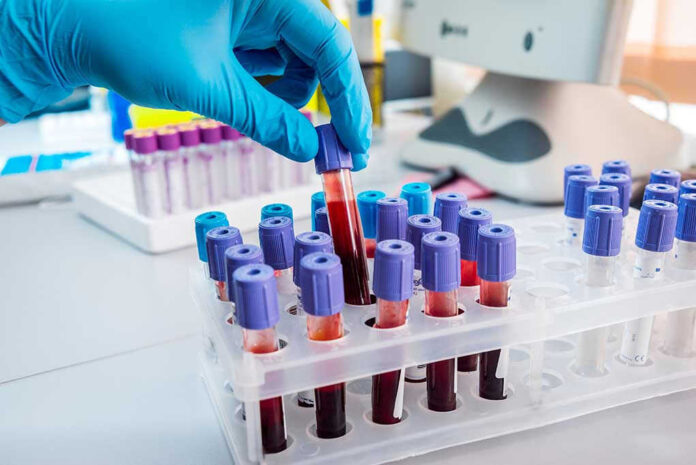
Hospitals across the globe have mountains of blood test results sitting in digital vaults, quietly ignored after the initial diagnosis. For decades, routine bloodwork was a blunt tool—yes or no, high or low, normal or abnormal. Now, artificial intelligence has transformed this overlooked data into a crystal ball. By mining patterns invisible to the human eye, AI predicts not just disease, but who may recover—and who may not—after a spinal cord injury. This leap forward doesn’t require new machines or expensive tests; it leverages the humble CBC panel already drawn from millions every day.
AI systems, trained on years of accumulated patient data, recognize combinations of blood markers that signal inflammation, immune response, and metabolic changes. Spinal cord injuries unleash a storm inside the body, but not every patient’s storm is the same. The AI sifts through red and white cell counts, platelets, and more, spotting subtle shifts that forecast whether the body will heal. These predictions can arrive within hours of hospital admission, giving doctors a head start in triaging care and families a clearer picture of the road ahead.
From Ivory Tower to Everyday Hospital: A Democratized Prognosis
For decades, accurate predictions about spinal cord recovery were the exclusive domain of specialists in elite hospitals, relying on expensive imaging and subjective clinical judgment. AI-driven bloodwork analysis smashes this barrier. Any hospital—urban or rural, rich or poor—can harness the power of this innovation as long as they have access to routine lab testing and an internet connection. The implications are enormous: families in remote areas finally receive prognoses once reserved for big-city patients, and stretched hospital resources are allocated with unprecedented precision.
Doctors accustomed to relying on experience and intuition now face a new kind of colleague: the algorithm. While some clinicians remain skeptical, early studies show that AI can not only supplement but sometimes outperform human judgment in predicting who will walk again, who will need aggressive intervention, and who faces the toughest odds. This doesn’t replace the physician’s empathy or expertise; it enhances care by adding a layer of objective, data-driven foresight.
The Hidden Patterns in Blood: What Else Could We Predict?
AI’s ability to find life-or-death insights in everyday lab work raises a provocative question: What other secrets lie hidden in our blood? Every year, patients undergo routine tests for cholesterol, glucose, and a dozen other markers. Until now, these results were siloed—useful for today’s diagnosis, irrelevant tomorrow. With machine learning, even a minor deviation in a blood count could be the first clue to a disease years before symptoms appear. Imagine a future where chronic conditions, cancer, or sudden cardiac events are predicted with the same ease as today’s spinal cord recovery forecasts.
The promise doesn’t end with prediction. As AI systems learn from more diverse and global datasets, their accuracy and relevance will only grow. Hospitals may soon use bloodwork to personalize treatment plans, monitor recovery minute by minute, and intervene before complications arise. This is not science fiction, but the logical next step in a healthcare revolution already underway.
Rewriting the Prognosis Playbook: The Human Side of AI Insights
With AI’s entry into the exam room, the conversation between doctor and patient changes. Instead of vague guesses and statistical averages, families receive tailored information rooted in their loved one’s unique biology. This level of clarity brings both hope and hard truths, but it empowers people to make better decisions about care, rehabilitation, and quality of life. The shift also challenges the medical community to rethink the art of prognosis—balancing algorithmic prediction with compassion and wisdom.
Adoption will not be instant or universal. Some physicians will resist, others will champion the technology. But as success stories multiply, skepticism will give way to acceptance. The bloodwork you get as a matter of routine may soon become the most powerful diagnostic tool you never knew you had—saving lives, guiding care, and quietly rewriting the future of medicine, one data point at a time.