
While the World Health Organization races to contain a deadly new Ebola outbreak in central Africa, the United States government has quietly ordered a sweeping entry ban that raises fresh questions about who our leaders really protect in a crisis.
Story Snapshot
- World Health Organization declares a Bundibugyo-strain Ebola emergency in the Democratic Republic of the Congo and Uganda, citing cross-border spread and likely undercounted cases.
- Centers for Disease Control and Prevention order reportedly blocks many travelers from several African countries for 21 days, sparking debate over effectiveness and fairness.
- Media language about a “global health emergency” blurs the legal difference between an outbreak alert and a full-blown pandemic, feeding public confusion.
- Both left and right worry that elites may use health emergencies to centralize power and restrict travel while failing to fix deeper vulnerabilities at home.
What Exactly The World Health Organization Declared About Ebola
The World Health Organization (WHO) Director-General has formally determined that the Ebola disease caused by the Bundibugyo virus in the Democratic Republic of the Congo and Uganda constitutes a Public Health Emergency of International Concern under the International Health Regulations, but does not meet the criteria for a pandemic emergency.[2][4] WHO reports that international spread is already documented, with confirmed cases in Kampala, Uganda, following travel from affected areas of the Democratic Republic of the Congo.[2][6] This declaration legally obligates countries to respond promptly and share information.[4]
World Health Organization guidance for this outbreak goes beyond general warnings and lays out specific measures. The agency recommends that confirmed Bundibugyo Ebola cases be immediately isolated in specialized treatment centers and barred from any national or international travel until two negative diagnostic tests, at least forty-eight hours apart, are documented.[2] WHO further advises that contacts of confirmed cases should undergo daily monitoring, with restricted national travel and a complete ban on international travel for twenty-one days after exposure.[2] These steps aim to slow cross-border spread without relying on sweeping global shutdowns.
How Serious The Outbreak Appears On The Ground
Available surveillance data suggest an outbreak that is dangerous but still numerically limited, and likely undercounted. A World Health Organization-linked summary describes eight laboratory-confirmed cases, roughly two hundred forty-six suspected cases, and around eighty suspected deaths in Ituri Province of the Democratic Republic of the Congo, spread across at least three health zones: Bunia, Rwampara, and Mongbwalu.[1] Separate reporting cites higher figures from the Africa Centers for Disease Control and Prevention, with more than three hundred suspected cases and over eighty deaths, underscoring rapidly changing, unstable numbers.[1][5]
World Health Organization officials warn that the reported figures probably represent only part of the problem. A detailed account describes signs of “a potentially much larger outbreak than what is currently being detected and reported,” with “significant local and regional risk of spread.”[3] The agency notes that about three weeks elapsed between the first suspected health care worker case in Bunia and formal confirmation that Ebola was circulating again, suggesting a low clinical index of suspicion among front-line providers and dangerous gaps in infection prevention inside strained hospitals.[3] Conflict and displacement in eastern Democratic Republic of the Congo further complicate case detection and independent verification.[1][3]
Why This Ebola Strain And Travel Raise Global Alarm
The strain driving this outbreak, Bundibugyo Ebola, presents a different challenge than more familiar Ebola variants. World Health Organization materials and broadcast reporting emphasize that there are no licensed vaccines or approved therapeutics specific to the Bundibugyo virus, which forces health systems to rely on isolation, tracing, and supportive care rather than medical countermeasures.[2][4] Experts also warn that health workers have far less experience with this strain, which has only been documented in a few previous outbreaks, increasing uncertainty about how large and fast this event may become.[2][3][6]
🚨 BREAKING: WHO declares Public Health Emergency of International Concern (PHEIC) over Ebola outbreak in DRC and Uganda.
246 suspected cases, 80+ deaths reported. Cross-border spread confirmed.
Full breakdown 👇 https://t.co/aU7bP5BlY3 #Ebola #WHO #PHEIC #PublicHealth— Shah (@MuhsinAbba61862) May 18, 2026
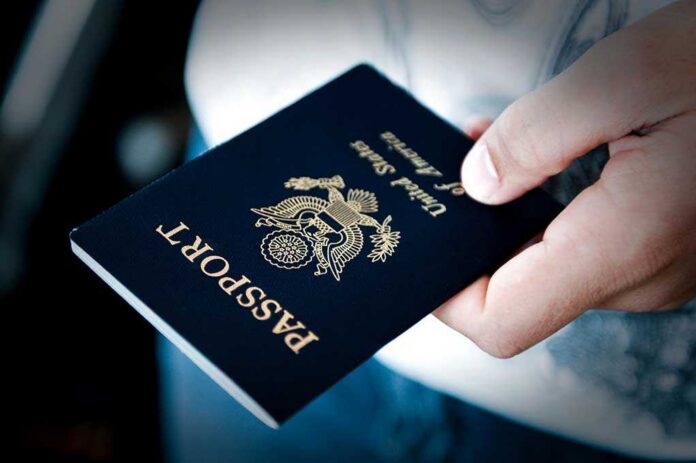
Cross-border travel is already proving to be a concrete transmission pathway, not just a theoretical risk. World Health Organization and news accounts describe confirmed Ebola cases in Kampala that followed travel from northeastern Democratic Republic of the Congo, including at least one Congolese national who journeyed hundreds of kilometers before developing symptoms and being diagnosed.[2][4][6] Those facts help explain why health authorities, including the United States Centers for Disease Control and Prevention, turn quickly to travel-related measures such as screening, quarantines, and in this case a reported twenty-one-day entry ban on many foreign nationals from several African countries.
How Media Language And Government Actions Feed Public Distrust
Coverage of the World Health Organization action shows how easily a technical legal category can morph into an alarmist headline. The Organization’s formal declaration is that of a Public Health Emergency of International Concern, a narrowly defined status under the International Health Regulations that falls short of a pandemic emergency.[2][4] Yet many outlets describe this as a “global health emergency,” language that blurs important distinctions and can make any travel measure, including broad entry bans, feel automatically justified to a worried public.[3][4][5]
This pattern deepens a frustration shared by conservatives and liberals who feel that the same elites who mishandled past crises now use emergencies to expand control while core systems remain fragile. Early misreports, such as a widely cited suspected case in Kinshasa later proven false, show how initial errors can enter the narrative and only slowly be corrected.[3] As the Centers for Disease Control and Prevention impose restrictions on ordinary travelers from African countries already struggling with conflict and weak health systems, citizens here and abroad will watch closely to see whether those sacrifices actually strengthen safety or simply reinforce a familiar cycle of fear, overreach, and limited accountability.
Sources:
[1] Web – WHO Declares Ebola Outbreak in Congo and Uganda a Global …
[2] Web – Epidemic of Ebola Disease caused by Bundibugyo virus in the …
[3] Web – WHO declares Ebola outbreak a global public health emergency
[4] YouTube – WHO declares global health emergency over the Ebola outbreak in …
[5] Web – WHO Declares ‘International Emergency’ Over Ebola in DR Congo …
[6] Web – Ebola disease caused by Bundibugyo virus, Democratic …