

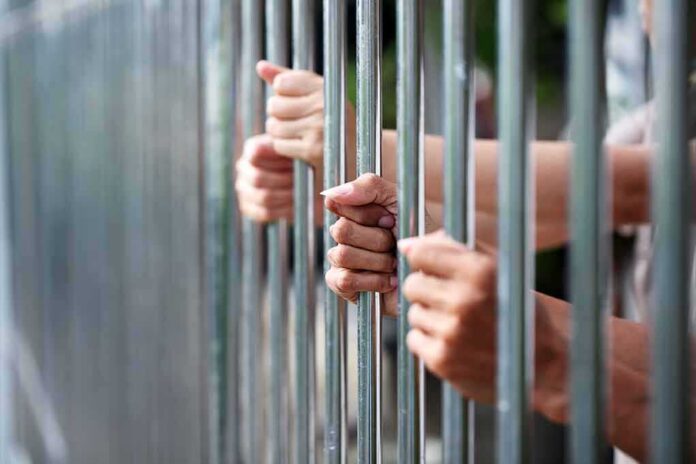
The prison “health” deal that freed at least 3,500 inmates also put people with violent pasts back on North Carolina streets—and the fallout is still landing.
Story Snapshot
- A 2021 court settlement cut North Carolina’s prison population by at least 3,500 to curb COVID risk [8].
- State media and lawmakers now question who qualified and how many reoffended after release [3][5].
- News reports say hundreds from the cohort were later rearrested, raising safety concerns [1].
- Supporters say the deal targeted those near release and aimed to reduce disease spread [8][4].
The Settlement That Emptied Beds And Opened A Political Fight
A lawsuit over prison conditions during COVID pushed North Carolina into a sweeping 2021 settlement. That deal bound the state to reduce crowding and manage outbreaks while expanding early releases. The American Civil Liberties Union of North Carolina describes it as a public health response that included vaccines, testing, and complaint channels, plus the early release of at least 3,500 people in state custody [8]. The number alone guaranteed scrutiny later. That scrutiny arrived once voters asked the obvious question: who got out, and why?
Legislators and watchdog outlets began to probe the eligibility rules and the actual roster. Coverage from a right-leaning state outlet framed the core doubt: did the process screen out people with violent histories, or did exceptions slip in [3]? A separate report highlighted that lawmakers launched a formal probe, with leaders pushing for the names, the criteria, and information about any new crimes tied to the released group [10]. The push reflects a common theme after pandemic-era releases: the policy moved fast, but the records moved slow.
Public-Safety Claims Collide With Pandemic Policy Defenses
Supporters of the settlement point to intent and design. They say the program aimed at people already near their scheduled exit dates and sought to protect inmates and staff from disease spread. The American Civil Liberties Union of North Carolina lists vaccine rollout, better testing, and transfers alongside the early releases, which shows the program functioned as one tool in a larger health strategy, not as blanket clemency [8]. A local television report echoed that claim and said critics’ broad statistics can be misleading without clear denominators and timelines [4].
Opponents counter with outcomes. A national outlet reported that more than 560 individuals who left prison under the agreement were later rearrested, citing data that fueled the “public-safety first” argument [1]. A state news site drilled into the same tension, asking whether screening failed to exclude people who posed a risk to the public or who held prior violent convictions [3]. A North Carolina television report showed lawmakers stating the releases were “worse than we thought,” and pressing for a full accounting, including violent recidivism details [5]. The gap between design and result drives the current storm.
The Names, The List, And The Accountability Gap
Journalists kept asking for the underlying list to test the rules against the actual releases. One analysis effort described the roster as opaque and tried to “flesh out” who got out and when, underscoring how secrecy invites suspicion and fuels rumor cycles [9]. Lawmakers then launched a formal inquiry to obtain documents, with a focus on violent-offender screens, supervision terms, and any revocations after new arrests [10]. Conservative readers will see a simple point: if government uses emergency power to release thousands, it must keep auditable records, and it must share them.
Democrat Roy Cooper agreed to release over 3,500 criminals early from prison in North Carolina.
Meet some of the murderers he let roam free.https://t.co/KjGLfjBnSf
— Senate Republicans (@NRSC) June 4, 2026
One media investigation also warned against pinning unrelated violent crimes on the release program when records show otherwise. A North Carolina outlet reported that a high-profile homicide suspect did not receive early release through the settlement, pushing back on internet claims and reminding readers that fact patterns matter case by case [2]. That correction does not erase concerns about the broader cohort. It does show why the actual roster and criteria must be public, so arguments hinge on proof, not viral posts.
What A Responsible Fix Looks Like Now
Lawmakers can start with three moves that respect both safety and due process. First, publish the full eligibility rules and the complete roster from the settlement period, with offense histories and release dates redacted only where the law requires. Second, release a clean recidivism study that separates technical violations from new violent charges, with time windows and sample sizes clearly stated [6]. Third, commit in statute that any emergency-release policy must exclude offenders with crimes against persons unless a judge signs off after a hearing. These are common-sense guardrails that serve the public better than spin.
Sources:
[1] Web – Exclusive: Here Are the Child Rapists on Roy Cooper’s Early Release …
[2] Web – Roy Cooper ripped over 560 inmates rearrested after COVID release
[3] Web – Roy Cooper Did Not Give DeCarlo Brown Early Release, Records …
[4] Web – Cooper’s COVID prison releases see new scrutiny – Carolina Journal
[5] Web – NY Post analysis questions NC pandemic-era inmate releases
[6] Web – ‘Worse than we thought’: NC lawmakers investigate release … – WRAL
[8] YouTube – NC lawmakers dig into prison settlement as GOP targets Cooper
[9] Web – NC NAACP v. Cooper (Rights of Incarcerated People)
[10] Web – Fleshing out Roy Cooper’s secret list – Longleaf Politics
© whatnewsdaily.com 2026. All rights reserved.