
An American oil tanker seizure near Venezuela is raising urgent questions about border security at sea, energy independence, and how far Washington should go to confront hostile socialist regimes.
Story Snapshot
- The U.S. seized an oil tanker off Venezuela’s coast, marking a sharp escalation in an already tense standoff with the Maduro regime.
- The incident highlights how energy security and border enforcement now extend far beyond the Rio Grande to the Caribbean and global shipping lanes.
- Conservatives see the move as a test of whether Washington will finally stand firm against socialism abroad without dragging America into endless entanglements.
- The tanker seizure underscores why strong borders, a powerful Navy, and energy independence remain core America First priorities.
Trump Confirms Seizure as Relations With Venezuela Stay Strained
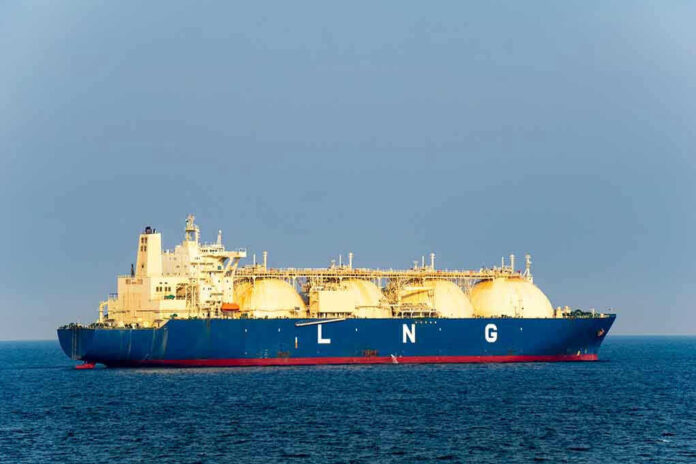
President Trump said the United States has seized an oil tanker off the coast of Venezuela, describing it as the latest escalation in an already tense relationship with the socialist Maduro regime. He stated, “We’ve just seized a tanker on the coast of Venezuela,” signaling that Washington is willing to project power south of the Caribbean when American interests or sanctions policy are at stake. Limited public data surrounds the vessel, ownership, and precise legal basis, leaving several key details unresolved.
Trump’s remark comes after years of friction between Washington and Caracas, driven by Venezuela’s socialist collapse, its ties to hostile regimes, and repeated human rights abuses. The tanker seizure appears to fit within a wider pressure campaign designed to choke off revenue streams that keep Maduro’s inner circle afloat. For conservative observers, the incident demonstrates why appeasing leftist strongmen never works and why U.S. leadership must be clear, firm, and backed by credible force when necessary.
Energy Security, Sanctions, and the Reach of American Power
The seizure near Venezuela underscores how energy policy, foreign policy, and national security now intersect on the high seas. When an oil shipment linked to a hostile regime or sanctioned network moves through vulnerable waters, it becomes a floating test of whether U.S. sanctions are serious or symbolic. By taking the tanker, Washington shows it is prepared to enforce its rules beyond paperwork and press releases, extending American reach into contested maritime spaces where weak enforcement has long emboldened bad actors.
Conservatives worried about America’s energy dependence will see this action through the lens of past years of self-inflicted wounds, where left-wing climate dogma restricted domestic production and strengthened petro-dictators abroad. A firm stance at sea only works when it is matched by an aggressive America First energy policy at home, unleashing drilling, pipelines, and refining capacity. Without that foundation, maritime shows of strength risk becoming symbolic gestures, while working families still face higher prices driven by earlier anti-fossil-fuel experiments.
Border Security at Sea and the Fight Against Socialist Regimes
For many on the right, the episode is not just about one tanker but about the broader principle of sovereignty. A strong border does not stop at a fence or river; it extends to ports, shipping lanes, and chokepoints where drugs, weapons, and illicit money move. A U.S. willing to seize a suspicious tanker sends an unambiguous message to cartels, smugglers, and state-backed networks that the oceans are not lawless zones. That message matters especially in waters long exploited by socialist regimes and transnational criminals.
The Maduro government has relied on shadowy energy deals, foreign allies, and opaque shipping arrangements to survive economic collapse and sanctions. Targeting tankers tied to such networks can weaken those lifelines without firing a shot on land. However, conservatives also worry about mission creep and the risk of sliding into yet another open-ended confrontation. The key test is whether Washington maintains a clear objective: defend American security, punish sanction violators, and resist socialism, while avoiding the kind of nation-building quagmires rejected by the America First movement.
Limited Information and the Need for Transparency and Restraint
Public information about this specific tanker remains thin, with unanswered questions about who owned the cargo, what legal authorities were invoked, and whether any crew members face charges. Limited data available means outside analysts can only draw broad conclusions, not final judgments, about the precise circumstances or long-term implications. For a constitutional conservative audience, that lack of clarity raises familiar concerns about transparency, due process, and making sure any military or law-enforcement action abroad stays firmly within U.S. and international law.
Many on the right will welcome a tougher posture toward a failed socialist dictatorship that has fueled regional instability and mass migration. Yet they will also demand that Washington avoid turning justified enforcement into an excuse for permanent intervention or unchecked executive power. The challenge for U.S. leaders is to pair strong actions, like seizing illicit tankers, with clear legal justifications, defined limits, and a broader strategy focused on American prosperity, secure borders, and energy dominance rather than open-ended foreign entanglements.