
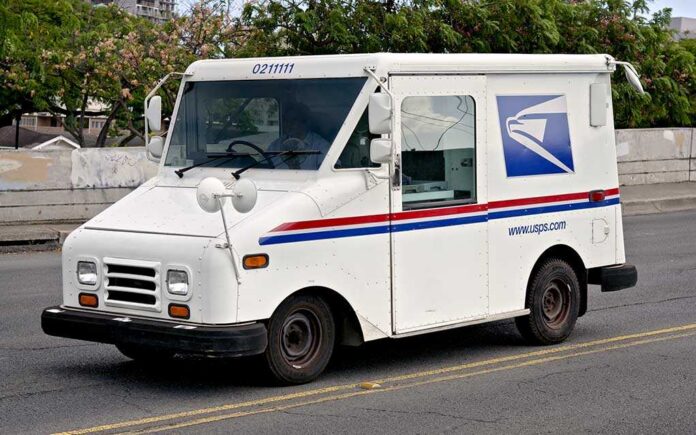
The price of a simple first-class stamp is being pushed toward a dollar as the U.S. Postal Service warns it’s running out of cash—and Washington is again being asked to “fix” a government-run system that can’t live within its means.
Quick Take
- USPS is proposing a first-class stamp increase from 78 cents to 90–95 cents after reporting a $9 billion net loss in fiscal year 2025.
- Postmaster General David Steiner told Congress the agency could face a cash shortfall within about a year without major changes.
- The proposal is tied to a broader push for cost cuts, revenue growth, and structural reforms including borrowing and pension changes.
- USPS says mail volume has collapsed over the past decade-plus, while regulators still tightly constrain how the agency sets prices.
Stamp Hike Proposal Lands on Capitol Hill Amid Insolvency Warnings
Postmaster General David Steiner brought a blunt message to a House Oversight subcommittee in mid-March: the Postal Service’s finances are deteriorating fast, and raising the first-class stamp rate to 90–95 cents is one lever he says could stabilize “controllable” losses. The request follows USPS reporting a $9 billion loss in fiscal year 2025, even as some shipping revenue rose. The proposed jump would be far larger than recent incremental increases.
Steiner’s testimony framed the stamp increase as part of a three-part strategy: raise prices where allowed, cut costs where possible, and grow revenue—especially in packages. Reports also describe him seeking changes Congress would have to authorize, including a higher borrowing limit and adjustments to how postal pensions are invested. While some outlets mention a possible path to $1-plus pricing, the discussed hearing range centered on 90–95 cents.
Why USPS Keeps Bleeding Money Despite Higher Prices
USPS has been trapped for years between a constitutional-scale expectation—universal service across a massive geography—and a business reality: Americans mail far fewer letters. Research summaries cite a drop from roughly 220 billion mail pieces in 2010 to about 110 billion today, a collapse that has pulled tens of billions in revenue out of the system as payments and billing moved online. Even with stamps rising from about 47 cents a decade ago to 78 cents now, volume keeps sliding.
Recent history matters here. A major cost driver was a 2006 mandate to prefund retiree health benefits, a policy that hammered USPS finances for years and was partially relieved by the 2022 Postal Service Reform Act. But the 2022 law did not give USPS full freedom to price mail like a private carrier would, and it did not erase the operational challenge of delivering to every address—urban, rural, and remote—at a uniform basic rate. Losses continued, including $9.5 billion in fiscal year 2024 and $9 billion in fiscal year 2025.
Regulatory Limits and Cross-Subsidies Complicate Any Turnaround
Unlike most federal agencies, USPS is designed to be self-funded rather than routinely supported by taxpayer appropriations, but it still operates under tight rules from the Postal Regulatory Commission. Those constraints limit how quickly mailing prices can rise, which USPS leadership argues reduces flexibility at the worst possible time. Steiner has also pointed to restrictions that make it harder for package revenue to offset letter-mail losses, even though parcels are the area where consumer demand is growing.
The agency already moved on the shipping side. USPS implemented competitive shipping price changes in January 2026 while leaving “Mailing Services” such as first-class stamps unchanged at 78 cents at that time. That sequencing is key: it shows USPS has been trying to wring more revenue from packages first, but leadership now appears to believe the letter-mail side can’t stay flat much longer. For families, small businesses, churches, and local civic groups still relying on mail, a 90–95 cent stamp would hit budgets immediately.
What Comes Next: Higher Rates, Service Cuts, or Congressional Action
The stamp proposal is not a done deal. USPS must navigate the regulatory process, and several of the biggest structural changes being discussed—like raising borrowing authority and revisiting pension investment rules—depend on Congress. Steiner has also floated possibilities such as reducing Saturday delivery and closing some post offices, options that can quickly become politically explosive, especially in rural areas where the post office functions as a local lifeline.
From a conservative lens, the core issue is accountability: a government-run monopoly service facing private-sector competition in parcels is still asking for more pricing power and more borrowing room after years of red ink. The research available does not show final decisions, only proposals and warnings—so it remains unclear which reforms will be adopted, and how quickly. What is clear is that USPS leadership is signaling that without major changes, the status quo is not financially sustainable.
Americans may soon pay almost $1 to mail a first-class letter. The U.S. Postal Service wants to raise first-class stamp prices to between 90 cents and 95 cents as it faces a financial crunch.https://t.co/hE3iobVbSX
— WJZ | CBS Baltimore (@wjz) March 18, 2026
For voters who endured years of inflation and reckless fiscal habits across the broader government, this debate is a reminder that “small” price hikes add up—especially when they’re driven by long-running mismanagement and slow-moving bureaucracy. Congress now faces a straightforward choice: approve higher rates and structural reforms, demand deeper operational cuts, or risk disruption to a service Americans still depend on, even in a digital age.
Sources:
USPS wants to raise first-class stamp price to as high as 95 cents.
USPS proposes raising first-class stamp price 90-95 cents amid financial struggles
Stamp costs could top $1 under USPS proposal
United States Postal Service eyes stamp prices near $1
USPS Recommends New Competitive Prices for 2026