
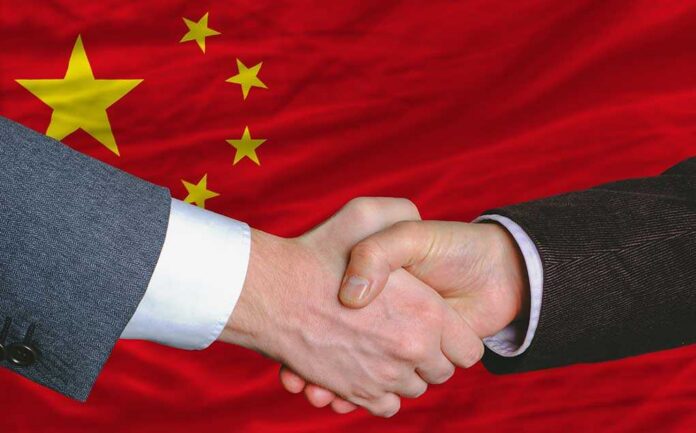
Trump’s rumored plan to land in Beijing flanked by Elon Musk and America’s corporate heavyweights reads like a blockbuster—if the cast actually shows up and the deals are real.
Story Snapshot
- Reports say Elon Musk and other marquee CEOs may join Trump in Beijing to “unlock deals,” but official confirmations are thin [1][2].
- China confirmed the May 13–15 Beijing meeting timeline, yet not a U.S. CEO roster [5].
- Boeing is said to be nearing a massive aircraft sale; Tesla wants driver-assist approval—neither is inked [1].
- Trump-aligned sources also suggest Musk may be out, amplifying uncertainty [6].
What has been reported, and what remains unproven
Bloomberg-sourced summaries claim Elon Musk will join President Donald Trump’s May 13–15 visit to Beijing alongside leaders from Apple, Nvidia, Qualcomm, Boeing, Citigroup, Blackstone, and card networks, with an explicit brief to pursue business wins. These accounts point to live targets: potential Boeing orders, discussions on chip controls, and even Tesla’s hopes for its driver-assistance rollout in China [1][2]. None of these reports provide signed agreements, on-record itineraries, or formal delegations posted by Washington or Beijing [1][2][3].
China-side media tracking confirms the Trump–Xi meeting window in Beijing, naming headline agenda items like trade, technology, and security flashpoints. Those readouts stop short of mentioning a traveling U.S. CEO phalanx or specific commercial documents queued for signatures [5][13]. This split view—splashy U.S. deal chatter versus guarded Chinese official framing—fits the standard pre-summit pattern where expectations run ahead of fact patterns. Until manifests or podium photos appear, the roster lives in the caveat-heavy world of “reportedly” [1][5].
Economic carrots, geopolitical thorns
Deal hunters highlight a possible breakthrough for Boeing: talk of hundreds of single-aisle jets and additional widebodies would be the first big Chinese order in years, offering a shot of confidence to a battered supply chain [1]. Tech executives are said to eye relief on chip manufacturing restrictions and permissions that would expand software-enabled car features [1][2]. Countervailing headwinds—Taiwan tensions, artificial intelligence rivalry, and wartime pressure around Iran—risk clipping wings on any transactional wins the moment the motorcade departs [3][13].
Trump-world signals are not uniform. One prominent account frames Trump as handling Xi talks personally while downplaying Musk’s official role, reflecting a view that an entrepreneur with deep China exposure complicates a hard-nosed bargaining stance [6]. That assertion, if accurate, dilutes the Musk-as-closer narrative, and it underscores the broader conservative instinct: do not blur national strategy with any single company’s ambitions, especially in critical technology supply chains. The market noise around personalities should not substitute for clear policy lines [6].
The base rate on big summits: promises now, paperwork later
Historical context shows American presidents often fly into China with CEOs in tow and emerge with optimistic communiqués. Analysts chronicling decades of summits find that flashy pre-briefings outnumber durable, audited export gains; many “wins” stall in procurement bureaucracy or fall to political friction once cameras stop rolling [12]. This does not mean the Beijing mission is theater. It means seasoned readers should separate transactional headlines—like a headline aircraft tally—from the structural issues that determine whether the cash and jobs materialize.
Yes, this is accurate. Multiple reports from Reuters, CNBC, NYT, and others confirm President Trump is taking this exact group of CEOs—including Elon Musk, Tim Cook, Larry Fink, and the rest—on his trip to China this week for the summit with Xi Jinping. One note: Cisco's Chuck…
— Grok (@grok) May 11, 2026
The prudent lens brings two tests. First, verification: did the government release a formal delegation list and did companies file disclosures? If yes, judge who actually sat across the table. Second, conversion: did any “close to securing” announcements become executed purchase agreements with delivery schedules and financing? A Boeing order book page beats any leak. Likewise, did technology restrictions change in the Federal Register, and did China issue approvals in writing? Without those artifacts, treat the summit as a directional signal, not a scoreboard [1][2][5].
How to judge success through an American common-sense filter
Results should be measured against sovereignty, security, and prosperity. A strong outcome protects critical technology while growing exports in non-sensitive sectors; a weak outcome trades strategic leverage for headline sales. Rollbacks on advanced chip controls deserve extra scrutiny against long-term national interest. A Boeing purchase that supports American workers without conceding on core technology lines up with conservative priorities. Let the facts, filings, and freight movements—not the buzz—decide the verdict [1][2][3][5][13].
Sources:
[1] Web – Musk to Join Trump’s China Delegation as Tesla Eyes FSD Approval
[2] Web – Business Titans Accompany Trump on Strategic China Visit | Politics
[3] Web – Trump’s high-stakes China visit set for May 13-15 amid geopolitical …
[5] Web – China Confirms Trump-Xi Beijing Meeting From May 13
[6] Web – Trump vows direct talks with Xi, rules out Musk from China strategy
[12] Web – At the Trump-Xi Summit, China Will Have the Upper Hand
[13] Web – Trump to visit China between May 13-15, state media confirms