
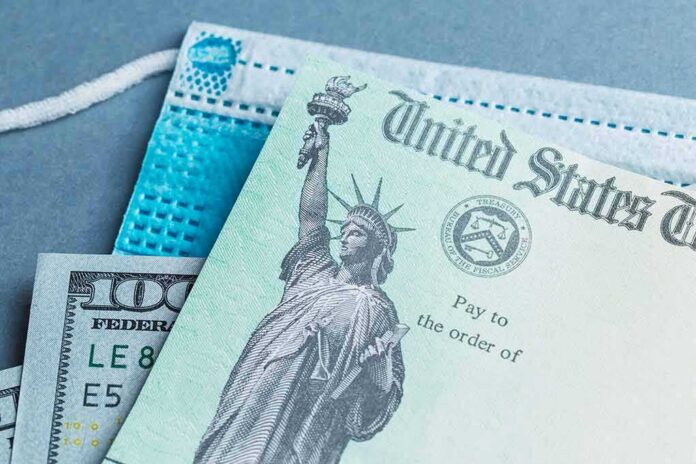
President Trump says his administration caught the government overcharging almost 1 million Americans for Obamacare — and he’s cutting $500 checks to fix it, just weeks before voters head to the polls.
Story Snapshot
- The White House announced $500 rebate checks for nearly 1 million Affordable Care Act enrollees across 30 states.
- Officials say the payments return roughly $500 million in exchange fees they call “Biden overcharges.”
- The Associated Press reports it remains unclear where the money comes from or if Congress must approve it.
- The announcement lands ahead of the November midterm elections, drawing sharp partisan reaction.
- Democrats have long described related ACA subsidies as cost-saving measures, not evidence of overcharging.
White House Unveils Refund Plan
The White House released a fact sheet on September 10 announcing what it calls the “Working Families Obamacare Refunds.” The document says the federal government will return “hundreds of millions in Obamacare overcharges” collected under President Biden, with nearly 1 million people getting a $500 check each. Officials tied the payments to exchange fees charged in 30 states.
Axios first reported the plan on September 9, saying the administration would pull the money from what the White House describes as a $500 million pool of excess fees paid by insurers and enrollees on ACA exchanges. The Associated Press later confirmed the scope, putting the number at roughly 1 million enrollees spread across 30 states.
How the Payments Would Work
Exchange fees are charges insurers pay to run health plans on ACA marketplaces, and companies typically pass those costs on to customers through premiums. The White House argues the Biden administration collected more in these fees than needed, and now wants to send the extra dollars straight back to consumers rather than let insurers or the government keep them.
This is separate from the ACA’s existing 80/20 rule, which already forces insurers to rebate money if they spend too little on actual medical care. Under that older rule, the average rebate check in 2025 was just $192, far below the $500 figure now being promised. The new plan targets government-collected fees, not insurer spending ratios.
Money Source and Approval Still Unclear
The Associated Press noted key details remain unresolved, including exactly where the rebate money will come from and whether Congress needs to sign off before checks go out. No legislation authorizing the program has been identified in the research record, raising questions about how quickly, or legally, the payments can be issued.
Critics have pointed out that a $500 check falls far short of covering typical health costs. One advocacy group noted the average monthly health insurance premium runs about $611, meaning a single rebate check wouldn’t even cover one month of coverage for many families.
A Long-Running Fight Over the Same Dollars
This dispute fits a familiar pattern in ACA politics, where the same money gets described very differently depending on who’s talking. Democrats have historically framed enhanced ACA premium tax credits as a way to lower costs, saying the credits cut premiums by about $800 a year for millions of people. That’s a subsidy argument, not a rebuttal to a specific overcharge claim.
🔥BREAKING🔥
President Donald J. Trump announces $500 rebate checks to nearly 1 million hardworking Americans who were wrongly overcharged through Obamacare.
"Our Administration is doing the right thing and giving the money back to the people who were wrongly ripped off."…
— DAILY INTEL UPDATES (@Ericdavis1343) September 10, 2026
House Democrats have also pointed to their own budget work as proof they’re already lowering health costs, framing their record as protecting coverage rather than overcharging anyone. No Democratic official in the research directly disputes the specific $500 million figure or the 30-state overcharge claim, leaving this mostly a fight over how to describe the same pot of money.
Timing Raises Questions for Both Sides
The rebate announcement comes weeks ahead of the November midterm elections, a timing detail that has not gone unnoticed. For voters frustrated with both parties, the episode fits a broader pattern: government programs and payments announced with election-season urgency, while basic questions about funding and legal authority stay unanswered until after the political benefit has already landed.
Sources:
facebook.com, whitehouse.gov, axios.com, healthinsurance.org, protectourcare.org, phillyburbs.com, cnn.com
© whatnewsdaily.com 2026. All rights reserved.