
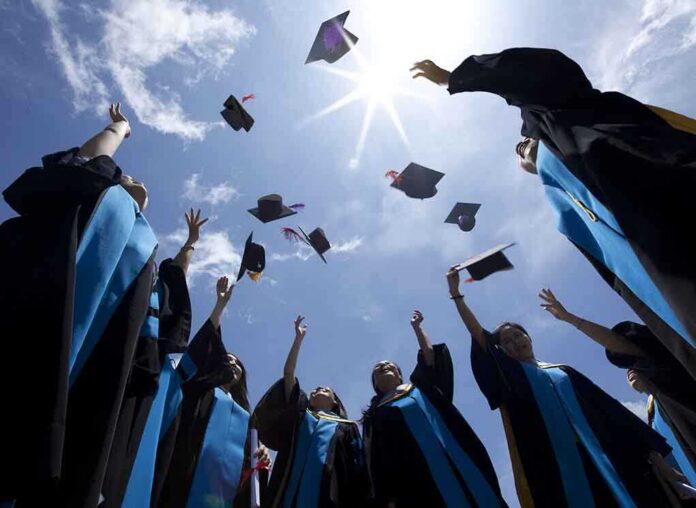
A simple graduation ceremony has become a referendum on whether American institutions still reward following the rules.
Quick Take
- California campuses plan “UndocuGrad” ceremonies for undocumented students in the Class of 2025, including CSULB’s “Beyond Borders Graduation Celebration.”
- Universities frame the events as voluntary, culturally supportive celebrations; critics frame them as preferential treatment that insults legal immigrants and visa-holding students.
- CSULB emphasizes privacy protections, including limits on sharing student information without a judicial order and campus-police practices that mirror California’s non-inquiry posture.
- Enrollment data shows hundreds of thousands of undocumented students in U.S. higher education, with California hosting a large share and about 83,000 in its postsecondary institutions.
UndocuGrad: A Culture Ceremony That Landed in a National Immigration Fight
California universities are hosting special graduation ceremonies aimed at undocumented students, with California State University Long Beach promoting its “Beyond Borders Graduation Celebration” for 2025 graduates. Supporters describe these events as recognition for students who finished degrees under unusual pressure and uncertainty. Opponents see a public institution applauding a category of student defined by an unlawful status, then calling it “inclusive” when the very premise divides students by how they entered and stayed.
CSULB’s public-facing description puts the emphasis on resilience and community, and it treats the event as voluntary and celebratory rather than a replacement for commencement. Reports about the broader trend also highlight the ceremony format: targeted programming, sometimes described as more intimate than a stadium graduation, and sometimes paired with limits on public access. That structure is exactly what intensifies scrutiny, because privacy and restriction can look like special handling.
What CSULB Actually Promises: Celebration, Targeted Support, and Privacy Boundaries
CSULB ties the Beyond Borders event to campus support networks that predate the current controversy, including FUEL (For Undocumented Empowered Leaders) and the Dream Success Center. The campus messaging centers on empowerment and services: a space where students can celebrate without fear that attendance becomes a public signal. CSULB also states it will not share student information absent a judicial order, and it points to campus-police alignment with state practices that do not inquire into immigration status.
That privacy posture sits at the heart of the debate. Universities argue students can’t access normal campus life if every gathering feels like a risk. Critics counter that a public university should not design special events around shielding immigration status, because it blurs the line between student support and institutional resistance to enforcement. Both sides are arguing about safety and fairness; they just define “fair” differently, which is why this fight keeps resurfacing.
The Moral Collision: Compassion for Students vs. Respect for the Rule of Law
Critics quoted in coverage of the backlash make a straightforward comparison: students who followed legal pathways, including international students on F-1 visas, face strict rules and real consequences for violations, so a celebration tailored to undocumented status feels like a slap in the face. That argument resonates with conservative common sense because it starts with equal standards. If rules matter for the visa holder who pays full tuition and obeys deadlines, rules should matter for everyone.
Supporters answer with a different kind of common sense: these are students who already completed the work, often while navigating political uncertainty and fear that policy swings could upend their lives. They argue a ceremony doesn’t erase immigration law; it recognizes academic achievement and human perseverance. The strongest version of that case avoids romantic slogans and sticks to practical outcomes: graduation rates, workforce readiness, and keeping students engaged rather than pushed into the shadows.
The Numbers Behind the Emotion: Undocumented Students Are Not a Tiny Edge Case
Advocacy research describes undocumented students as a meaningful segment of U.S. higher education, roughly 400,000 students nationally, with California hosting a significant share. The same research points to a decline from 2019 levels, suggesting the pipeline is not automatically growing, even in states with more welcoming policies. California’s postsecondary system reportedly includes about 83,000 undocumented students, which helps explain why campuses build dedicated programs instead of treating the issue as occasional.
Those figures don’t settle the argument, but they do clarify why universities institutionalize support. A large enough population produces real needs: financial aid navigation, legal referrals, mental health support, and community programming. Conservatives should read that as an administrative reality, not a conspiracy. Institutions respond to persistent demand. The political question is whether the response stays within the guardrails Americans expect from publicly funded schools: neutrality, equal treatment, and respect for lawful processes.
Why “Open to All” Still Feels Like Preferential Treatment
Some campuses describe these ceremonies as open to all graduates while being designed for undocumented students. That phrasing tries to defuse accusations of exclusivity, but it can also sound like wordplay. A program can be technically open while socially or symbolically targeted, and adults over 40 recognize the difference. When the branding and purpose revolve around one group’s legal vulnerability, the event communicates moral approval, even if no one is turned away at the door.
Restricted access adds another layer. Private venues and controlled attendance can be reasonable for safety, yet they also invite suspicion that the institution wants applause without accountability. Taxpayers and families who value transparency tend to ask one practical question: if the ceremony is simply cultural recognition, why does it need special confidentiality rules and limited visibility? Universities may have good answers, but they often fail to offer them in plain language.
The Fight Universities Can’t Avoid: Trust Depends on One Standard for Everyone
UndocuGrad ceremonies will continue because they serve real students and because California’s campus culture rewards visible support. The backlash will also continue because Americans instinctively measure fairness by whether the institution honors lawful behavior. Universities could lower the temperature by making two truths explicit: they can celebrate academic completion without celebrating unlawful status, and they can protect student privacy without creating the impression of a separate system that exempts some people from consequences.
The unresolved tension is the hook that keeps pulling this story back into the news cycle: higher education wants to project compassion, while a large share of the public wants institutions to project standards. The path forward requires fewer slogans and more clarity. A public university can recognize a student’s grit and still say, out loud, that the country’s immigration system should reward legal pathways. When schools refuse to say that second sentence, they shouldn’t act surprised when the first sentence triggers outrage.
Sources:
Colleges face backlash over ‘UndocuGraduation’ ceremonies
Undocumented Students in Higher Education (2023)
Beyond Borders Graduation Celebration