
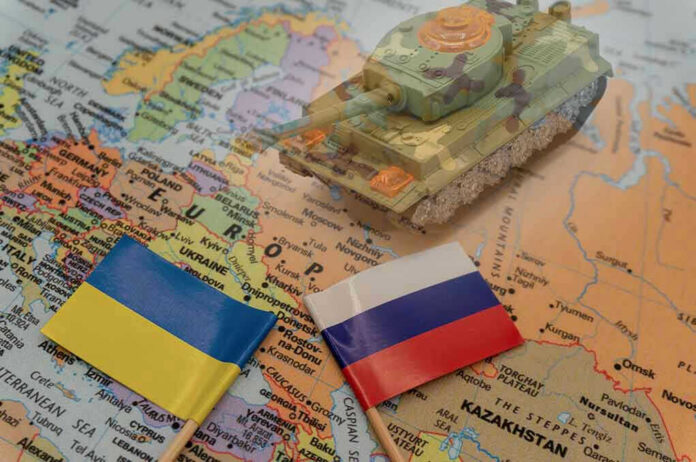
A senior Ukrainian official has announced that Kyiv and Moscow are moving toward a peace agreement to end the four-year war, raising hopes for resolution while skeptics question whether this breakthrough is genuine or just another false dawn in a conflict marked by failed negotiations.
Story Snapshot
- Kyrylo Budanov, head of Ukraine’s Presidential Office, told Bloomberg that peace talks are progressing toward an agreement with Russia
- Both sides are shifting away from maximalist positions toward compromise in US-mediated negotiations, though territorial issues remain unresolved
- Russia’s trillion-dollar war spending creates financial incentive to end the conflict, according to Ukrainian officials
- Kremlin sources contradict the optimism, claiming negotiations remain at an impasse with unacceptable positions still on the table
Ukrainian Official Predicts Swift Peace Agreement
Kyrylo Budanov, head of Ukraine’s Presidential Office, declared in a Bloomberg interview that peace negotiations between Ukraine and Russia are advancing toward a deal. Budanov stated that both sides recognize the necessity of ending the war and predicted the timeline for reaching an agreement would be short. His comments represent the most optimistic assessment from a senior Ukrainian official since serious negotiations resumed under US mediation. The statement comes as the conflict enters its fifth year, having begun with Russia’s full-scale invasion in February 2022.
Financial Pressures Driving Russian Compromise
Budanov emphasized that Russia’s massive war expenditures are creating powerful incentives for Moscow to negotiate seriously. He noted that Russia has spent enormous sums already in the trillions funding the war effort from its own resources, unlike Ukraine’s reliance on Western aid. This financial burden, according to the Ukrainian official, is pushing both sides away from their initial maximalist positions toward more realistic compromise. Budanov linked recent Ukrainian strikes on Russian oil terminals to efforts to pressure Moscow ahead of upcoming negotiation rounds, suggesting Kyiv is using military leverage strategically.
Territorial Red Lines Complicate Path Forward
Despite optimism about procedural progress, fundamental disagreements over territory persist as major obstacles to any final agreement. President Volodymyr Zelenskyy has publicly rejected any territorial exchanges involving the Donbas region, establishing a clear red line for Ukrainian negotiators. Budanov avoided providing specifics on how territorial disputes might be resolved, indicating this remains the most contentious issue in talks. The lack of detail on these core questions raises concerns among observers that optimistic rhetoric may not translate into concrete breakthrough given the entrenched positions both sides have maintained throughout the conflict.
Contradictory Signals From Moscow Cast Doubt
Kremlin-linked sources have offered a starkly different assessment of negotiation progress, describing talks as remaining at an impasse with both sides reaffirming unacceptable positions. This contradiction between Ukrainian optimism and Russian skepticism mirrors patterns from previous failed negotiation attempts, including the 2022 Istanbul talks that collapsed over similar territorial and security disagreements. The divergent narratives suggest either genuine miscommunication between negotiating teams or deliberate public posturing by one or both sides. For Americans watching yet another foreign conflict drain resources and attention, the mixed signals underscore legitimate questions about whether political elites are being straight with their publics about realistic prospects for peace.
Top Kiev Negotiator Budanov Says Russia and Ukraine Are Moving Towards a Peace Deal To End 4-Year War
READ: https://t.co/Qc1vEY21mq pic.twitter.com/Eb5TqC8xGT
— The Gateway Pundit (@gatewaypundit) April 11, 2026
The broader implications extend beyond the immediate conflict zone. A genuine peace agreement would stabilize global energy markets disrupted by the war and sanctions, potentially easing inflationary pressures that have burdened American families. However, a frozen conflict or failed negotiation would perpetuate instability and continued financial commitments from Western governments at a time when many voters on both left and right believe those resources should address domestic priorities. The coming weeks will reveal whether Budanov’s optimism reflects real progress or merely wishful thinking from officials desperate to show their publics an end to the suffering and financial drain of prolonged war.
Sources:
Ukraine’s Presidential Office chief issues statement on war’s end
Zelenskyy aide says Kyiv nearing peace deal with Russia to end Ukraine war
Budanov sees room for compromise with Russia and predicts peace talks may not drag on