

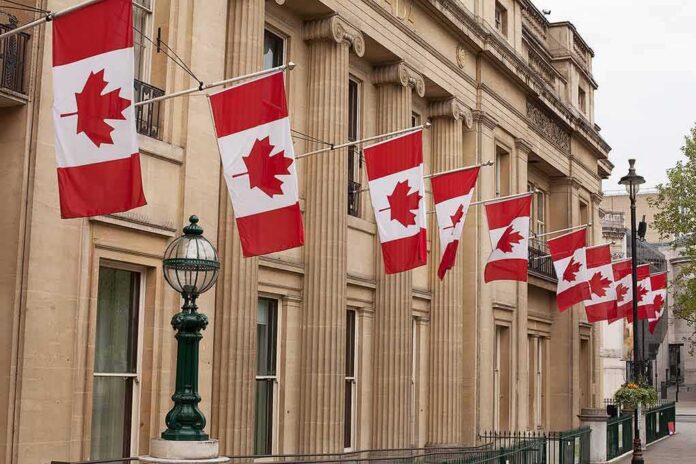
Minutes after talks collapsed, the United States and Canada veered into a tariff fight that could raise prices and strain jobs on both sides of the border.
Story Snapshot
- U.S. says Canada backed away from terms; Canada says U.S. added unfair last-minute changes
- President Trump’s team tied tariff relief to Canada lifting its retaliation first
- Canada vows to match new U.S. tariffs “dollar for dollar” to defend its workers
- Three weeks of intensive talks and a brief tariff pause still ended in failure
What each side says went wrong
United States Trade Representative Jamieson Greer said Canada declined to finalize a trade deal under terms both sides had agreed to earlier in the week, and warned that new U.S. tariffs respond to Canadian retaliation already in place. Canadian Prime Minister Mark Carney said the United States introduced last-minute changes that were unfair and uneconomic, which led Canada to suspend talks and prepare matching counter-tariffs “dollar for dollar”. These competing claims remain unresolved in public documents.
Greer repeated that Canada must lift its retaliatory measures to avoid new U.S. duties, framing Washington’s move as conditional, not unilateral. He also said the United States had offered Canada the best treatment of any major exporter, including room on some sector tariffs and cooperation on energy, but that Ottawa still stepped back from a deal. Canada disputes that picture, arguing that new U.S. terms undermined trust and made any agreement unreliable.
How the deadline drama unfolded
Reuters reported that President Trump paused a planned tariff increase by three days on August 18 after saying a deal was within reach, signaling an effort to leave space for final talks. Negotiators then met and called through the week, including Greer, Canadian ministers Dominic LeBlanc and Janice Charette, and both leaders, but the effort failed near the deadline. The collapse left both governments set to escalate tariffs even as supply chains and consumers braced for higher costs.
Reporting describes this as part of an ongoing tit-for-tat cycle. Canada had put in place retaliatory measures, and U.S. officials consistently linked any tariff relief to Ottawa removing those countermeasures first. Carney said Canada negotiated in good faith but would not accept terms that gave the United States unfair access to its market or put Canadian jobs at risk. Without a public draft agreement, outside observers cannot verify whose version of the final sticking points is correct.
What this means for families and businesses
Higher tariffs usually mean higher prices for shoppers and tighter margins for small firms that buy cross-border parts. Food, building materials, and consumer goods are often hit first. The risk is simple: when two close partners tax each other’s products, the bill rolls downhill to workers and households. That is why past U.S.-Canada fights often push both sides back to the table after the political dust settles. But until then, companies may delay hiring and investment as they wait for clarity.
1 AM Top-of-the-Hour News
“We've been under no illusions. We recognized from the start that America has changed. ”
Canadian Prime Minister Mark Carney Saturday hours after trade talks collapsed in Washington…and President Trump followed through with his threatened 50% tariffs… pic.twitter.com/qQHzhqVmft— Worldwide News Network (@WorldwideNNX) August 23, 2026
People across the political spectrum see a pattern here. Many conservatives blame years of weak trade enforcement that hurt U.S. factories. Many liberals see powerful interests steering policy while regular people eat the costs. Both can be right about one thing: when governments trade barbs instead of hard facts, families pay. The record so far rests on statements, not signed texts. Releasing negotiating drafts or official readouts would help voters judge who moved the goalposts and when.
What to watch next
Watch for tariff lists and start dates, which will tell you which products get hit and by how much. Look for any sign that Canada suspends specific countermeasures, or that Washington swaps broad tariffs for targeted relief tied to clear steps. Also track whether either side publishes offer sheets or meeting notes. Even limited documents could confirm who changed terms at the end. Until then, pressure from workers, farmers, and small businesses may be the strongest force pushing both capitals back to serious talks.
Sources:
theatlantic.com, kyuk.org, reuters.com, cbc.ca, politico.com
© whatnewsdaily.com 2026. All rights reserved.