
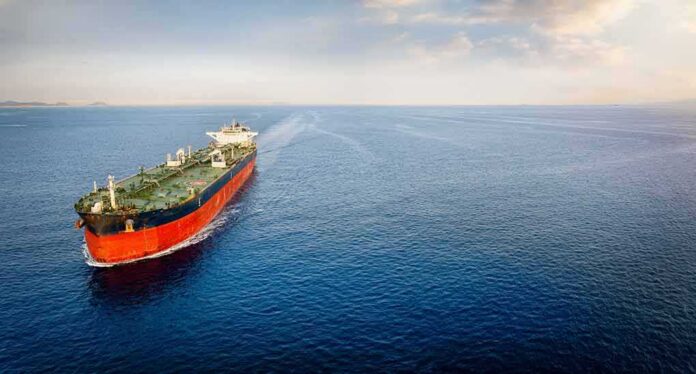
U.S. forces disabled a Curaçao-flagged oil tanker headed toward Iran’s Kharg Island after warnings, sharpening a risky fight over who controls Gulf shipping lanes.
Story Snapshot
- U.S. Central Command said it fired a Hellfire missile to disable the Belma as it moved toward Kharg Island.
- Iranian officials said the same tanker, identified as Belma, was struck again near or at Kharg Island days later.
- Reports differ on whether the ship was offshore, inbound, or docked, leaving gaps on timing and location.
- The clash fits a wider pattern of U.S.–Iran maritime escalation that has slowed tanker traffic and raised costs.
What the U.S. Military Says Happened
United States Central Command (CENTCOM) said a U.S. aircraft disabled the Curaçao-flagged commercial tanker Belma as it transited international waters toward Kharg Island. CENTCOM said the ship ignored multiple warnings and was hit by a Hellfire missile aimed at the smokestack or engine area. Outlets with different leanings, including the British Broadcasting Corporation and Bloomberg, carried similar details from CENTCOM. The U.S. framed the action as blockade enforcement, not a strike on a docked vessel.
Reuters and the British Broadcasting Corporation reported that CENTCOM described the Belma as unladen and non-compliant, which signals the tanker was not carrying crude at the time. Bloomberg described the ship as U.S.-sanctioned and said the disabling shot followed repeated warnings. People’s Daily’s English edition echoed that the vessel was sailing toward Kharg Island when U.S. forces intervened. These accounts agree on the core facts: warnings, direction of travel, and a disabling hit using a missile.
What Iranian Officials and Media Reported
Iran International cited Bushehr’s deputy governor, who said an empty tanker docked at Kharg Island was struck again by U.S. missiles and identified the vessel as Belma. Middle East Eye quoted the same official, through Fars, saying the “empty, Belma N.I.22” was attacked again by two U.S. missiles and had been hit two days earlier. This version places at least one event at or near the island, not only offshore. It casts the episode as repeated strikes on the same ship.
Reuters reported explosions heard near Kharg Island and relayed Iranian claims that U.S. missiles hit a tanker near the island. The wire also noted the origin of the blasts was unclear in the initial Iranian account. That uncertainty leaves basic questions open on where, when, and how many times the ship was hit. The Iranian-linked reports provide named officials, but they did not include photos, port logs, or insurer notices in these stories.
Why Key Details Remain Unclear
Public reporting does not include a neutral hull survey, satellite damage imagery, or the ship’s International Maritime Organization number that ties “Belma” and “Belma N.I.22” together. That gap makes it hard to confirm whether all outlets describe one incident or two linked events. It also keeps the exact location uncertain: “transiting toward” Kharg Island versus “docked at” Kharg Island implies different rules and risks.
Iranian Oil Tanker Hit by Missile Strike on Kharg Islandhttps://t.co/wUQJm7t2DC pic.twitter.com/UgN7nEOe90
— ARKNEWS (@Arknews_Arktv) September 5, 2026
Both sides have reasons to shape the story. The U.S. wants to show lawful blockade enforcement with warnings and a precise, disabling shot. Iranian officials want to show that America attacked a tanker at a key oil hub. Without class-surveyor reports, satellite timelines, or crew statements, the public record leans on official claims. That is common in wartime, but it strains trust across the political spectrum.
What This Means for Americans
Kharg Island handles much of Iran’s crude exports, so even a single disabled tanker near it can ripple through oil markets. Reuters and Bloomberg coverage places this clash inside a broader U.S.–Iran pattern that already slowed ship traffic through the Strait of Hormuz in recent months. Slower flows can push up energy prices. Higher fuel and shipping costs hit family budgets, truckers, and small businesses first. Americans feel that pinch long before experts finish any formal investigation.
For conservatives worried about secure borders and strong deterrence, CENTCOM’s account reads like needed enforcement. For liberals worried about endless conflict and fossil fuel risk, a missile shot at a commercial ship raises alarms about escalation and oil dependence. Both groups share a core doubt: leaders rarely share full evidence, yet costs land on working people. Clearer facts on the tanker’s identity, damage, and location would help Americans judge if this action aligned with our laws and interests.
The Next Proof Points to Watch
Independent satellite images showing the ship’s track and damage would settle the “offshore versus docked” dispute. A class-surveyor or insurer report would confirm a Hellfire impact, where it hit, and whether there were injuries. Port and pilotage logs from Kharg Island could show if Belma ever moored. A fuller CENTCOM after-action release could clarify whether this was blockade enforcement only or part of a broader strike plan. Until then, expect more claims than proof.
Sources:
npr.org, bbc.com, reuters.com, theguardian.com, nytimes.com, azernews.az
© whatnewsdaily.com 2026. All rights reserved.