
President Trump blasted Justices Amy Coney Barrett and Neil Gorsuch after they voted to strike down most of his tariff plan, igniting a fresh fight on the right over judicial fidelity to the Constitution and the America First agenda.
Story Highlights
- Supreme Court ruling curtailed Trump’s tariff policy; Barrett and Gorsuch joined the majority.
- Trump said his appointees lacked the “bravery to do what is right” after the decision.
- Reports quoted Trump calling parts of the Court “unpatriotic” and “an embarrassment”.
- Debate grows on the right over judges, loyalty, and constitutional limits on executive power.
What Triggered Trump’s Rebuke
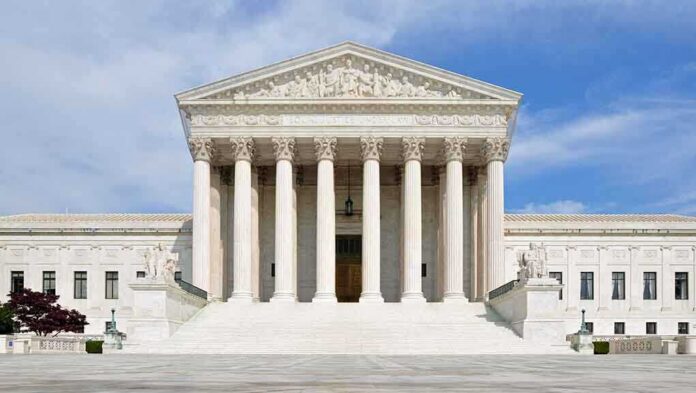
News outlets reported that the Supreme Court struck down key parts of President Trump’s tariff program, with Justices Amy Coney Barrett and Neil Gorsuch joining the majority. The decision limited how far the president can go under trade and emergency laws. The ruling cut into a core tool Trump used to pressure foreign rivals and protect American industry. Soon after, Trump criticized the justices by name and said they lacked courage in the face of a national interest fight.
Coverage described Trump’s anger as direct and personal. Reports quoted him saying some on the Court were “unpatriotic and disloyal to our Constitution,” and that certain justices were “an embarrassment to their families” after the tariffs ruling. He singled out his own appointees, Barrett and Gorsuch, and said they did not have “the bravery to do what is right for our country.” The remarks built on earlier episodes where Trump blasted judges over rulings that blocked his policies.
Why Conservatives Care: Power, Policy, and the Constitution
Conservatives see tariffs as leverage to rebuild manufacturing, counter unfair trade, and push back on rivals like China. The Court’s decision clipped the executive branch’s trade tools right when factories and energy producers need relief from foreign dumping and rigged markets. Many on the right also worry that the judiciary keeps narrowing elected power while leaving the administrative state and global trade panels untouched. That tilt can leave working families exposed to offshoring and rising costs.
Trump’s reaction tapped that frustration. He argued the justices failed the country by blocking a policy that protects jobs and national security. His allies say the Court should apply the law as written and allow the president the authority Congress already granted in statute. Critics respond that judges owe no personal loyalty and must check any overreach. The clash is not new, but this ruling raised the stakes because it hit a central America First tool: tariffs.
The Independence Question and What the Record Shows
Some coverage framed the dispute as proof that Trump’s nominees are independent, not political operatives. Reports quoted Trump saying he did not want personal loyalty from judges but wanted choices “for our Country,” showing the argument is about outcomes, not secret coordination. Other reporting highlighted a study finding many Trump-appointed judges often diverge from ideological peers, which some call a sign of judicial independence on the bench.
At the same time, Trump’s sharp words are a matter of public record. He wrote that Barrett and Gorsuch were not the people he interviewed, and said they acted “cowardly” after major rulings against his policies. Those statements followed concrete votes in the tariff case, not a vague complaint. The facts show a specific legal break that touched real policy costs for U.S. workers and industries, and a president upset with judges he believed misread the law’s grant of power.
What Comes Next for Trade and the Right’s Judicial Strategy
The administration can adjust tariff tools within the limits the Court left in place, pursue new statutory authority from Congress, or target trade cheats with tougher enforcement. Expect a push for clear language that affirms presidential power to respond fast to unfair trade, national security risks, and supply chain threats. That path would reduce courtroom guesswork and force Congress to take a public stand on tools that protect American jobs and energy security.
Trump publicly attacked his own Supreme Court appointees after they ruled against him – and his AG says that's totally fine. In a Truth Social post, Trump wrote the justices "are not the people" he interviewed when nominating them, calling them "merely a shell of their original…
— Top Stories (@TopStories77) September 15, 2026
Inside the conservative movement, a deeper review of judicial picks is likely. Many grassroots voters want nominees who read laws as written, resist globalist pressure, and respect the separation of powers without kneecapping elected authority. Think tanks and legal groups will debate how to balance independence with fidelity to original text and national interest. For now, one fact is clear: the tariff ruling tightened legal limits, and Trump’s public blast made the split impossible to ignore.
Sources:
reason.com, abcnews.com, thehill.com, yahoo.com, apnews.com
© whatnewsdaily.com 2026. All rights reserved.