
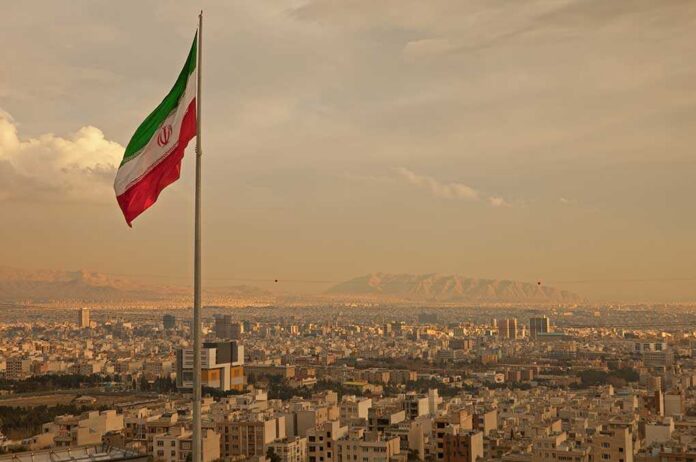
Iran’s rulers are accelerating executions to silence dissent—while internet blackouts and global distraction help keep the crackdown out of sight.
Quick Take
- Human rights groups report a fast-moving wave of executions tied to anti-regime unrest that erupted in January 2026.
- Reports describe rushed proceedings, alleged torture-extracted confessions, and families sometimes denied the bodies of the executed.
- Multiple tallies point to a major execution surge since 2025, with wartime conditions and information controls making verification harder.
- Ethnic and political minorities—including Kurdish activists and others—are frequently cited as being disproportionately affected.
What’s driving the new execution surge
Iran’s execution pace has drawn renewed attention after protests in January 2026 and a subsequent crackdown that left many dead and many more jailed, according to human-rights reporting summarized across several outlets. In recent weeks, rights groups cited roughly 10 executions in a single week, with cases linked to protesters and political opponents. Specific reports highlight the April 4, 2026 execution of Vahid Baniamarian, described as a former physics teacher accused of ties to the MEK.
Information is incomplete because wartime restrictions and internet blackouts can limit independent confirmation of arrests, trial records, and exact totals. Still, the pattern described is consistent across multiple sources: Iranian authorities appear to be using the death penalty as a tool of intimidation to deter renewed street protests. For Americans watching from afar, the core point is straightforward: a state can turn courts into a conveyor belt when it fears its own citizens.
How Iran’s legal system becomes a weapon under pressure
Reporting and advocacy groups describe trials that move rapidly from arrest to sentencing, sometimes relying on confessions said to be coerced under torture. Amnesty has warned about young people at risk and about transfers that happen in secrecy, a detail that matters because secrecy reduces the public’s ability to contest evidence or even confirm where a detainee is held. When families are denied bodies, the punishment extends beyond the condemned person and amplifies fear in the community.
The Iranian state’s incentives in a crisis are grimly rational. Executions broadcast power, discourage organizing, and signal to security forces that the regime intends to survive at any cost. Even when public executions are officially restricted, outside summaries note that some still occur, and that capital punishment is broadly authorized under Iranian law for a wide range of offenses. That legal breadth gives authorities flexibility to re-label dissent as “security” or “rebellion” in politically charged periods.
Why Americans aren’t hearing more about it
Iran’s information controls are the most direct reason the story is hard to follow. When internet access is throttled or blacked out, fewer videos and fewer documents circulate, and international outlets often hesitate to report numbers they cannot independently confirm. A second reason is competition: U.S. politics, economic anxiety, and overseas conflicts pull attention elsewhere. That creates a gap where major human-rights stories can persist without sustained public pressure from Western democracies.
For conservatives and liberals who both feel institutions are failing, the coverage problem lands in a familiar place: accountability. If the world cannot see what’s happening, officials inside Iran face fewer consequences. At the same time, Americans should be careful about claims that are hard to verify in real time. The most credible reporting still acknowledges uncertainty, including disputes over totals and undercounting risks. The throughline, however, is consistent—executions are rising and are being used to crush dissent.
What it means for U.S. policy in Trump’s second term
The immediate policy question is how Washington should respond without confusing support for the Iranian people with backing the regime. Public condemnations from U.S. leaders can spotlight individual cases, but sanctions and diplomacy also require reliable information and clear goals. When Iran’s government uses wartime conditions to accelerate punishments, it complicates negotiations and increases pressure on allies who prioritize human rights in foreign policy. It also reinforces a hard truth: regimes that fear their citizens rarely reform under polite requests.
Executions Continue in Iran – Why Aren't We Hearing More About It? – RedState https://t.co/vBTUXiT9mP
— Rick Santini (@RickSantini2) April 17, 2026
For American readers, the lesson is less about partisan reflex and more about clarity. Iran’s execution surge is not a culture-war sideshow; it’s a reminder that authoritarian systems often treat dissent as a criminal disease to be eradicated. In an era when many citizens here distrust “elite” narratives and media filters, it’s worth tracking the few sources that document names, dates, and patterns—and recognizing that blackouts themselves can be part of the strategy.
Sources:
iran-regime-uses-war-mask-brutal-execution-surge-against-political-opponents
UN experts appalled by unprecedented execution spree in Iran, with over 1000 killed in nine months