

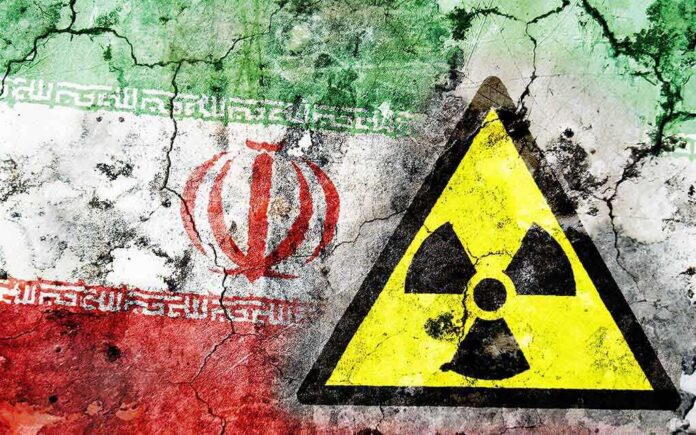
Iran’s state media aired an eight-minute nuclear survival guide, a stark signal that Tehran is bracing its people for the risk of a major strike.
Story Highlights
- Iran’s official outlets broadcast step-by-step advice for a nuclear blast, including sheltering and decontamination.
- The guidance told citizens to use basements or central rooms, avoid windows, and shut outside-air systems.
- The release coincides with tense regional dynamics, where messaging also serves regime signaling goals.
- Core tips mirror United States federal guidance: get inside, stay inside, and monitor updates.
Iran Airs Nuclear Survival Instructions Nationwide
Iran’s state-linked media published and broadcast an eight-minute nuclear survival video that lays out practical steps for civilians. Reports say the guidance first appeared on Iran’s official news agency on October 29 and then ran across state television and other outlets. The instructions describe what to do if a blast occurs and how to protect against fallout. Officials urged people to move quickly, avoid danger zones near windows, and seek sturdy shelter. The release marked a rare, direct civil-defense push.
The broadcast told people to head to basements or central rooms in solid buildings. It advised closing doors and windows and shutting off any air systems that draw air from outside. The guidance warned against staying in vehicles, filming the flash, or standing near glass. It also covered decontamination steps and food and water safety. Citizens were told to plan to remain sheltered for at least a day and to wait for official instructions before leaving.
What The Instructions Tell Iranians To Do
The video walked through immediate actions after a detonation. People outside should drop low, shield their face, and move to indoor shelter after the shock wave passes, according to summaries of the guide. Those inside should put as many walls and dense materials as possible between themselves and the outside. The advice stressed using packaged food and bottled water to limit contamination. The focus stayed on clear, simple steps that any family could follow in a crisis.
Iranian outlets framed the advisory as civil defense amid the risk of severe conflict. The message paired urgency with concrete actions. It did not dwell on politics in the instructions themselves. Instead, it listed steps that raise survival odds in the first 24 hours. The emphasis on blocking outside air, staying away from windows, and using inner rooms aligns with widely accepted nuclear safety practice. The structure looked designed for quick recall during chaos.
Why Tehran Is Doing This Now
The timing points to two overlapping goals: practical readiness and strategic signaling. Governments often use emergency messaging to prepare people and to send messages to rivals. Research on Iran’s communications shows the regime blends information, intimidation, and influence to shape domestic and foreign audiences during crises. By airing survival steps, Tehran shows its public that it is ready, while hinting to adversaries that it takes the threat seriously and can manage fallout, literal and political.
The content also fits routine nuclear-emergency doctrine. United States federal planners tell Americans to “Get Inside, Stay Inside, Stay Tuned,” use basements or central building areas, and remain sheltered for many hours after a blast. Iran’s advice repeats these pillars almost verbatim. That overlap means the video does not, by itself, prove an attack is imminent. It does show that Iranian officials wanted their population to hear, watch, and remember tested methods that save lives in the first day after a detonation.
What It Means For Americans And U.S. Policy
Americans should read this as a reminder that deterrence, missile defense, and clear red lines still matter. President Trump’s team faces a foe that mixes military moves with propaganda and psychological operations. Iran’s broadcast underscores that it plans for worst-case scenarios while working to steer the narrative at home and abroad. Strong defense posture, energy security, and unwavering support for American forces and allies help keep the peace and prevent miscalculation that puts families at risk.
BREAKING: Iran has released a rare broadcast on state TV this morning, preparing and instructing citizens to survive a nuclear strike, including sheltering for at least 24 hours, issued by Isfahan emergency services.
It comes amid Tucker Carlson's warning that Trump may be days…
— The world journal (@WorldJrnl) November 3, 2026
The takeaway for readers is simple. First, Iran told its people exactly how to survive the first day of a nuclear event, and that is serious. Second, the steps mirror what United States authorities teach: get inside fast, stay put, and follow official updates. Third, messaging in Tehran often doubles as theater meant to project resolve and control. Clear American strength and steady policy lower the odds that such grim instructions ever need to be used, anywhere.
Sources:
lifesitenews.com, keralakaumudi.com, dnaindia.com, clashreport.com, m.dailyadvent.com, public-pages-files-2025.frontiersin.org, fema.gov
© whatnewsdaily.com 2026. All rights reserved.