

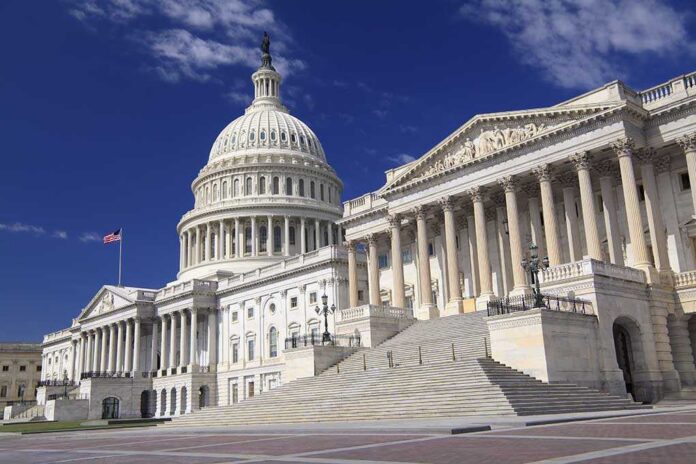
Democrats captured both chambers of Congress on election night, flipping multiple longtime Republican Senate seats and clinching a House majority.
Story Highlights
- Democrats were projected to win control of the House and Senate.
- Senate flips included Texas, Kansas, Iowa, Ohio, Maine, North Carolina, and South Carolina.
- House control crossed the 218-seat threshold for a majority.
- Major outlets reported no widespread breakdowns in voting as results came in.
Election Night Control: What Changed And Where
Major news organizations projected that Democrats won the House and the Senate on November 4, 2026. These calls rested on counts and models showing Democrats clearing the 218 seats needed for House control and winning enough key Senate races to lock in a majority. Outlets including the Associated Press, CNN, CBS News, National Public Radio, and The New York Times aligned on that outcome during the night, signaling a clear shift in Congress.
The Senate map showed large movement in states that had favored Republicans for years. Coverage identified Democratic flips in Texas, Kansas, Iowa, Ohio, Maine, North Carolina, and South Carolina. That list included deep-red states like Kansas and South Carolina, where Democrats had not held Senate seats in decades. The string of wins changed the balance even before all close contests were settled, because the remaining uncalled races could not erase the new majority.
House Majority: Hitting The Constitutional Threshold
Newsrooms reported that Democrats crossed the 218-seat mark needed to control the House. The New York Times cited the Associated Press in noting that Democrats secured the majority threshold as votes were tallied across many states. National Public Radio reported that Democrats flipped more than a dozen Republican-held districts as the map filled in, even as dozens of races remained uncalled at that time. These gains made a change in House leadership likely when the new Congress convenes.
Live coverage emphasized that many calls were projections based on counted votes and expected trends. CBS News described a decisive picture but noted that roughly 75 House races were still undetermined at one point in the evening. That reporting approach is standard on election night. Networks project chamber control once the remaining uncalled races cannot mathematically restore the other party’s majority, even while district-level counts continue.
Historic Senate Flips And What They Signal
Several Senate results carried historical weight. The Associated Press highlighted Kansas as a state that had not elected a Democratic senator in nearly a century, underscoring the scope of the shift. CBS News flagged Democratic wins in Texas and Kansas as first-in-decades outcomes, while also noting a loss for longtime Maine Senator Susan Collins, another marker of change. Together, these flips point to a national mood that cut across regions and challenged long-standing partisan maps.
Democrats have won control of both chambers of Congress in a sweeping midterm election victory, delivering a major setback to President Donald Trump and the Republican Party.
The Nov. 3 elections saw Democrats flip Senate seats in traditionally Republican states, including… pic.twitter.com/rWvxeTA2iU
— The Tablet (@TabletNewspaper) November 4, 2026
Named winners gave the story concrete shape. Reports cited victories such as Abdul El-Sayed’s Senate win in Michigan, along with James Talarico in Texas and Adam Hamilton in Kansas, reflecting a broad bench of new Democratic senators entering Washington. Those calls, carried by major outlets, added detail beyond generic “flip” talk by tying outcomes to candidates and states. That helpfully grounds the narrative in specific races voters followed at home.
Process Notes: Counting, Certification, And Order
Election-night coverage did not report widespread violence or a systemic breakdown in voting. Reports focused on counts, projections, concessions, and outstanding races, which is the usual pattern in modern midterms. A small caveat applies: networks reported results before official state certification, which takes longer and can shift close margins. But the core story, as covered by national outlets, was a peaceful transfer of congressional control based on votes counted on election night.
Why This Matters For Voters Across The Spectrum
This outcome sets up divided government with President Trump in the White House and Democrats steering both chambers. Conservatives worry that higher spending and regulation may return. Liberals worry that social programs and immigration policy will still clash with White House priorities. Yet many on both sides share a deeper concern: leaders in Washington often serve party goals, donors, and career safety over real fixes. This shift tests whether Congress can deliver results that meet everyday needs.
What To Watch Next: Policy And Power Moves
Congressional committees will change hands, and subpoenas, budgets, and judges will face new gatekeepers. Expect quick moves on health care costs, border and asylum rules, energy prices, and oversight of federal agencies. Watch for negotiations over spending caps and the debt limit, where standoffs can rattle markets and family budgets. Also track certification and recount steps in a few close races; while they rarely change control, they can adjust the final margins reported by the networks.
Sources:
theatlantic.com, us.cnn.com, apnews.com, edition.cnn.com, cbsnews.com, npr.org
© whatnewsdaily.com 2026. All rights reserved.