

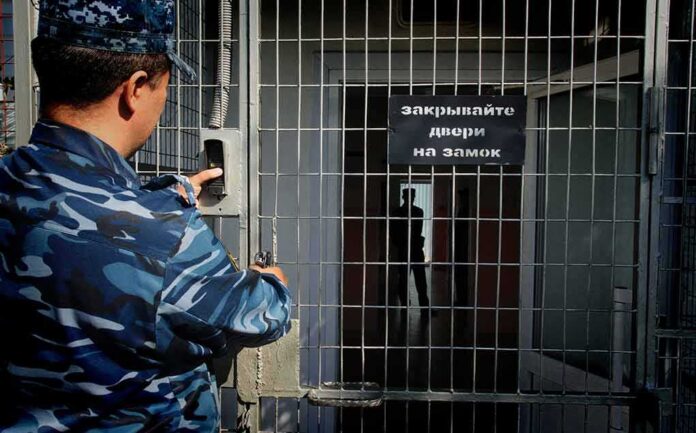
Russia has freed Marine veteran Robert Gilman after years of detention, and the release now puts a harsh spotlight on a case split between Russian criminal charges and a U.S. push for humanitarian return.
Quick Take
- President Trump said Russia released Gilman on a humanitarian basis after talks with President Vladimir Putin.
- U.S. officials had urged his release because of serious health concerns and repeated medical warnings.
- Russian authorities had convicted Gilman on assault charges that grew into a much longer prison term.
- The case has become another example of the tense, murky fights over Americans jailed in Russia.
Release Ends a Long Fight
President Trump announced that Robert Gilman was released from Russian custody and was headed back to the United States. Trump said the Kremlin agreed to free him on a humanitarian basis after talks with President Vladimir Putin, and reports said Gilman was being flown home for medical care. The release came after months of public alarm over his condition and repeated requests from U.S. officials.
Gilman’s case had drawn attention because the U.S. government and several advocacy groups described him as a wrongful detainee. The State Department said it was deeply concerned about his health and had repeatedly raised his case with Russia while requesting release on humanitarian grounds. Reuters also reported that U.S. officials had made repeated outreach to Moscow as his condition worsened and he was said to be in a stupor.
Russian Charges Stayed at the Center
Russian authorities did not treat Gilman as a political hostage. They said he was first jailed in 2022 after an incident on a train in Voronezh, where he was accused of assaulting a police officer while drunk. The Senate office of Senator Edward Markey later said Gilman had been convicted and sentenced to four and a half years, then later received a reduced sentence on appeal.
That legal record matters because it is the core of Russia’s public case. It also helps explain why the dispute stayed so bitter. U.S. supporters argued the original case was weak and that later prison-related charges were even more troubling. Russian reporting, as summarized in available coverage, said the later convictions added years to his sentence and pushed total incarceration much higher.
Health Concerns Drove the Diplomatic Pressure
Gilman’s condition became the most urgent part of the story. Reuters reported that he slipped into a stupor in June and was being described by advocates as possibly near death, while the Associated Press said he had been in a dissociative stupor for 47 days. Advocacy groups also said he had been mistreated in prison, including claims of abuse and forced medication, which his family used to press for a humanitarian release.
NEW: Fomer US Marine Robert Gilman has been released from Russia. There were stron gconcerns about his health, with an advocate warning just days ago that he was "near death"https://t.co/YqmLSWeZ1l
— Jennifer Hansler (@jmhansler) August 11, 2026
The release also fits a broader pattern in U.S.-Russia detention fights. One side frames the case as ordinary criminal law, while the other sees a sick American being trapped in a system that can turn prison into leverage. Gilman’s case has fed both concerns at once: a detention that began with a criminal charge, then grew into a long-running diplomatic test with a fragile man at the center.
What Remains Unclear
Even with Gilman on his way home, some parts of the record remain hard to verify from public reporting alone. The available coverage does not include the full Russian court file, the release order, or complete medical records. That leaves open questions about the legal basis for each sentence change and the exact condition that drove Moscow’s decision to let him go. Those gaps will matter as the case becomes part of a larger debate about fairness, power, and government accountability.
Sources:
facebook.com, newsweek.com, bostonglobe.com, mirror.co.uk, pbs.org, economictimes.indiatimes.com, nytimes.com, reuters.com, x.com
© whatnewsdaily.com 2026. All rights reserved.