
Days after condemning President Trump on national television, an Air Force major was ordered into pretrial confinement for “continued misconduct,” with no formal charges yet filed.
Story Snapshot
- The Air Force says Maj. Jason Watson was confined on Aug. 18 based on probable cause of continued misconduct.
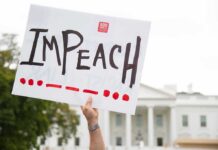
- Watson earlier protested in uniform at the U.S. Capitol, calling to impeach and remove President Trump and Vice President Vance.
- An investigation is underway; possible Uniform Code of Military Justice violations include Articles 88 and 92 if proven.
- Military rules require quick, neutral review of pretrial confinement decisions under court‑martial procedures.
What the Air Force Decided and Why It Matters
Air Force officials said Major Jason Watson was ordered into pretrial confinement on August 18, citing probable cause tied to “continued misconduct,” and stressed he is presumed innocent while the case is reviewed under court‑martial rules. Officials did not list the specific acts under review, and no formal charges had been filed when the confinement was reported. The lack of detail leaves the public unsure whether the core issue is speech, disobedience, or a separate risk assessment.
Reuters previously reported the Air Force opened an investigation after Watson appeared in uniform on the steps of the U.S. Capitol calling for the impeachment and removal of President Trump and Vice President JD Vance. Capitol Police arrested him for crowding, obstructing, and incommoding after orders to move, according to earlier coverage. The service later restricted him to Joint Base Anacostia‑Bolling before the confinement decision, signaling rising command concerns.
What Watson Said and the Rules That Could Apply
Watson’s speech argued that the president had violated the Constitution and urged action, comments he repeated in a television interview days before confinement. Stars and Stripes reported his conduct is being reviewed for possible violations of Article 88, which covers contempt toward officials by commissioned officers, and Article 92, which covers disobeying a lawful order, among others; those theories would depend on the exact words used and any orders given and ignored. His lawyers said he had been told not to talk to the press or post online about the case.
Military law draws bright lines here. Commissioned officers face limits on contemptuous speech against named officials under Article 88 of the Uniform Code of Military Justice, but not every harsh comment is a crime; context and intent matter. Separate rules punish disobeying a direct, lawful order under Article 92. If the misconduct rests on breaking an order, the facts of that order and any violation would be central. Those details have not been released publicly in this case.
How Pretrial Confinement Is Supposed to Work
Military rules say no one may be confined before trial unless there is probable cause that an offense occurred, that the person committed it, and that confinement is needed because lesser restraints will not work. A neutral officer must review the confinement decision promptly, usually within 48 hours, to check the facts and the need for custody. If officials miss steps, the law grants credit against any later sentence, but it does not erase the case.
Air Force Maj. Jason Watson has been placed in pretrial confinement days after criticizing Trump in a CNN interview. The Air Force cited alleged “continued misconduct” but has not specified the conduct. Watson is presumed innocent.#USPolitics #BreakingNews pic.twitter.com/KnXiLavww3
— SHADOW WIRE NEWS (@shadowwirenews) August 20, 2026
This process matters for everyone, whatever your politics. Conservatives worry that commanders sometimes excuse disorder when it suits elite goals. Liberals worry that the system can chill dissent when it targets powerful leaders. Both concerns point to the same fix: clear facts and fast, neutral review. The Air Force says that review is underway, but it has not disclosed the specific acts behind “continued misconduct.” Until those facts are public, the debate will run hotter than the record can bear.
Sources:
yahoo.com, militarytimes.com, houlahan.house.gov, monumentlegal.com, youtube.com, cnn.com, instagram.com, tjaglcs.army.mil, ucmjdefenseguide.com
© whatnewsdaily.com 2026. All rights reserved.