
A lone gunman’s charge at the White House Correspondents’ Dinner on April 25 exposed a security vulnerability that law enforcement neutralized in seconds, raising urgent questions about protecting high-profile political and press gatherings in an era of escalating threats.
Quick Take
- Cole Allen, 31, from Torrance, California, charged a security checkpoint at the Washington Hilton armed with a shotgun, handgun, and knives during President Trump’s first attendance as sitting president.
- Gunfire erupted around 8:30 p.m., sending attendees ducking under tables as Secret Service agents evacuated Trump and First Lady Melania within seconds; a Secret Service agent was shot but protected by his vest.
- Allen was tackled and subdued by law enforcement; he remains in custody facing multiple charges with investigators probing his motive for targeting the event.
- Trump vowed to reschedule the dinner within 30 days, framing the incident as an attack by “thugs” that would not deter civic participation.
A Breach at the Nation’s Press Event
Saturday night’s shooting shattered the carefully choreographed tradition of the White House Correspondents’ Association Dinner, an annual black-tie gathering since 1921 designed to celebrate the First Amendment and foster dialogue between journalists and government officials. The event, held at the Washington Hilton since 1981—the same venue where Ronald Reagan was shot—drew hundreds of reporters and Trump administration officials, including Vice President JD Vance, Defense Secretary Pete Hegseth, and Treasury Secretary Scott Bessent. Security included magnetometers and trained dogs, yet the checkpoint itself became the flashpoint when Allen charged from roughly 50 yards away, triggering an armed confrontation that lasted mere seconds before tactical officers subdued him.
Seconds That Saved Lives
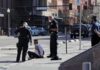
The speed of the response likely prevented a catastrophe. Attendees heard three to four gunshots around 8:30 p.m., with the sound originating near a back stairwell opposite the stage where Trump sat. Within seconds, Secret Service agents whisked Trump and Melania from the ballroom as law enforcement officers with long guns entered the dining area. One Secret Service agent was struck by gunfire but his protective vest absorbed the impact, leaving him unharmed. The suspect was tackled and restrained before firing could resume, transforming what could have been a mass casualty event into a contained security incident with no injuries to protected individuals or attendees.
The Suspect’s Calculated Approach
Cole Allen’s preparation suggests premeditation rather than spontaneous rage. The 31-year-old tutor from Torrance, California, traveled from Los Angeles to Chicago by train, then to Washington, D.C., according to Acting Attorney General Todd Blanche. Allen checked into the Washington Hilton itself—the event venue—positioning himself for proximity to his target. He arrived armed with a shotgun, a handgun, and knives, indicating intent for maximum harm. Yet investigators remain puzzled: Allen has declined to answer questions about his motive, and public statements reference only a vague desire to target “officials” without clarifying which officials or why.
Trump’s Defiant Response
From the White House briefing room, Trump praised law enforcement’s “quick and brave” actions while refusing to yield to what he termed intimidation by “thugs.” He posted a security video showing Allen’s takedown on Truth Social and announced plans to reschedule the dinner within 30 days. This posture—resilience rather than retreat—aligns with Trump’s broader narrative of facing unprecedented threats during his presidency. Two assassination attempts during the 2024 campaign, including a July rally shooting in Butler, Pennsylvania, where a bullet grazed his ear, have reinforced his messaging that political violence will not alter his course or dampen civic engagement.
Implications for High-Profile Security
The incident exposes a paradox inherent to open democratic events: the First Amendment celebration requires accessibility, yet accessibility creates vulnerability. Attendees passed magnetometers with only invitation screenshots—no photo identification required—allowing Allen entry despite his weapons. The WHCA faced a dilemma: maintain the dinner’s symbolic openness or implement security measures that might undermine the event’s purpose. Speaker Mike Johnson and other officials thanked responders, but the breach raises uncomfortable questions about whether similar vulnerabilities exist at other prestigious gatherings where government and media intersect.
How the White House Correspondents' Dinner and response unfolded: https://t.co/b5oAgUfOgc
— CBS News (@CBSNews) April 26, 2026
As the investigation deepens and rescheduling plans materialize, the White House Correspondents’ Dinner stands as a test case for protecting democratic institutions while preserving their essential character. The dinner’s survival—Trump’s commitment to reschedule rather than cancel—signals defiance against violence. Yet the April 25 shooting serves as a stark reminder that in an environment of rising political tensions and accessible weaponry, even the most carefully guarded events remain vulnerable to determined actors willing to breach security checkpoints. The speed of Saturday’s response prevented tragedy, but it also exposed fault lines in the architecture of American public life that no amount of tactical preparation can entirely eliminate.
Sources:
Trump and First Lady removed from White House Correspondents’ Dinner after security incident
Trump evacuated from White House Correspondents’ Association Dinner
Trump evacuated from White House Correspondents’ Dinner