
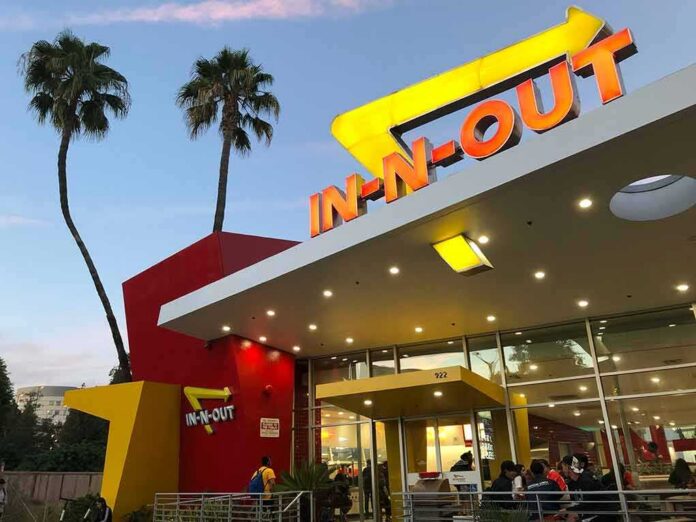
Three people were killed and two others were injured when gunfire erupted at a Twin Falls In-N-Out, turning a busy Saturday into a panic scene that shook a community and exposed gaps in public information flow.
Story Snapshot
- Officials reported three dead and two injured at the Twin Falls In-N-Out shooting.
- Police labeled it an active shooter incident and locked down nearby roads and a bridge.
- Authorities gave mixed updates on suspect status as the scene evolved.
- Names, motive, and full incident records were not yet public at time of reporting.
Confirmed Casualties and Immediate Police Response
City spokesperson Josh Palmer said at least three people were dead and two others were injured after shots were fired near the In-N-Out on Blue Lakes Boulevard in Twin Falls. Police received an emergency call early Saturday afternoon and moved quickly to the scene, where they described an active shooter situation in or near the restaurant’s dining area. Local broadcast outlets echoed the same death and injury counts, citing city and police statements soon after the attack.
Twin Falls Police, Idaho State Police, and fire and medical teams coordinated the response. Officers closed nearby roads and restricted access to protect the public and manage the scene. Reports said a bridge in the area was also shut down as part of the lockdown, and drivers were told to take alternate routes. These steps matched standard mass-casualty protocols that focus on stopping the threat, clearing routes for medics, and preserving evidence.
Active Shooter Designation and Scene Controls
Police and city officials publicly labeled the event an active shooter incident. That designation signaled to residents and nearby businesses that the situation was dynamic and dangerous. Road closures and a perimeter helped responders treat victims and search for any further threat. Local coverage and national summaries repeated those facts through the afternoon, building a shared core account even as some details remained unsettled.
Authorities advised people to avoid the area while they worked. News video segments also reported that two injured victims were taken to a nearby hospital for treatment, though their conditions were not detailed in official releases available at the time. The casualty figures and the active shooter label remained the most consistent elements across early reports, which centered on safety and traffic alerts for the community.
Conflicting Updates on the Suspect and the “Fog of the First Hour”
Public statements about the suspect shifted as information moved fast. One official line said a person believed to be the shooter was no longer a threat. Other updates described authorities searching for a suspect, and one report referenced the possibility of more than one shooter. These differences likely reflect timing and caution, but they also fed public confusion during a tense afternoon.
🚨🚨 Active shooter in Twin Falls at the In-n-Out. Might be a double-double homicide.
— T. H. Mick (@THMick_) August 2, 2026
This pattern fits what crisis researchers call the “fog of the first hour,” when officials and media share urgent updates before investigators have a full forensic picture. In Twin Falls, early claims about suspect status, the number of shooters, and the scope of any search were not fully aligned. That gap highlights why communities want fast facts and why authorities try to balance speed with accuracy during unfolding violence.
What We Still Do Not Know and Why That Matters
Officials had not released victim names, a motive, or a formal incident report when these accounts were published. Without those records, the public timeline, the suspect’s identity, and the legal basis for any arrest remained unclear. The core facts—three dead, two injured, active shooter response, road closures—were solidly reported. The missing details will matter for accountability, court action, and lessons to improve future emergency response.
Shared Concerns Across the Aisle
People across the political spectrum see a system that struggles to protect families and to communicate clearly when danger strikes. Residents fled a casual lunch spot as shots rang out, then watched mixed updates ripple across news and social feeds. That experience deepens distrust and fear. Clear, verified releases and faster disclosure of basic records can help rebuild trust, even as communities debate deeper issues like crime, mental health, and public safety priorities.
Sources:
nypost.com, independent.co.uk, ksl.com, youtube.com, fox13now.com, facebook.com, instagram.com
© whatnewsdaily.com 2026. All rights reserved.