
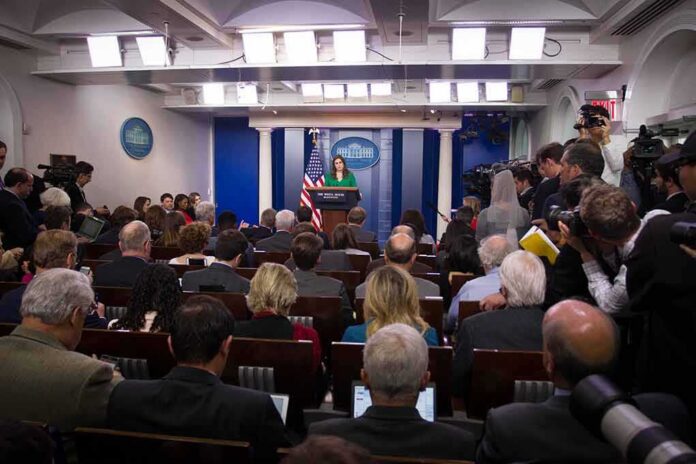
Media outrage hit a wall when Governor Sarah Huckabee Sanders told reporters that selective access for chronic bad actors is common sense, not censorship, after President Trump named CNN, MS NOW, and Politico for exclusion over “fake news.”
Story Highlights
- President Trump announced a White House bar on CNN, MS NOW, and Politico, citing persistent “fake news.”
- Reports said the ban targeted three outlets, not the entire press corps.
- Early coverage found no immediate enforcement steps at the White House.
- CNN claimed any ban would be an “illegal assault” on press freedom.
What The President Announced And Why It Matters
President Trump said he was barring CNN, MS NOW, and Politico from the White House “effective immediately,” arguing the outlets push “fake news” and write to hurt Republicans. He framed the step as a response to biased coverage, not a shutdown of journalism. Multiple outlets reported the announcement on September 18 and identified the three organizations by name, underscoring that it was a selective action, not a blanket ban on all reporters. The announcement drew instant national attention and sharp debate.
Trump’s stated rationale tied the move to repeated hostility and slanted reporting. Coverage quoted him saying these outlets “purposely write negative news” and aim to diminish his administration. That argument resonates with many conservatives who have watched double standards for years. Still, the reporting packages did not include a formal White House policy memo, credential order, or a list of disputed stories with documented errors, leaving some procedural questions open for now.
What Changed On The Ground And What Did Not
Early reports said there was no sign of immediate enforcement after the announcement. CNN reported that there was “no evidence” of steps taken yet, and other outlets described continued presence of named reporters on site. That detail matters because it separates a public warning from a processed policy. It also indicates the White House press office and security teams had not, at the time of those reports, rolled out a credential revocation or entry-screening change tied to the announcement.
Coverage also confirmed the target list was confined to three outlets, rather than the wider press corps. That distinction cuts against claims that the administration moved to silence all critical voices. A narrower action, even if controversial, sits in a different legal and practical lane than a full shutdown. Conservative readers know past administrations played access games too. The real test will be whether the White House codifies clear, viewpoint-neutral standards and applies them with due process.
How Major Media Framed The Fight And The Legal Stakes
CNN’s public response said any such ban would be an “illegal assault” on a “fundamental and constitutionally protected right,” and the network insisted it has the right to report “without hindrance or interference from the government.” First Amendment groups echoed that view in press coverage. These quotes set up a courtroom-sounding clash, even as on-the-ground enforcement remained unclear in early reports. The media narrative focused on rights and retaliation, not procedures and scope.
"TRUMP DECLARES WHITE HOUSE BAN OF NEWS OUTLETS" — New York Times
By Michael M. Grynbaum & Benjamin Mullin@nytimes — Saturday 19 September 🔍The story is framed as a constitutional conflict between executive authority and the First Amendment, focusing on the procedural and… pic.twitter.com/uVyDRV7jOE
— Paperboy (@frontpagestoday) September 19, 2026
Conservatives see a double bind. When left-leaning outlets push narratives that later fall apart, there is little penalty. When a conservative White House pushes back, critics cry “censorship.” The record so far shows three facts at once: the President publicly named three outlets; the action was described as selective; and early reports found no enforcement. Those facts argue for calm, transparent rules. If the White House builds a process anchored in accuracy, fairness, and security, it can defend access decisions while respecting the Constitution.
Sources:
businessinsider.com, aljazeera.com, cnn.com, usatoday.com
© whatnewsdaily.com 2026. All rights reserved.