

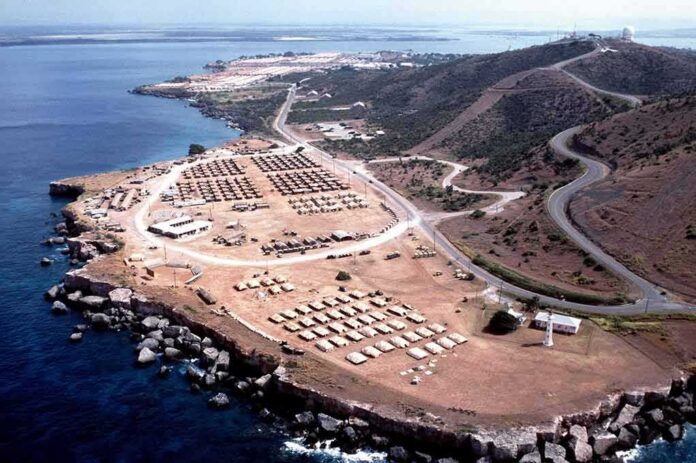
An abandoned Navy base in Alaska is still pulling down about $340,000 a year in federal internet subsidies, even though no one on Adak Island says they use the service.
Quick Take
- The Federal Communications Commission (FCC) Universal Service Fund pays for internet at the old Adak base.
- Reporting says the annual cost is more than $340,000, while residents report zero use of the subsidized service.
- Adak residents now rely on Starlink, not the old subsidized system.
- The island’s tiny population makes the subsidy look even larger on a per-person basis.
What the Subsidy Pays For
Reporters found that the Federal Communications Commission’s Universal Service Fund keeps paying to wire hundreds of buildings on Adak Island, even though most sit empty and no resident interviewed said they subscribed. The ProPublica account says the annual cost tops $340,000, and Benton’s summary of the reporting says there is “zero indication” anyone is benefiting from the service.
The hard number matters because this is not a vague accounting issue. It is a live federal payment tied to a place that once held a Navy base, now reduced to a remote outpost with few people and many vacant structures. The reporting says the local telecom still receives the subsidy while the buildings it serves no longer hold the community that once needed them.
Why the Cost Draws Attention
The waste claim lands so sharply because the island is tiny. One report cites a state estimate of 77 residents, while residents themselves put the number closer to two dozen. That gap drives the per-person math into ugly territory, with the subsidy amounting to roughly $14,000 a year for each person if the lower estimate is used.
That kind of figure explains why this story spread fast. Most readers do not need a policy degree to see the problem. A federal program meant to connect people is instead being used to support lines that appear to have almost no customers left. The most telling detail is also the simplest: residents say they get online through Starlink, which arrived in 2023 without an FCC subsidy.
A Broader Pattern in Federal Broadband Aid
Adak is not the only place where a subsidy survives after the original need fades. The Universal Service Fund is a broad federal program that supports phone and broadband service in high-cost areas, and the FCC says telecommunications providers contribute based on interstate and international revenues. That structure helps spread service to remote places, but it also makes waste harder to spot once a community changes.
🔴 U.S. pays $340k/year for internet at abandoned Alaska Navy base with no users
Adak Island, a former Naval Air Facility closed in 1997, maintains a population below 100. The federal government pays an Anchorage firm $340,000 annually to provide broadband internet service to… pic.twitter.com/twC4yU2qrb
— NewsTongue (@NewsTongueX) July 21, 2026
That is why the Adak case hits a nerve far beyond Alaska. The federal program has a noble purpose, and many rural places still depend on it. But a system built to serve isolated communities can drift into autopilot when buildings empty out and no one checks whether the money still buys useful service. In plain terms, taxpayers keep paying long after the need has moved on.
What Remains Unclear
The reporting is strong, but one piece is still missing from the public record in the material provided here: a primary FCC document showing the exact payment trail behind the $340,000 figure. The investigation also does not name the telecom company in the research packet’s summary, or show a public FCC response that explains why the subsidy remains in place.
Even so, the basic story is clear. A remote Alaska island that once housed a Navy base still receives federal internet support for empty buildings, and local residents say they have already moved on to faster, unsubsidized service. That leaves one uncomfortable question hanging in the air: how many other subsidies keep flowing simply because no one has bothered to stop them?
Sources:
taskandpurpose.com, benton.org, propublica.org, en.wikipedia.org
© whatnewsdaily.com 2026. All rights reserved.