

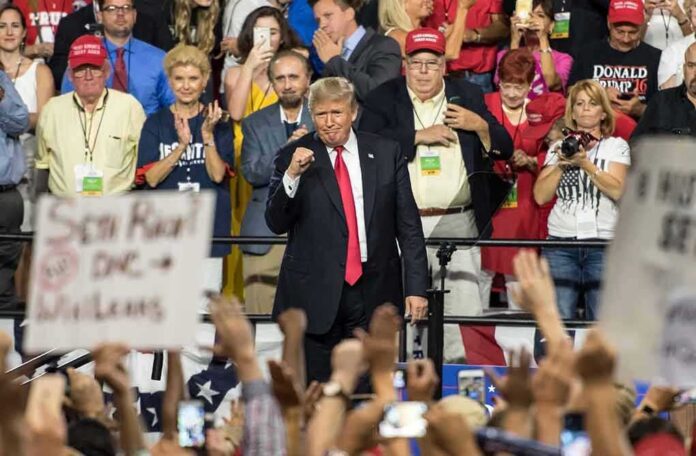
President Trump put Michigan’s auto jobs center stage again, tying trade and manufacturing to working families’ paychecks.
Story Highlights
- Trump used Michigan stops to spotlight manufacturing and auto industry jobs.
- Campaign events were set at factory and airport venues across the state.
- Reporters expected a strong focus on the economy and trade policy.
- Coverage documents the message and venues, not full outcome data.
Trump’s Michigan Focus: Manufacturing And Auto Jobs
Reporters said President Trump’s Michigan speech would zero in on manufacturing and auto jobs. They noted he planned to speak at General Motors’ Milford Proving Ground, a site tied to vehicle testing and industry work. That choice sent a clear signal. He aimed his case at workers who build and design the cars America drives. The setting matched the message. He linked trade policy and investment to steady paychecks and the return of American production strength.
Outlets tracking the trip framed it as an economy-first push. They highlighted manufacturing, auto jobs, and the cost of living. They also tied the visit to the state’s primary calendar, where turnout and momentum matter. Michigan remains a decisive battleground with many households tied to plants, suppliers, and logistics. By going straight to an iconic auto site, Trump kept the conversation on jobs, wages, and how trade rules shape real family budgets in the Midwest.
Where He Went: Venues That Signal Work And Wages
Coverage shows a pattern of Michigan venues that underline industry and mobility. Reports list factory floors, airport hangars, and community sites. They include FALK Production in Walker, a town hall in Warren at Macomb Community College, and an airport site in Oakland County. Each backdrop reinforces a jobs message and easy access for workers and local media. The path suggests a ground game aimed at metro Detroit and West Michigan, where many auto suppliers operate.
Travel notes also point to repeated returns near key votes. Outlets described back-to-back rallies and roundtables across the state in short windows. The goal appears simple: meet people where they work and live, then press the trade-and-jobs case. That approach reflects a belief that policy must be seen, not just heard. When a candidate stands in a plant or on a tarmac by cargo doors, he connects policy talk to paychecks, shifts, and job security in a direct way.
What Is Proven And What Needs Data
The day’s reporting is strong on what Trump planned to say and where he would say it. It confirms a focus on manufacturing and the auto industry, and it shows Michigan events built around that theme. It does not, by itself, prove a full cause-and-effect chain from any single trade deal to today’s job counts or wages. That is normal for live event coverage, which captures the moment but not a full audit of outcomes.
Readers should see this clearly. The venues and the message line up with the goal of boosting American industry. The press notes tell us who, what, where, and when. To test long-run results, we would need state and sector data on jobs, pay, output, and new plant investment. That level of proof sits in labor and industry series, not in rally write-ups. Today’s facts show the stage and the script; the scorecard needs deeper numbers.
Why This Matters To Michigan Families
Michigan families feel trade and energy costs in every bill. Factory shifts depend on fair rules, steady demand, and relief from global games that undercut U.S. shops. Trump’s team leaned into that reality by standing at sites linked to design, testing, and production. The core promise is simple: put American workers first and stop policies that ship jobs away. That stands against years of global deals that helped boardrooms but hurt middle-class paychecks.
Manufacturing cars in America helps create American prosperity.
Since taking office, President Trump has ignited an automotive renaissance, onshoring production, restoring factory jobs, and driving massive investment from automobile companies.
Don't miss his speech at General… pic.twitter.com/okOKbsWy3A
— The White House (@WhiteHouse) July 27, 2026
Conservatives want secure borders, fair trade, and energy that does not drain wallets. They want leaders who defend the Constitution and the right to work, save, and build a family. Michigan’s auto belt is where those fights feel real. Speeches at plants and airports are not just theater. They are a pledge that policy will serve workers, not distant elites. The message was clear in Michigan: build it here, grow pay here, and keep America in the driver’s seat.
Sources:
© whatnewsdaily.com 2026. All rights reserved.