

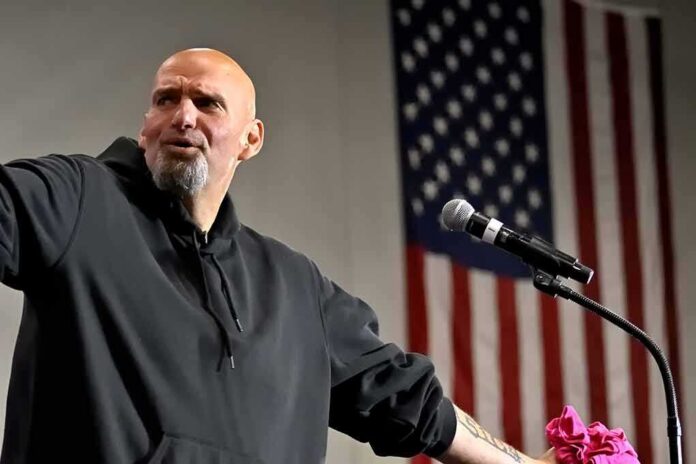
When a sitting U.S. senator greets a reporter by accusing his news outlet of “loving Hamas and Iran,” it shows just how bitter and personal America’s media and foreign policy fights have become.
Story Snapshot
- Senator John Fetterman blasted Drop Site News as “trash” and “pro-Hamas” during a Capitol Hill confrontation.
- The Drop Site reporter said the outlet is funded by tens of thousands of individual donors, but offered no documents on the spot.
- Fetterman’s attack fits his wider pattern of drawing a hard line on support for Israel, even against his own party.
- The clash highlights growing distrust of media funding and motives on both the left and the right.
Fetterman’s Street-Level Clash With Drop Site News
On Capitol Hill, Senator John Fetterman was walking to an elevator when a reporter introduced himself as working for Drop Site News. Once Fetterman heard the name, he lit into the outlet instead of answering the reporter’s questions about Israel and Iran. He called Drop Site a “trash” anti-Israel outlet and said, “I think the question is why does Drop Site love Hamas and Iran and Hezbollah so much.” As the elevator doors closed, he added that he loves seeing Israel kill Hamas leaders.
The reporter tried to ask whether Fetterman was okay with Israeli Prime Minister Benjamin Netanyahu visiting the United States. Fetterman did not engage on that topic and instead kept pressing his charge that Drop Site was sympathetic to terror groups. He also said Drop Site’s founders think it is acceptable to attack and kill Israeli civilians. These are very serious accusations, made in public, without Fetterman presenting any evidence in that moment beyond references to past comments by one co‑founder.
Questions Over Who Funds Which Voices
At one point in the exchange, Fetterman shifted from ideology to money and asked, “Where does your trash outlet come from and who’s funding it?” He pressed the reporter on whether he was “taking your paycheck from these kind of people,” tying funding directly to alleged support for Hamas and Iran. The reporter answered that Drop Site is funded by its readers and claimed it has “46,000 individual donors,” suggesting a broad base of small contributors.
That donor claim, if accurate, would point to a crowd-funded model and not obvious foreign backing. But neither side in the hallway produced tax records, audited statements, or other documents that could support or challenge the numbers or the source of the money. This lack of public detail is common with newer independent outlets. It feeds the wider frustration many Americans feel that powerful voices in politics and media talk a lot about “the truth” but do not open their books in a way regular citizens can easily check.
Fetterman’s Hard Line on Israel and Party Politics
This confrontation did not come out of nowhere. In recent months, Fetterman has made support for Israel his “red line” inside the Democratic Party. He has warned that if Democrats officially adopt an anti-Israel stance, he would leave the party. He has also criticized campus protests, saying some show a “germ of antisemitism” and mocking activists who camp out “for Hamas.” These comments have made him a rare Democrat praised by some conservatives for his foreign policy stance.
"I love killing Hamas leadership"
US Senator John Fetterman repeatedly interrupts Drop Site reporter with anti-Palestine statements.
Follow Press TV on Telegram: https://t.co/AorBZcZGdl pic.twitter.com/3RRBw1Sjj7
— Palestine Highlights (@PalHighlight) July 30, 2026
Drop Site News has sharply criticized Fetterman’s positions on foreign policy and immigration, including his backing of a Republican-led bill linked to deportations. That history of tough coverage helps explain why Fetterman reacted so strongly when he heard the outlet’s name. For many readers, the clash looks less like a calm debate over facts and more like a powerful elected official and a combative media outlet using each other as symbols in the larger fight over Israel, Iran, and who gets to shape the story.
What This Says About Trust, Media, and the “Elites”
This kind of viral hallway showdown taps into frustrations shared by people on both the right and the left. Many conservatives see outlets like Drop Site as part of a globalist, far-left media class that attacks Israel and makes excuses for violent groups. Many liberals, in turn, see politicians like Fetterman as backing endless wars and dismissing real concerns about civilian deaths and growing inequality abroad. Both sides suspect that hidden donors, think tanks, and wealthy insiders are steering these battles from the shadows.
The facts we have here are clear but limited. We know what Fetterman said on camera, and that he questioned Drop Site’s funding and motives. We know the reporter claimed tens of thousands of donors but did not, in that moment, share proof. We do not, in this record, have verified funding documents or a careful study of Drop Site’s coverage that could show whether it is truly “anti-Israel” or simply critical of Israeli government policy. That gap between strong accusations and thin public evidence is exactly what feeds distrust in a system many Americans already see as run by elites, not by them.
Sources:
yahoo.com, foxnews.com, breitbart.com, youtube.com, nbcnews.com, en.wikipedia.org, jns.org, instagram.com
© whatnewsdaily.com 2026. All rights reserved.