
The U.S. Army just multiplied its bet on battlefield artificial intelligence to a potential $700 million—and that tells you where command-and-control is headed next.
Story Highlights
- The Army expanded an enterprise agreement for Striveworks’ Chariot platform to $700 million over five years.
- The move builds on an earlier $70 million firm-fixed-price contract for Chariot licenses.
- Chariot supports the Army’s Next Generation Command and Control program, a core modernization effort.
- The scale reflects a shift to continuously updated, operational software for warfighters.
Army Scales Chariot To Speed Decisions And Targeting
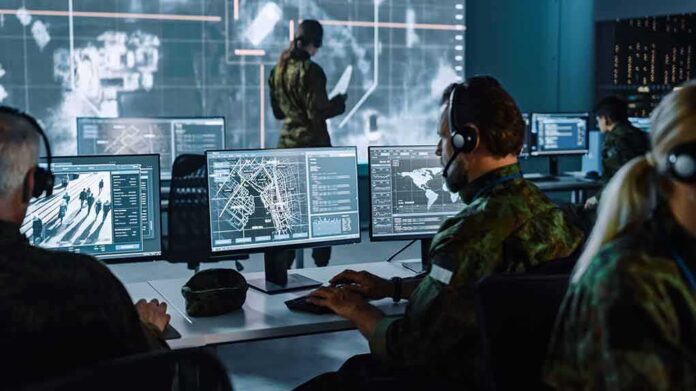
The Army expanded Striveworks’ enterprise agreement from $70 million to a potential $700 million, signaling broader fielding of the company’s Chariot software and artificial intelligence tools across units and missions. The contract jump follows a confirmed $70 million firm-fixed-price award for Chariot platform licenses, recorded in a Department of War contract announcement dated January 15, 2026. Chariot sits inside the Army’s Next Generation Command and Control program, which aims to help commanders digest data fast and act faster than any opponent.
Officials are building a software backbone that can adjust in real time as threats change. Chariot’s role is to connect data, models, and workflows so analysts and operators can move from sensor inputs to target options in minutes, not hours. Reported deployments tie Chariot to Army formations as NGC2 comes online. The $700 million ceiling does not guarantee full spend, but it enables scaling across more brigades, theaters, and mission sets as performance warrants.
What Chariot Brings To The Fight
Chariot integrates data from many sources, helps train and manage artificial intelligence models, and delivers tools that troops can use at the edge. The goal is not fancy lab demos. The goal is speed and clarity for real teams under pressure. Reporting describes Chariot as a core artificial intelligence component inside the NGC2 software stack. That places it near the heart of the Army’s decision loop, where seconds matter and clean data beats noise every time.
Striveworks also won a five-year, $200 million award connected to NGC2 activities, according to press materials, which indicates the Army’s intent to align contractors inside a common application ecosystem for command and control. The expanded agreement gives program leaders room to bring more units onto the same tools and standards without spinning up new, one-off buys for each fielding wave.
Why The Contract Structure Matters Now
The Pentagon is shifting from buying fixed products to buying ongoing software capacity. These vehicles let the Army add features, push updates, and adapt models as new data arrives. Government Accountability Office reporting urges clear rules on data rights, testing, and vendor lock-in for artificial intelligence, because control of training data and model outputs will shape future leverage and costs. A large, flexible agreement can be a strength if leaders enforce those guardrails with discipline.
Command-and-control software also lives or dies on data standards. Project Convergence lessons stressed that poor data schemas and brittle links will break the kill chain, no matter how sharp the algorithm might be. The NGC2 push tries to solve that by creating a common environment where apps interoperate, sensors talk to shooters, and commanders see the same map. Chariot’s value rises when it plugs into that shared picture and cuts the time from detection to decision.
What Success Should Look Like On The Ground
Field users should spend less time wrangling data and more time acting on it. Targeting cycles should shrink. Confidence in sensor fusion should rise. Units should train once and fight on the same interface across exercises and real missions. Those are clear tests that a taxpayer can understand. If the Army meets them, this expansion will read as smart stewardship: spend on software that saves minutes, and you save lives and munitions. That is common sense and a conservative value.
Army Scales Up Enterprise Agreement For Striveworks’ AI Tech To $700 Millionhttps://t.co/4Q8bpV3k8j
— Matt Beinart (@MBeinart22) October 22, 2026
Skeptics often worry that big software buys breed waste. The better frame is accountability. The Army has a ceiling to scale what works and a duty to measure results with hard metrics. The Government Accountability Office guidance offers a blunt checklist: own the data you pay to create, track performance, and avoid single-vendor choke points. Meet that bar, and the $700 million ceiling becomes a tool, not a trap, to keep America’s soldiers faster and safer on any battlefield.
Sources:
defensedaily.com, finance.yahoo.com, insidedefense.com, morningstar.com, gao.gov
© whatnewsdaily.com 2026. All rights reserved.