

President Trump seized on a gray area in Abdul El-Sayed’s medical credentials that blends title, training, and legal authority — and voters are being asked to sort it out.
Story Snapshot
- Trump amplified claims that El-Sayed is “not really a doctor,” pushing a licensing dispute into national politics.
- Reports say El-Sayed earned an MD from Columbia but never held a medical license or completed residency.
- Michigan law and fact-checks distinguish having an MD from being licensed to treat patients.
- Hundreds of physicians defended describing El-Sayed as “doctor,” citing his training and public-health work.
What Sparked The Fight Over “Doctor” And “Physician”
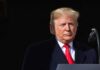
Michigan’s Senate race turned a technical credential issue into a prime-time clash. During a debate, a Republican rival said Abdul El-Sayed was “not really a doctor” and claimed he could not legally treat patients. National attention followed when President Trump echoed the challenge at a rally, framing it as a matter of honesty and safety. The charge hinges on a legal line: what it means to hold a medical degree versus being licensed to practice medicine.
Independent reporting says El-Sayed earned a medical degree at Columbia University. The same reports say he did not complete a residency and has not held a medical license. Without a license, he cannot legally diagnose, treat, or prescribe for patients. Fact-checkers say the degree itself makes him a doctor in the educational sense, while the lack of licensure means he is not a practicing physician. That is a key difference often lost in campaign heat.
What The Records And Laws Actually Say
Bridge Michigan reviewed state definitions and found that Michigan ties the title “physician” and the practice of medicine to licensure. That means a person can have an MD and still be barred from caring for patients unless the state licenses them. El-Sayed has said he does not practice medicine, which fits those rules. This helps explain why critics focus on licensing, while supporters stress academic credentials and public-health leadership.
The broader system backs up this split. Across the United States, medical school grants the MD degree, while states grant licenses after extra steps. Those include postgraduate training, often residency, and passing national exams. The process exists to protect patients and keep standards clear. When politicians blur these lines, they can stoke fear or resentment. Voters deserve precise terms so they can judge fitness for office without mixed labels getting in the way.
How Supporters And Critics Frame The Same Facts
Supporters point to letters from hundreds of Michigan physicians who call El-Sayed a colleague and defend using “doctor.” They argue population-level work, like running a health department or shaping policy, uses medical judgment at scale. Critics argue that titles should match current legal authority. They say calling someone a physician without a license confuses the public and cheapens the hard path of residency and board exams that practicing doctors complete.
President Trump targets Democrat Abdul El-Sayed over questions surrounding his medical credentials before heading to a rally in Port Huron, Michigan. pic.twitter.com/MRdsSbikta
— Dr. Charlie Quantum (@Drcharliewad) October 25, 2026
El-Sayed’s own words try to bridge the divide. He has said, “I’m a physician. I trained to take care of people,” while also stating, “I don’t practice medicine.” That message says his education is real, but he chose public health over clinical work. For many voters, the question is not only accuracy, but honesty and clarity. People across the spectrum are tired of leaders who shade terms to win points rather than explain straight.
Why This Matters Beyond One Candidate
This fight taps a deeper worry: powerful people play by different rules. When campaigns weaponize technical language, regular citizens feel talked down to and misled. Clear standards protect patients and respect professionals. Clear language also respects voters. Precision is not trivia. It is fairness. The system should make it easy to confirm who is licensed, who is trained, and what each title allows. That clarity would cool the outrage industry and honor both expertise and the public.
Sources:
x.com, vagelos.columbia.edu, fordschool.umich.edu, aamc.org
© whatnewsdaily.com 2026. All rights reserved.