
When military justice intersects with cross-border digital evidence, procedure becomes the story: preferred charges trigger a formal legal track, while the hard work ahead is attribution, admissibility, and jurisdiction—not headlines.
The Short Version
- The Air Force has preferred charges against Lt. Col. Michael Morris for alleged possession and distribution of child sexual abuse material, obstruction of justice, and conduct unbecoming an officer.
- An Article 32-style review determines whether the evidence supports referral to court-martial; Morris remains presumed innocent unless and until proven guilty.
- Investigators allegedly examined potential exchanges linked to Morris’s brother, who faced separate Illinois charges, raising digital-attribution and evidentiary-chain questions across jurisdictions.
- U.K. authorities have liaised with U.S. counterparts since being notified of suspected indecent-image offenses; proceedings unfolded stateside, complicating public expectations about U.K. process.
What has formally happened, and what that means under the UCMJ
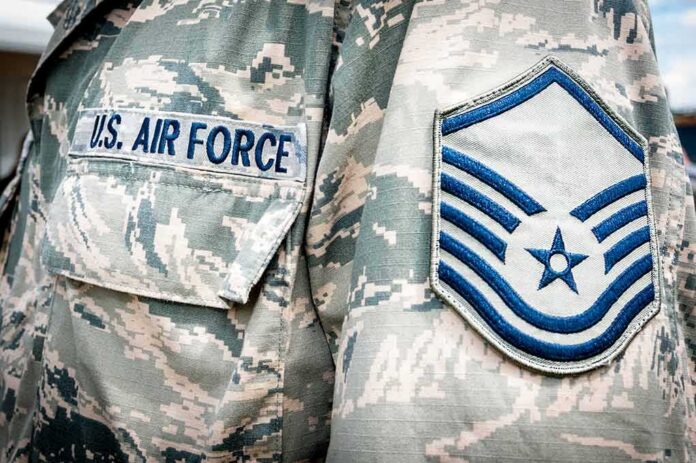
According to on-record statements cited by multiple outlets, the Department of the Air Force has preferred charges against Lt. Col. Michael Morris, a senior officer then assigned to the Air Force District of Washington. Reported specifications include possession and distribution of child sexual abuse material, obstruction of justice, and conduct unbecoming an officer and a gentleman—offenses chargeable under the Uniform Code of Military Justice (UCMJ) and, where applicable, assimilated federal statutes. Preference of charges is not a conviction; it is the military-justice mechanism that starts the adjudicative process. The Air Force indicated that both charges and evidence will be evaluated to determine whether the case proceeds to court-martial, the forum for a full merits trial with counsel, witnesses, and rules of evidence.
The reported next step was a preliminary hearing—often referred to colloquially as the Article 32 hearing—at Joint Base Andrews. At this stage, a preliminary hearing officer assesses probable cause, the form of charges, and the forum recommended for trial. The outcome can range from referral to court-martial, to disposition at a lower forum or by administrative means, to dismissal. The accused does not enter a plea unless and until a convening authority refers the case to a court-martial.
The investigative thread: digital exchanges, a stateside case, and cross-border facts
Reporting attributes a key investigative lead to alleged exchanges between Morris and his brother, Benjamin Morris, who faced separate state charges in Illinois concerning child sexual abuse material with alleged conduct windows in March and April 2026. In digital-contraband prosecutions, the fulcrum is rarely the mere existence of illicit files somewhere in a networked ecosystem; rather, it is attribution—linking knowing possession, access, control, and distribution to a specific user through device forensics, account records, and metadata. That is why investigators pursue extraction reports, file hashes, subscriber and IP logs, and chain-of-custody documentation; these are the building blocks that sustain charges through a preliminary hearing and, if referred, at trial before members or a military judge.
Contemporaneous accounts also reference alleged materials linked to Morris’s London residence during his U.K. posting, with the Metropolitan Police confirming they were notified on August 25 of a U.S. investigation into suspected indecent-image offenses and have been liaising with U.S. authorities since then. These coordination facts matter. Even when suspected conduct touches a host nation, a U.S. service member may be subject to primary U.S. military jurisdiction depending on status-of-forces agreements, where evidence is located, and whether host-nation authorities pursue charges of their own. Here, public statements by the Met Police emphasize communication and liaison rather than a parallel U.K. prosecution track, aligning with the U.S. military’s initiation of a formal justice process.
How military law handles digital-contraband allegations
Three questions dominate a digital child-sexual-abuse-material case in the military context. First, did the government lawfully obtain and preserve the data—devices, cloud accounts, or communications—and can it prove an unbroken chain of custody? Second, can experts tie specific files and transmission events to the accused’s knowing conduct, rather than to automated syncing, third-party access, or ambiguous device sharing? Third, do the images or videos meet statutory definitions, which have evolved alongside case law and, more recently, questions about synthetic imagery and authenticity that prosecutors and defense counsel now regularly litigate. The UCMJ overlays these elements with unique offenses—such as conduct unbecoming—that capture service-discrediting behavior even when it overlaps with civilian criminal codes.
The preliminary hearing is where much of this scaffolding is stress-tested in outline. The standard is probable cause, not proof beyond a reasonable doubt; however, the government typically previews its attribution theory, forensic methodology, and witness lineup, and the defense probes alternative inferences, contamination risks, and discovery gaps. If referred, the court-martial demands a higher evidentiary showing with expert testimony, demonstratives, and cross-examination configured to the Rules for Courts-Martial and Military Rules of Evidence—close cousins to the Federal Rules of Evidence but not identical. Appellate opinions in the military justice system, including Air Force Court of Criminal Appeals decisions, reflect the judiciary’s scrutiny of statutory elements, plea validity, and evidentiary sufficiency in this domain.
Jurisdiction, sovereignty, and perception
Allegations touching both U.K. and U.S. soil introduce familiar jurisdictional complexities. Status-of-forces arrangements generally reserve primary jurisdiction to the United States for offenses arising from official duty or committed by U.S. personnel, but host-nation law may also apply depending on the conduct. Public-facing cooperation—like the Met Police statement acknowledging ongoing liaison with U.S. authorities—signals that evidence sharing and deconfliction channels are active even if the prosecution forum is American. The optics can be thorny when a service member departs a host country mid-investigation; nevertheless, what governs outcomes is less optics than law: which sovereign asserts jurisdiction, what evidence each side holds, and whether mutual legal assistance and liaison produce admissible proofs in the chosen forum.
The media environment around offenses involving children is rightly unforgiving of euphemism, yet military justice still rests on a constitutional spine. Charges are allegations, not adjudicated facts; the presumption of innocence operates by design until a conviction is lawfully entered. That principle coexists with the Air Force’s duty to act decisively when it believes criminal conduct may have occurred—by preferring charges, securing evidence, and moving the case into an Article 32 review and, if warranted, a court-martial where the facts are tested adversarially.
What to watch as the case advances
Several developments will indicate the case’s trajectory. First, the convening authority’s decision on referral—if the hearing officer recommends trial—will show whether the government’s theory clears the probable-cause bar. Second, any released charging document details and, later, motions practice will reveal the government’s attribution architecture: device ownership, account control, hash-value matches, and timelines of alleged transmissions. Third, coordination with U.K. authorities may surface in evidentiary stipulations or witness availability; cross-border proofs must be authenticated to military-evidence standards. Finally, should a court-martial occur, the trial record—and, if necessary, appellate review—will supply the definitive account of what the government proved and how the defense answered it.
Sources:
military.com, independent.co.uk, uk.news.yahoo.com, afcca.law.af.mil, jagcnet.army.mil, courtlistener.com
© whatnewsdaily.com 2026. All rights reserved.