
Autonomous mine-laying is crossing from concept into capability: the U.S. Army’s Volcano program just proved an unmanned truck can plan, drive, and emplace entire minefields while precisely logging their locations—an efficiency and force-protection leap with real operational value, even as safety, cybersecurity, and legal scrutiny lag the engineering.
At a Glance
- The Army demonstrated an autonomous variant of the M139 Volcano that emplaced two minefields without human assistance.
- A driverless Palletized Load System (PLS) truck integrates the legacy dispenser to keep engineers out of direct risk.
- Emplacement locations are auto-logged to the Army’s common operating picture for accountability and maneuver planning.
- Evidence is promising but early: testing used inert canisters; no public third-party safety or cybersecurity audit exists.
What the Army Actually Achieved—and Why It Matters
The core accomplishment is straightforward and operationally meaningful: during a multi-day event at Camp Grayling, the Autonomous Volcano variant conducted its first remote live-fire operation and later laid two separate minefields without human intervention in the vehicle loop, according to the Army’s program office and on-site reporting. The demonstration fused a decades-old dispenser—the M139 Volcano—with a driverless PLS A1 truck, aiming to shift combat engineers out of the most exposed part of obstacle emplacement. In an era when tempo and survivability hinge on shrinking the time troops spend in predictable, high-threat patterns, offloading a hazardous, time-sensitive task to autonomy is not a parlor trick; it is a doctrinally relevant change to how obstacles are generated, recorded, and exploited on a dynamic battlefield.
The second meaningful advance is data discipline. The system automatically logs where each mine canister is released and uploads those coordinates to the Army’s common operating picture—a shared battlefield map used for command and control—so commanders can plan friendly maneuver around live obstacles, interlock fires, and schedule clearance or self-neutralization timelines. Minefields have always been as much a coordination challenge as a mechanical one; reliable, machine-captured emplacement records reduce human error and improve accountability across echelons.
Mechanics: From Legacy Dispenser to Autonomous Obstacle Asset
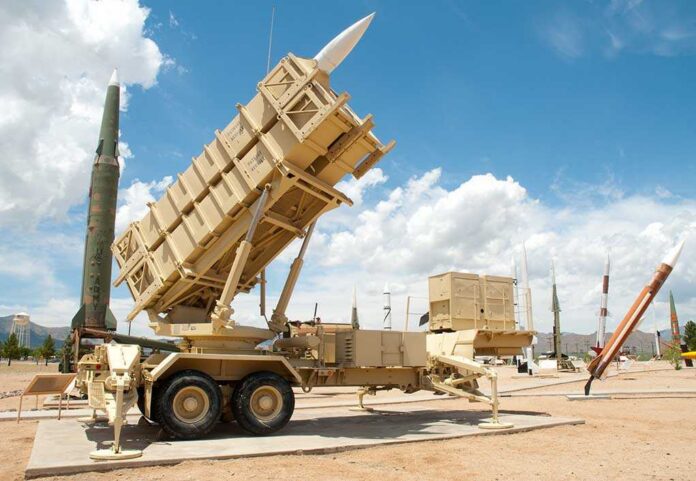
Volcano’s engineering premise is modularity. The M139 is a scatterable mine dispenser that, when mounted to a vehicle, can blanket roughly 32 acres with up to 960 mines, depending on loadout and pattern—an area-denial effect normally achieved by trained engineer teams working under fire or time pressure. The autonomous variant mounts the dispenser on a PLS A1 truck equipped with a By-Wire/Active Safety Kit, which enables drive-by-wire control and autonomy functions such as route following and obstacle detection. In practice, an operator can remotely initiate firing, while the autonomy stack handles the driving and dispensing sequence according to a preplanned pattern and safety parameters. The value proposition is twofold: compress the total time on station and keep humans away from predictable lanes that draw artillery or loitering munitions.
The demonstration mixed modes. Soldiers remotely fired inert mine canisters in the first live-fire scenario—critical for validating command links and sequencing without the risks of armed mines—then proceeded to fully autonomous minefield emplacement runs. Because the system captures exact dispense points and pushes them to the operations picture, it also creates an auditable trail that later supports clearance, marking, and after-action analysis. That digital paper trail is not a minor feature; it is central to reconciling modern fires and maneuver with the compliance and humanitarian obligations that govern landmine use.
Where the Evidence Is Strong—and Where It Is Thin
On the merits, the test hit concrete milestones that are hard to dismiss: a successful remote live-fire of the integrated system, and two minefields laid autonomously, with emplacement logged to the shared map. These specifics are consistent across the Army’s program communications and independent defense trade reporting, and they align with the technical logic of coupling a known dispenser to a proven heavy logistics chassis via a drive-by-wire kit. In short, the claim that the system functionally works in demonstration conditions is well supported.
By contrast, safety and reliability remain assertions rather than audited facts in the public domain. The record shows no independent failure-rate data, no third-party safety certification, and no disclosed cybersecurity or anti-spoofing validation for the autonomy stack. The test window was short, the initial live-fire used inert canisters, and no adverse-weather or electronic-warfare stress testing has been published. These are normal gaps at this phase of development; they do not negate the achievement, but they do constrain any confident claims about robustness at scale or against a capable enemy.
Operational Payoff: Speed, Protection, and Accountability
Mine warfare is an economy-of-force multiplier. A unit that can rapidly throw down a precise, recorded obstacle gains options: canalize an enemy into pre-sighted kill zones; buy time for a reposition; harden a flank before a counterattack; or simply deny a key approach for hours. Doing so without exposing an engineer squad to the classic slow, linear emplacement drill changes risk calculus—particularly against surveillance-heavy adversaries for whom predictable patterns are invitations to strike. The Autonomous Volcano’s ability to generate a mapped minefield quickly, then vacate, compresses the enemy’s window to detect and disrupt the obstacle mission.
Just as important is the record it keeps. Scatterable systems must be managed with rigor—activation times, self-destruct/self-neutralization behaviors where applicable, and marked hazard zones—both to prevent fratricide and to meet legal and policy requirements. Automatic coordinate capture and upload reduce the oldest failure mode in mine warfare: incomplete or inaccurate records scribbled under stress. As autonomy expands into other engineer tasks—bridging, breaching, route clearance—the discipline of machine-logged actions will become central to integrating obstacles with fires and information operations.
Comparative Lens: A Broader Shift Toward Unmanned Mine Warfare
The Army’s move sits within a wider, well-documented trend: armed forces are pushing autonomy into both mine-laying and mine-countermeasure roles. Maritime forces field autonomous minehunters to keep crews away from influence-triggered hazards, while land forces experiment with unmanned minelayers to scale obstacle density without proportionally scaling risk. That context matters. It explains the incentives—reduce exposure, increase pace—and why early announcements so often spark the same cycle of enthusiasm and unanswered questions when third-party audits lag behind engineering milestones.
Against that backdrop, pairing a legacy dispenser with an unmanned heavy truck is a pragmatic step rather than a leap into the unknown. It leverages known munitions behavior while transferring the dangerous driving and dispensing task to autonomy. The practical competition is not with blue-sky robotics, but with human crews doing the same work in the open. That is a low bar to clear on force protection; the harder bar is proving reliability under electronic attack, GPS degradation, and weather—areas where published evidence remains pending.
The Hard Questions Still Unanswered
Three gaps deserve sober attention before anyone declares the capability “ready for prime time.” First, lethality validation: inert-canister firing proves sequence and control, not the dispersal fidelity, arming behavior, or pattern density of live mines. The Army should release data from live-mine trials—dispersal variance, dud rates, and pattern conformance—so commanders can plan around real effect bands rather than nominal specifications.
Second, autonomy assurance: a credible, red-teamed cybersecurity and spoofing-resistance assessment is table stakes for any unmanned platform expected to operate in the reach of enemy electronic warfare. Without a published validation—sensor spoofing, GPS jamming fallback behaviors, comms loss handling—the community is guessing at resilience. Third, reliability under persistence: a three-day event cannot substitute for extended operations across temperature, precipitation, dust, and terrain extremes. A reliability growth program with disclosed metrics would separate engineering promise from field-ready performance.
Ethics, Law, and Command Responsibility
Autonomy does not absolve accountability; it intensifies it. International humanitarian law regulates landmine use through requirements on recording, marking, and clearance responsibilities; the policy environment—particularly regarding persistent versus self-neutralizing effects—demands exacting control. The Autonomous Volcano’s automated logging feature points in the right direction, but full compliance depends on more than coordinates: commanders must integrate timelines for deactivation or clearance, ensure deconfliction with civilian movement corridors, and preserve records for post-conflict remediation. As the capability matures, transparency around control measures and post-emplacement obligations will matter as much to legitimacy as the technical success of the dispenser run.
Ethical risk concentrates where automation tempts scale. A system that can lay an accurate minefield quickly can also enable overuse unless doctrine, rules of engagement, and review processes stay ahead of the convenience. Here, the combination of rigorous emplacement records, commander-in-the-loop authorization for firing, and auditable logs is not bureaucratic overhead; it is the mechanism by which militaries align a new efficiency with enduring legal and moral constraints.
Judgment: A Real Capability in Hand, With Proof Yet to Deliver
The evidence supports a clear bottom line. The Army has turned a legacy dispenser into a credible autonomous obstacle asset, demonstrated remote live-fire control, and executed fully autonomous emplacement runs with automated mapping—tangible steps that improve force protection and obstacle agility. Those achievements earn attention because they solve perennial combat-engineer problems with relatively low-cost modernization.
But the case is not closed. Absent independent safety data, live-mine performance metrics, and red-teamed cybersecurity validation, confidence must be calibrated. The smart posture is neither hype nor dismissal: field it in controlled increments, publish the hard numbers, and let the data drive doctrine. If subsequent trials show reliable performance under jamming, weather, and sustained operations—and if commanders pair the tool with disciplined control measures—the Autonomous Volcano will mark a consequential shift in how armies create and manage the battlespace.
Sources:
realcleardefense.com, defensenews.com, dvidshub.net, en.wikipedia.org
© whatnewsdaily.com 2026. All rights reserved.