
A Chinese coast guard ship blasted a Philippine government vessel with a powerful water cannon near a disputed reef, in yet another aggressive move that should alarm every American who cares about peace, sovereignty, and the rule of law.
Story Snapshot
- Chinese coast guard fired a water cannon at a Philippine government vessel near Scarborough Shoal, causing damage and a near collision.
- Philippine officials say their ships were on a lawful patrol and aid mission inside their exclusive economic zone, helping local fishermen.
- China claims the Philippines “intruded” into its waters and insists its actions were “in accordance with the law,” despite video showing the blast at close range.
- Repeated water‑cannon attacks highlight a dangerous pattern of Chinese maritime coercion that threatens regional allies and tests U.S. resolve.
Chinese Water Cannon Strikes Philippine Government Ship
Philippine authorities say a Chinese coast guard vessel came within about seven meters of the BRP Datu Paduhinog, a Philippine government fisheries ship, before hitting it with a powerful water cannon blast near Scarborough Shoal. Officials report the spray struck at such close range that it created a serious risk of collision and damaged the Philippine vessel’s equipment. Video released by the Philippine Coast Guard and carried by international media shows a large Chinese ship firing its cannon directly across the bow of the smaller Philippine vessel.
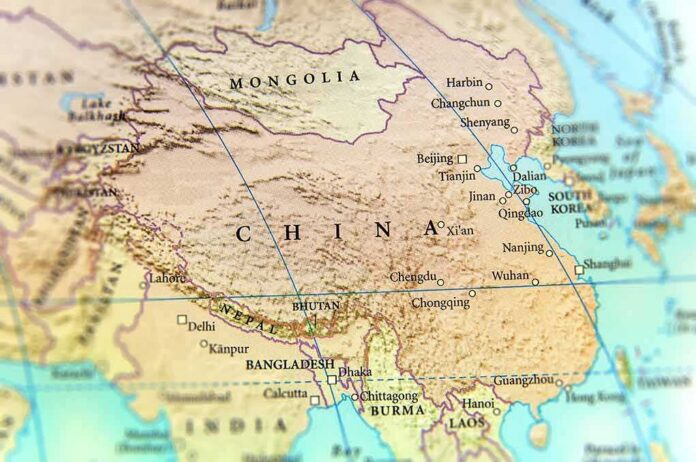
Philippine officials say the targeted ship was delivering fuel subsidies to local fishermen and conducting routine patrols in waters Manila firmly considers part of its exclusive economic zone. The reef, known locally as Bajo de Masinloc, sits roughly 200 kilometers off Luzon, well within the Philippines’ internationally recognized economic zone. Despite this, China has controlled access to the shoal for years and now uses coast guard and other state vessels to block, blast, and drive away Philippine boats that try to reach their own fishermen.
Beijing Defends Its Actions, Blames the Philippines
China’s coast guard and state media claim that Philippine vessels “intruded” into Chinese waters near Scarborough Shoal and that Chinese crews took “professional” and “in accordance with the law” measures to drive them away. Chinese statements accuse the Philippines of engaging in “illegal activities” and say Beijing had repeatedly warned the ships to leave before using water cannons and blocking moves. After Manila released video of the encounter, Chinese officials pushed back, accusing the Philippines of making “false allegations” and even suggesting the Philippine ship deliberately collided with the Chinese vessel.
Philippine agencies flatly reject these claims and describe the Chinese behavior as reckless, aggressive, and unlawful under international rules at sea. The Philippines notes that the 2016 Hague arbitral ruling under the United Nations Convention on the Law of the Sea found no legal basis for China’s sweeping “nine‑dash line” claims and affirmed that features like Scarborough Shoal cannot generate vast Chinese‑controlled waters in the way Beijing asserts. In public statements, Philippine officials say Chinese water‑cannon attacks violate basic safety standards and humanitarian norms by endangering civilians and blocking legitimate aid and resupply missions.
Pattern of Repeated Water‑Cannon Confrontations
This latest clash fits a clear pattern: Chinese ships have used water cannons against Philippine vessels near Scarborough Shoal, Second Thomas Shoal, Sabina Shoal, and other contested areas multiple times in recent years. Philippine reports describe damage to hulls, shattered bridge windows, injured crew members, and missions cut short across several incidents. International outlets have aired footage showing Chinese coast guard cutters spraying powerful jets of water at close range, sometimes while ramming or “sideswiping” much smaller Philippine boats.
In earlier episodes, Philippine supply and fisheries vessels heading to help marines on the grounded BRP Sierra Madre at Second Thomas Shoal were blasted and blocked, forcing at least one boat to turn back before unloading. At Sandy Cay, near the Philippine‑held Thitu Island, a Chinese ship reportedly used a water cannon and struck a Philippine research vessel twice, damaging its bow and smokestack. Philippine officials argue these actions are not isolated but form a steady campaign of maritime pressure meant to scare off fishermen, restrict access, and chip away at practical control over their own waters.
Why This Matters for U.S. Conservatives and American Power
These clashes put front‑line stress on a key U.S. treaty ally at a time when China is testing how far it can push without triggering a stronger response. Philippine fishermen and small crews are facing large, state‑backed ships that use forceful tools like high‑pressure water cannons and hazardous blocking maneuvers to control contested seas. Each incident raises the risk of serious injury or loss of life and increases the chance of a wider crisis if a ship sinks or a crew is badly hurt.
A China Coast Guard (CCG) vessel fired a water cannon at a Philippine #fisheries vessel delivering fuel subsidies to Filipino fishermen at Panatag (Scarborough) Shoal on Thursday, the Philippine Coast Guard (PCG) said. https://t.co/lUgzrX3le3
— UBC Oceans (also found at ubcoceans.bsky.social) (@UBCoceans) July 24, 2026
For American conservatives who care about national strength, secure borders, and fair trade, China’s behavior at Scarborough Shoal is another reminder of what unchecked regimes do when they think no one will stop them. A government that bullies small fishing boats in disputed waters can also bully on economics, technology, and security. Supporting allies like the Philippines, demanding respect for clear international rulings, and keeping U.S. sea power strong are not “globalist games” — they are basic steps to protect American interests and prevent hostile powers from rewriting the rules to our disadvantage.
Sources:
insiderpaper.com, straitstimes.com, apnews.com, amp.scmp.com, aljazeera.com, reuters.com, bbc.com, en.wikipedia.org, cnn.com, youtube.com, france24.com, cbsnews.com, srnnews.com
© whatnewsdaily.com 2026. All rights reserved.