

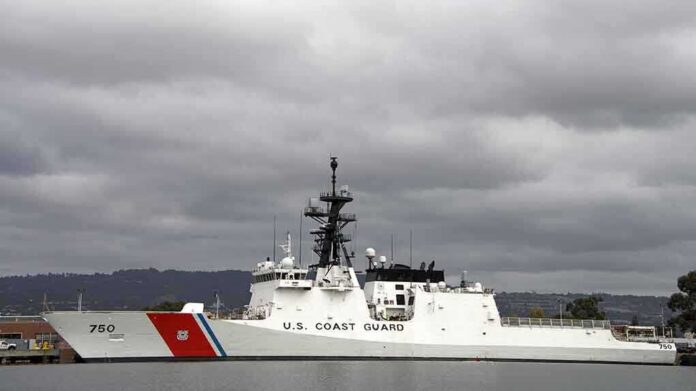
Thousands of gallons of Navy diesel spilling into Seattle’s harbor inside a “safe” zone is a sharp reminder of how complex systems can fail even when the rules are followed.
Story Snapshot
- A broken fuel hose on the USS Sampson spilled an estimated 2,500–5,000 gallons of diesel into Elliott Bay.
- The spill happened inside a pre-boomed containment area at Vigor Shipyards on Harbor Island.
- Washington’s Department of Ecology, the U.S. Navy, and the U.S. Coast Guard launched a joint cleanup right away.
- The accident highlights wider worries about military fuel spills and government oversight of basic safety.
How the USS Sampson Spill Happened in Elliott Bay
On a Monday afternoon at Vigor Shipyards on Harbor Island, workers were removing fuel from the Navy destroyer USS Sampson when a critical hose failed. That single equipment failure sent an estimated 2,500 to 5,000 gallons of diesel into Elliott Bay, according to the Washington Department of Ecology. The ship sat inside a “pre-boomed” area, meaning hard barriers were already in the water around the vessel to trap any spill. Recovery operations began soon after the leak was discovered, with crews moving fast to corral the fuel.
State officials say the diesel stayed inside the containment zone and did not spread freely across the bay. Response teams used mechanical skimmers and absorbent materials to collect the trapped fuel on the surface. The Department of Ecology coordinated the cleanup with the U.S. Navy, U.S. Coast Guard Northwest, and private response contractors, forming a unified command. Extra absorbent boom was added inside the barrier, and the Navy plans to keep containment in place until the ship moves into dry dock for long-planned repairs and upgrades.
Why This Spill Fits a Larger Pattern of Military Fuel Accidents
This spill is not a freak event; it fits a clear pattern of fuel accidents during military transfer and removal work. A safety review of fuel spills at naval sites shows that hose failures, valve mistakes, and other basic equipment problems often cause releases of hundreds or thousands of gallons. In 2024, almost 7,800 gallons of jet fuel spilled into Virginia’s James River during a transfer from a Navy barge to a new aircraft carrier, again during routine fueling. An older survey found the U.S. Navy spilled fuel into the ocean about every two days on average in the late 1990s.
That history means people across the political spectrum have reason to worry about oversight and training. Conservatives who distrust big government see repeated fuel spills as more proof that federal agencies and the military struggle with basic competence, even while spending huge sums of taxpayer money. Liberals frustrated with environmental harm see another example of powerful institutions polluting shared resources and relying on cleanup later. Both sides can look at Elliott Bay and ask why, in 2026, simple hoses and valves still fail in ways that threaten local waters.
Environmental Stakes and Accountability in Elliott Bay
Diesel does not cling to shorelines like thick crude oil, but it can still harm fish, birds, and marine life when large amounts hit the water. The Department of Ecology’s report on a much smaller 70-gallon diesel spill in Elliott Bay in 2020 found that even limited fuel can create a surface “sheen” that must be reported and cleaned by law. Here, the estimated volume from the USS Sampson is more than thirty times larger, even if contained. That scale raises questions about long-term effects and how fully the fuel can be removed from the bay’s busy harbor.
🔴 USS Sampson spills 2,000 gallons of diesel fuel into Seattle harbor during defueling
The Arleigh Burke-class guided-missile destroyer USS Sampson discharged an estimated 2,000 gallons of diesel fuel into waters at Vigor Shipyard on Harbor Island, Seattle, Washington on Monday… pic.twitter.com/etgkS4mLir
— NewsTongue (@NewsTongueX) July 15, 2026
Washington regulators and the Navy will likely review what exactly caused the hose to fail and whether better inspections, training, or equipment could have prevented the accident. Past investigations of fuel spills have often found simple human errors, like valves left open, or aging equipment pushed past safe limits. Many Americans, both right and left, already feel that federal leaders answer more to contractors and career insiders than to local communities. When a destroyer spills thousands of gallons of fuel in a major city’s harbor, and the official message is “we contained it,” those deeper fears about the system and the so-called “deep state” only grow stronger.
Sources:
realcleardefense.com, military.com, westseattleblog.com, response.restoration.noaa.gov, nationalacademies.org, latimes.com, navalsafetycommand.navy.mil
© whatnewsdaily.com 2026. All rights reserved.