
Iran’s supreme leader warned of retaliation “without geographic limits,” as reports say U.S. strikes could start right after the midterms.
Story Snapshot
- Iran’s leader ordered immediate responses to any enemy threat, without geographic limits.
- Reports say the United States warned allies to brace for possible post-midterm strikes on Iran.
- President Trump said he is weighing a deal with Tehran against renewed military action.
- Coverage cites deterrence signals, but confirms no final U.S. strike order yet.
Public Order From Tehran Signals Wider Target Set
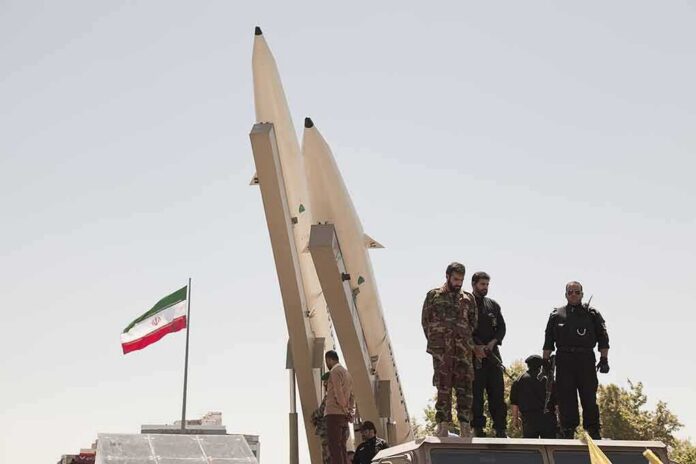
Iran’s supreme leader issued a public directive telling the armed forces to respond at once to “any kind and level of threat,” without geographic limits. Reports said the order called for updating target lists to reach United States and Israeli assets, including physical and non-physical targets. Other outlets echoed the “no geographic limits” phrasing, underscoring a warning meant to deter attacks and to widen perceived risks for any adversary that strikes Iranian interests.
Iranian media and regional coverage framed the message as a broader threat environment, not a precise battle plan. The wording did not name exact targets, timelines, or command rules. That gap keeps options open for cyber moves, proxy actions, or missile and drone strikes. It also fits a pattern in which Iran pairs strong words with selective, calibrated steps that raise costs while trying to avoid a large, direct war it might not win outright.
U.S. Post-Midterm Contingencies And Official Signals
Reports said U.S. officials told Middle East allies to prepare for possible renewed strikes on Iran after the November 3 midterm elections, and to expect potential Iranian retaliation against energy and other critical sites. President Trump said he is weighing a deal with Tehran against action to “finish them off,” while saying any strikes would come after the elections. A separate report described possible several days of strikes after the vote, though officials stressed no final decision had been made.
White House statements avoided confirming plans, citing the need to protect sensitive military information. Officials repeated that all options remain on the table to stop Iran from getting a nuclear weapon. That stance is routine in high-stakes crises. It also shows how leaders use public messages to manage risk, signal resolve, and shape global markets. The uncertainty can unsettle Americans who already face high costs and feel elite decisions come without clear accountability.
What “Without Geographic Limits” Could Mean In Practice
The phrase suggests a wider map of potential targets. That could include U.S. or Israeli personnel and facilities in the region, sea lanes, energy systems, or cyber networks. It could also point to actions by partner groups outside Iran. However, the public statement did not list locations or reveal mobilization orders. Without verified force movements or unit tasking, the warning reads as broad deterrence aimed at buying time and caution from adversaries, rather than a dated strike plan.
🚨 TEHRAN UNLEASHED: SUPREME LEADER DIRECTS UNCONSTRAINED STRIKES 🚀
The ISLAMIC REPUBLIC has ordered ARMED FORCES to execute immediate retaliation, escalating regional threats across the MIDDLE EAST via IRANIAN proxies.#Iran #OSINT
— OSN – Observer Security Network (@OSN_Reports) October 31, 2026
Analysts often see this language as deterrence by punishment. The goal is to scare off attacks by raising likely costs. In the past, Iran has mixed drones, missiles, cyber activity, and proxy groups to send messages while limiting escalation. That record suggests a gap between Iran’s sweeping words and narrower actions that follow. Still, even limited action can hit energy prices, trade routes, and regional security, which affects families far from the front lines.
Why This Matters For Americans Across The Spectrum
War talk can spike oil and gas prices, stress supply chains, and send markets into a tailspin. Working families already strained by inflation feel those shocks first. Veterans and military families worry about deployments and risks. Both conservatives and liberals see a familiar pattern: leaders trade threats while the public pays the bill. Many fear that Washington and Tehran use crisis messaging to serve political goals, while the real costs land on ordinary people who have little say in the choices.
How To Read The Next 72 Hours
Watch for concrete indicators rather than louder rhetoric. Clear signs would include travel warnings, maritime and aviation notices, visible force movements, cyber alerts to key sectors, and named strike authorizations. If none appear, deterrence may be working, or both sides may still be gaming options. For now, the recorded facts are a public Iranian threat with sweeping language, U.S. ally briefings about post-midterm contingencies, and a President who says a decision is still open.
Sources:
en.ilsole24ore.com, haaretz.com, ntn24.com, noticiassin.com, independent.co.uk, cfr.org, newsnationnow.com
© whatnewsdaily.com 2026. All rights reserved.