

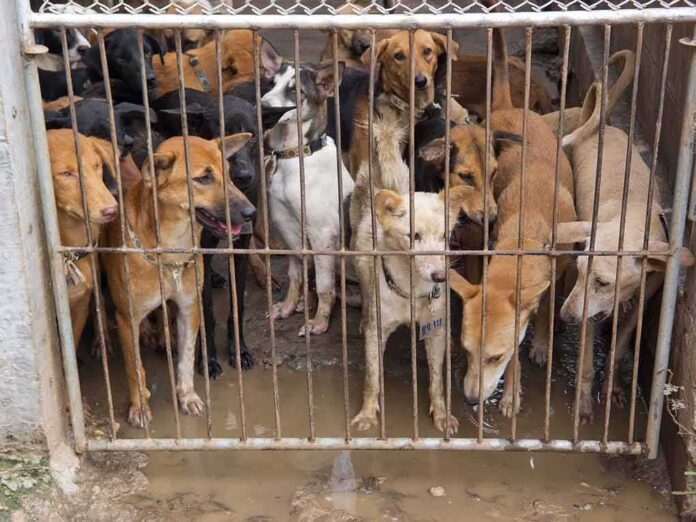
Congress just drew a hard line on “puppy pipeline” breeding, and the fight now moves to your wallet.
Story Snapshot
- Rep. Nancy Mace introduced a bill to ban breeding and selling dogs for research.
- The bill was filed and sent to the House Agriculture Committee in late September 2026.
- Advocates say federal grants since 2025 funded dog and cat experiments topping $225 million.
- Freedom of Information Act findings describe 1,500-plus hounds shipped to labs in 18 months.
Mace puts a stop sign on the dog-to-lab supply chain
Representative Nancy Mace says her bill would shut down “America’s puppy pipeline to research labs” and protect dogs already trapped in the system. Her office framed the practice as an ongoing trade, not scattered cases, and tied it to taxpayer dollars. This framing matters because Congress controls the purse. If lawmakers see a commerce pipeline that exists because of federal money, they can vote to choke it off fast.
Congress.gov shows the bill was introduced on September 21, 2026, and referred to the House Agriculture Committee. That formal step puts it in the queue for hearings, markups, and a floor vote if leadership advances it. Committee jurisdiction signals where the first real clash will occur: definitions, exemptions, and enforcement. Without published bill text in this record, the fine print remains unknown, but the direction is clear—halt breeding and sales aimed at labs.
What the FOIA trail claims about dogs, dollars, and destinations
White Coat Waste says Freedom of Information Act records show more than $225 million in new National Institutes of Health awards for dog and cat experiments since February 2025. The group highlights grants involving breeding puppies to become blind and other harms that the public would likely reject if asked to pay for it. The same group ties the nation’s largest commercial breeder of dogs and cats for labs, Marshall BioResources, to National Institutes of Health-funded experiments through document requests.
A separate Freedom of Information Act-based count, reported by a news outlet, says Oak Hill Genetics shipped 1,518 hound-mix dogs to laboratories between January 1, 2025, and June 30, 2026, including to labs still funded by National Institutes of Health grants. The shipment number gives the debate a hard edge. It shifts the discussion from “whether” dogs go to labs to “how many” and “who paid.” The count also suggests the practice is routine, not rare.
NIH promises, watchdog pressure, and a familiar Washington loop
Mace’s January 31, 2026 letter argues the National Institutes of Health said it would end harmful dog and cat research but then renewed awards for studies that induce strokes in puppies and kittens and breed dogs to go blind and suffer bleeding disorders. That complaint fits a pattern in Washington: agencies promise transitions, then advocates surface new awards that seem to cut against the pledge. Representative Greg Steube has also described spending at the scale of tens of millions of dollars per year on dog experiments in past records.
Agencies and research defenders tend to counter with need, oversight, and precedent. Federal guidance has allowed canine breeding colonies when investigators need specific genetic lines, but it also requires a clear scientific justification before any in-house breeding begins. Those points do not answer the core issue here: who decides when the line is crossed from “rare and justified” to “routine and wasteful,” and why should taxpayers underwrite it in 2026?
The conservative test: necessity, transparency, and spending discipline
Taxpayers deserve to see each link in the chain: the breeder, the shipment, the grant, and the result. If a shipment of 1,500-plus dogs moved in 18 months, lawmakers should match each truckload to active grants, principal investigators, and outcomes worth the cost. Conservative common sense says government should fund what works, cut what does not, and publish records so citizens can judge. A ban is one tool. Sunlight paired with rigorous audits is another.
Rep. Nancy Mace moves to BAN ‘lab puppy mills’
PUPPS Act would outlaw breeding and selling dogs for research, with repeat offenders facing fines of up to $40,000 per dog pic.twitter.com/PoxZ8wobQ5
— RTBreaking (@RT_Breaking_) September 23, 2026
Opponents may argue dogs still model some diseases well, and breeding can be controlled. That claim has limits. The National Institutes of Health already phased out a once-common supply channel for dogs because the National Academies said it was not necessary. When even a prior “standard” source failed the necessity test, it proved that strong scrutiny can change practice. The current bill presses that same question with fresher numbers, stronger oversight demands, and a clear spending hook.
Sources:
thegatewaypundit.com, breitbart.com, animalwellnessaction.org, ground.news, mace.house.gov, congress.gov, x.com, thecooldown.com, pmc.ncbi.nlm.nih.gov
© whatnewsdaily.com 2026. All rights reserved.