

When a federal shooting unfolds without body-camera corroboration, the public inevitably stops arguing about the split-second decision and starts arguing about the record; in Austin, the absence of confirmed body-worn video transformed an immigration-enforcement stop into a referendum on transparency, policy compliance, and institutional credibility.
The Short Version
- DHS and Austin officials agree the shooting followed a federal traffic stop and that city police were not involved.
- Homeland Security Investigations, with FBI assistance, opened a formal inquiry; the wounded man was later reported stable and in federal custody pending removal.
- Whether the ICE officer wore an assigned body camera remains publicly unresolved; no body-cam footage has been released.
- A defense attorney says bystander video contradicts a foot-pursuit narrative, sharpening the need for official evidence.
- This dispute fits a recurring pattern: in serious use-of-force cases, missing or withheld footage shifts the debate from facts on the ground to accountability policy.
What is established: a federal stop, a wounded man, and an active investigation
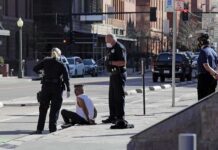
The uncontested spine of the case is straightforward. DHS described the event as an officer-involved shooting during a law-enforcement operation involving a Venezuelan national in federal custody pending removal, and stated that Homeland Security Investigations, with the FBI, would lead the probe. Austin’s police chief said the encounter occurred after a traffic stop and made clear city officers were neither part of the operation nor the shooting itself. Initial dispatch audio cited in local coverage placed the stop near the Research Boulevard and Highway 183 underpass, consistent with an active enforcement stop rather than an unrelated encounter. News outlets, citing DHS, reported the man survived, was in stable condition, and remained in federal custody after medical treatment.
Those points matter because they foreclose some of the common early ambiguities: this was not a rogue or off-duty confrontation, nor a city-policing incident later handed to federal authorities. A designated federal investigative team was engaged from the start—a standard pathway after a serious use of force. That frame sets expectations: the government possesses the most comprehensive record and bears the burden of assembling and releasing an authoritative chronology.
Where the record is thin: justification, footage, and the officer’s documentation
Beyond that spine, gaps dominate. DHS has not publicly articulated why the officer fired—no detailed timeline of perceived threat, commands given, or legal predicates has been released. Media reports say it remains unknown whether the shooting ICE officer was wearing a body camera at the time; no body-camera recording has been produced, and DHS did not answer detailed press queries in the days that followed. The officer’s identity, any use-of-force report, and any camera assignment logs likewise were not made public in initial briefings. Those are not minor omissions; they are precisely the elements that anchor public confidence in a lethal-force review in 2026, especially when a stop unfolds in a busy corridor with potential civilian witnesses and bystander video.
The victim’s legal status, while relevant to the federal operation, does not answer the force question. DHS characterized him as having a final order of removal; that claim aligns with the reported posture—“in federal custody pending removal”—but does not bear on whether the officer’s split-second assessment met the constitutional and departmental standards for deadly force.
The live dispute: a lawyer’s specific contradiction to a pursuit narrative
The most concrete counterpoint is not generic skepticism; it is a named attorney claiming that video footage she reviewed undermines an official foot-pursuit account. According to coverage attributing her on-record statements, video did not show a foot chase before the shot was fired. CNN also reported the existence of bystander livestream video, captured while driving along the corridor, that purportedly recorded portions of the incident environment. These are narrow but important assertions because they target a factual hinge: pursuit dynamics often frame the immediacy of threat and the feasibility of alternatives. If the government’s eventual narrative relies on a foot pursuit to explain proximity, visibility, or officer perception, and contemporaneous video contradicts that point, investigators will have to reconcile the discrepancy with additional evidence—radio traffic, positioning, ballistic trajectories, and sworn testimony.
That is precisely why local officials—Rep. Greg Casar among them—demanded an independent inquiry and immediate release of whatever body-worn video exists, complete and unedited. The Travis County District Attorney’s office echoed the call for a comprehensive, independent fact-finding process. Those are political statements, but they track a familiar oversight logic: preserve every byte, release what can be released promptly, and lock in a shared evidentiary baseline before narratives harden.
Body cameras as accountability tools: powerful, imperfect, and often discretionary
Zooming out, the Austin case lands in a well-worn groove. In modern policing and immigration enforcement, the quickest way for a post-shooting narrative to lose altitude is the absence—or nonrelease—of camera footage. Cameras do many things well: they fix time, location, and many environmental details; they often reduce ambiguity about distances and cover. But scholars and government syntheses have repeatedly found mixed effects on officer behavior and public complaints; some trials show reductions in force when cameras are worn, others show no change, and some research even finds an uptick in assaults on camera-wearing officers, underscoring that cameras are not a universal behavior-modification device.
What cameras are, reliably, is an evidentiary backstop that disciplines after-action claims. That is why the most consequential policy question is not merely “were cameras assigned?” but “who decides when the recordings are released and on what timeline?” Reporting in recent years has traced ICE’s evolving camera policy—mandates to wear during enforcement juxtaposed with centralized discretion over public release, including mechanisms for expedited disclosure within fixed windows in some circumstances, and director-level authority that can delay or limit publication in others. The friction is predictable: the public norm has shifted toward a 48–72 hour release window in high-salience incidents; agencies, citing investigative integrity and privacy, often resist hard clocks.
How to resolve an evidentiary vacuum: the work of a credible reconstruction
Serious use-of-force reviews converge on the same suite of methods, each answerable with records already in government custody. First, lock down the communications layer: dispatch audio, call-for-service logs, radio transmissions, and unit GPS traces establish the timeline to the minute and fix who knew what and when. Second, establish spatial truth: diagram the stop location, lane positions, and sight lines; overlay shell casing locations, impact points, and vehicle and pedestrian vectors; correlate with any bystander video timecodes. Third, close the personnel loop: officer interviews taken under caution, camera assignment rosters, training files, and firearm-pull logs corroborate or contradict any asserted threat cues. Fourth, integrate the medical record: wound path and bullet recovery can validate or falsify hypothesized postures or movements at the instant of fire. Each of these steps is routine; none depends on speculation. They also do not require public dissemination to be performed promptly, though timely public summaries are the difference between a patient process and a corrosive vacuum.
In a case like Austin’s, two release decisions would answer most public questions quickly. One: confirm, with documentation, whether the involved officer was issued a body camera and whether it was powered and recording during the stop. Two: publish an initial timeline and spatial diagram derived from dispatch logs and scene processing, with appropriately redacted identifiers. If bystander video exists and captures the critical moments, say so and incorporate its timecode into the official clock. These are not novel transparency moves; they are now the minimal expectations in a high-visibility federal shooting.
NEW: More than 100 members of Congress are demanding ICE release Wilber Rafael Garces Perez — the 28-year-old Venezuelan man shot by an ICE officer in Austin Sunday — so he can receive medical treatment, while also calling on the agency to halt efforts to deport him.
Texas… pic.twitter.com/iFx9xKscPB
— Ali Bradley (@AliBradleyTV) September 22, 2026
What this means going forward
On the merits, the strongest evidence in the public record supports three conclusions: a federal enforcement stop occurred; the man survived and is in the government’s custody; and a formal HSI–FBI investigation is active. The justifying threat assessment for the trigger pull remains unsubstantiated in public. The most specific contradiction on the table—a lawyer’s assertion that video shows no foot pursuit—raises a testable claim for investigators to meet with communications logs, scene reconstruction, and, if it exists, camera footage.
None of that prejudges the ultimate use-of-force finding. It does, however, judge the process. In 2026, the public standard for a credible federal shooting review is evidence-led and time-disciplined. Absent that, the body-camera question stops being a technological footnote and becomes the whole story—again.
Sources:
yahoo.com, nbcnews.com, npr.org, apnews.com, cnn.com, time.com, pbs.org, cbsnews.com, independent.co.uk, policeforum.org
© whatnewsdaily.com 2026. All rights reserved.