
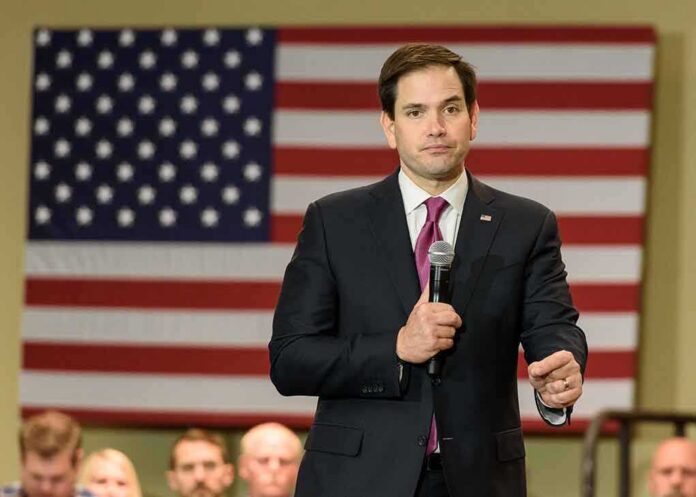
Secretary of State Marco Rubio declared in Munich that America will not put the “global order” above the interests of the American people.
Story Highlights
- Rubio said U.S. foreign policy will put American interests before the “so-called global order.”
- The statement reflects President Trump’s “America First” doctrine now driving State Department policy.
- Rubio’s approach pressures allies to do more while keeping cooperation that serves U.S. goals.
- Analysts say this marks a sharp break from postwar globalism toward a more transactional strategy.
Rubio’s Pledge: America’s Interest Comes First
Secretary of State Marco Rubio told leaders at the Munich Security Conference on February 14, 2026, that the United States will no longer place the “so-called global order” above the vital interests of its people and its nation. He said international cooperation still has a place, but only when it advances U.S. goals. The message was clear and direct: alliances are tools, not masters, and American security and prosperity lead every decision. The remarks made the administration’s stance unmistakable.
Rubio’s words track with repeated guidance he has given since taking office. In testimony and department communications, he has framed “America First” as the mission of U.S. diplomacy. He has said policies must make America safer, stronger, or more prosperous. He has also emphasized focusing on threats close to home and confronting rivals where they challenge U.S. interests. That consistency signals a firm course for the State Department under President Trump’s direction.
From Doctrine To Practice Inside The State Department
Rubio and his team have moved to align daily diplomacy with this doctrine. He told lawmakers the department serves U.S. interests first, even when global institutions press a different line. That means tighter demands on burden sharing, sharper use of leverage, and less patience with forums that slow action. It also means guarding American industry and energy security when deals or rules tilt against U.S. workers and families. The goal is simple: outcomes that help Americans at home.
In written statements and testimony, Rubio stressed that the United States can still cooperate with partners when it pays off for the country. He noted the department is advancing President Trump’s vision of an America First foreign policy. That includes clear-eyed competition with adversaries and insistence that friends carry their weight. It is not isolation. It is a reset to common sense: defend the nation, protect prosperity, and avoid missions that drain resources without benefit.
What Changes For Allies, Adversaries, And U.S. Families
Allies will hear a steady message: do more for your own defense, buy more capability, and meet your commitments. Institutions will face tighter tests on whether they deliver value for the United States. Adversaries will see faster pushback when they threaten American interests. For U.S. families, the promised payoff is safer borders, more reliable energy, and trade terms that back American jobs. The approach also seeks to stop endless spending abroad that does not serve citizens.
Policy experts describe this shift as a major break with the liberal internationalist model that treated the “rules-based order” as a guiding good on its own. They see a more pragmatic, transactional line that checks every move against national interest. Supporters call that overdue accountability after years of costly global projects. Critics warn of short-term thinking. Either way, the new National Security Strategy codifies the change, and State is executing it daily under Rubio.
Sources:
facebook.com, state.gov, co.usembassy.gov, jpost.com, theconversation.com
© whatnewsdaily.com 2026. All rights reserved.