
A Maryland murder case is raising a chilling question for law enforcement and the public alike: how did a quadruple amputee allegedly drive a Tesla and fire a gun during a deadly argument?
Quick Take
- Dayton James Webber, 27, a professional cornhole player and quadruple amputee, is charged with first- and second-degree murder in the shooting death of Bradrick Michael Wells, 27.
- Investigators say the shooting happened during an argument inside a Tesla SUV in La Plata, Maryland, on the night of March 23, 2026.
- Police reports say Webber fled with the victim’s body still in the vehicle; the body was later found about 12 miles away in Charlotte Hall.
- Virginia authorities later located Webber and the Tesla more than 100 miles away in Charlottesville; he was arrested and is awaiting extradition.
What police say happened inside the Tesla
Charles County, Maryland investigators say Webber was driving on Radio Station Road in La Plata around 10:30 p.m. Sunday when he argued with Wells, who was sitting in the front passenger seat. Authorities allege Webber shot Wells during that dispute. Police have not released details about what started the argument, what firearm was used, or the precise sequence of events inside the vehicle.
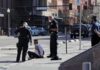
According to reporting, Webber pulled over near the intersection of Radio Station Road and Llano Drive after the shooting and asked two backseat passengers to help remove Wells’ body. Those passengers reportedly refused, exited the vehicle, and flagged down officers. Investigators say Webber then drove off with Wells’ body still in the Tesla SUV, turning a homicide scene into a multi-jurisdiction search within minutes.
Timeline: body found, suspect tracked across state lines
Authorities say Wells’ body was discovered about two hours later—around 12:30 a.m.—in a yard on Newport Church Road in Charlotte Hall, roughly 12 miles from La Plata. A resident called 911 after finding the body. By Monday morning, police in Charlottesville, Virginia, located the Tesla and found Webber at a nearby hospital, where he was arrested as a fugitive from justice.
Webber is being held in an Albemarle County jail while he awaits extradition back to Charles County, where he faces first-degree murder, second-degree murder, and related charges. A spokesperson for the Charles County Sheriff’s Office has said investigators see no evidence that anyone else was involved in the shooting and believe Webber acted alone, while also emphasizing the investigation is still early.
The unanswered question: how could it be carried out?
The case is drawing national attention because police have not publicly explained how Webber—described as a quadruple amputee—was able to drive a vehicle and discharge a firearm. That gap matters because it will shape investigative steps, courtroom testimony, and the reliability of competing narratives. Reporting also notes that social media videos appear to show Webber shooting rifles and a 9mm handgun, suggesting adaptive methods may exist.
What this case means for public safety and basic accountability
The immediate, verifiable takeaway is not political—it’s practical: serious violent crime cases hinge on clear evidence, competent forensics, and witness cooperation. In this incident, the two backseat passengers’ refusal to help move the body and their decision to contact police quickly may become central to establishing a timeline. Any prosecution will likely lean heavily on physical evidence, vehicle data, and corroborated witness statements.
For many Americans already tired of institutions that seem to blur accountability, this case is a reminder that equal justice must still mean equal responsibility under the law. Disability status can shape how investigators reconstruct events and how courts handle logistics, but it does not eliminate the state’s obligation to prove what happened beyond a reasonable doubt. Key details remain unpublicized, and officials have not filled the mechanical gaps yet.
Quad Amputee Cornhole Pro Accused Of Murder, Tesla Getaway https://t.co/SZrfKCwzsI
— zerohedge (@zerohedge) March 24, 2026
The American Cornhole League also faces an uncomfortable spotlight because Webber is reported to be a professional player in a sport promoted as broadly accessible and broadcast on ESPN. The league has previously emphasized that “anyone can play, anyone can win,” but public statements about the criminal case were not included in the available reporting. For now, the facts that matter are the charges, the cross-state arrest, and the unresolved questions investigators still have to answer.
Sources:
Quadruple Amputee Professional Cornhole Player Charged With Shooting Friend to Death
Dayton Webber amputee cornhole player accused murder
Quadruple amputee charged murder shooting
Deadly shooting Maryland arrest Virginia Dayton James Webber Charles County La Plata