
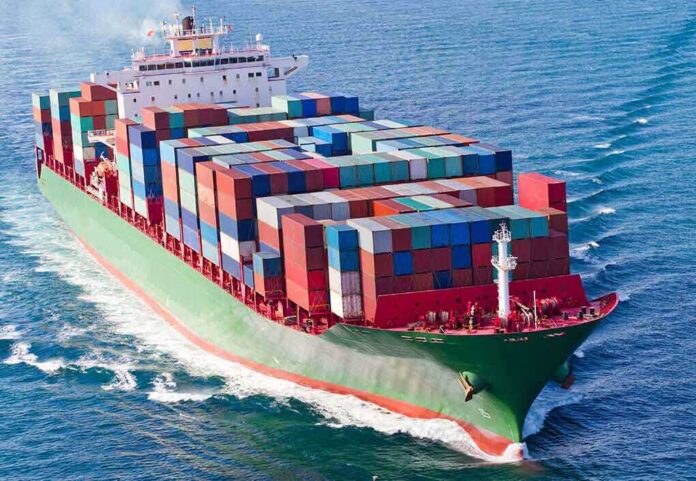
A cargo ship came under attack by multiple small boats near the Strait of Hormuz during a fragile ceasefire, raising questions about whether the Trump administration’s blockade strategy is protecting American interests or dragging the nation deeper into a conflict that threatens global energy security.
Story Snapshot
- Unidentified bulk carrier attacked by small craft 11 nautical miles from Iran’s coast on May 3, with all crew safe but escalation risks mounting
- First such incident in two weeks occurs amid three-week ceasefire and Iran’s peace proposal, which Trump dismissed as inadequate
- At least two dozen similar attacks documented since the Iran war began, with Iranian fast boats difficult to detect and counter
- U.S. blockade costs Iran millions in lost oil revenue while the Strait of Hormuz—carrying 20% of global oil—remains a critical chokepoint vulnerable to disruption
Attack Breaks Two-Week Lull in Strait Violence
The United Kingdom Maritime Trade Operations center confirmed on May 3 that a northbound bulk carrier reported being attacked by multiple small craft approximately 11 nautical miles west of Sirik, Iran. All crew members remained safe, and no injuries or environmental damage occurred. UKMTO urged vessels transiting the area to exercise extreme caution and report suspicious activity. The attack represents the first reported incident since April 22, when another cargo ship came under fire in the same region. No group has claimed responsibility, though the timing and tactics mirror previous encounters with Iranian fast boats.
Ceasefire Tested as Peace Talks Stall
This latest incident occurred during a fragile three-week ceasefire between U.S. forces and Iran, complicating diplomatic efforts to de-escalate the broader conflict. Iran recently submitted a peace proposal to the Trump administration, but President Trump dismissed it as inadequate, signaling potential for renewed military action. Iranian officials insist their proposal excludes nuclear negotiations and focuses on easing the U.S. blockade that has cost Tehran millions in lost oil revenue. The attack raises doubts about whether either side genuinely seeks peace or merely tactical advantage during the pause in hostilities.
Iranian Fast Boats Evade Detection
Iran has deployed nimble fast-attack boats equipped with twin outboard motors throughout the conflict, making them difficult to track and counter. These vessels have been used to harass commercial shipping, lay mines, and seize at least two cargo ships since the war began. President Trump issued a “shoot and kill” order last month authorizing U.S. forces to destroy Iranian boats caught deploying mines in international waters. UKMTO maintains the threat level at “critical,” acknowledging that these small craft present unique challenges for naval forces designed to counter larger vessels. The tactic reflects Iran’s asymmetric warfare strategy against superior American naval power.
Global Chokepoint Remains Vulnerable
The Strait of Hormuz serves as a vital passage for approximately 20% of the world’s oil trade, making it one of the most strategically important waterways on Earth. Iranian officials have asserted control over the strait, demanding tolls from non-U.S. and non-Israeli vessels while effectively closing the passage through repeated attacks and threats. Shipping firms now face heightened insurance costs and are increasingly rerouting vessels to avoid the danger zone. A sustained closure of the strait would trigger severe disruptions to global energy markets, potentially spiking oil prices and exacerbating economic instability worldwide. Commercial shipping remains caught between Iranian aggression and American military response.
The pattern of attacks exposes a troubling reality: neither Washington’s blockade nor Tehran’s maritime harassment appears capable of forcing a resolution. American taxpayers fund an expansive military presence in the Gulf while ordinary shipping crews risk their lives navigating waters that powerful governments cannot secure. Meanwhile, the economic costs mount for consumers facing potential energy price increases and businesses struggling with supply chain uncertainties. Both sides claim to seek stability, yet both pursue strategies that perpetuate chaos in one of the world’s most critical commercial arteries, leaving everyday Americans to wonder whether their government prioritizes genuine security or perpetual engagement.
Sources:
Cargo ship near Strait of Hormuz reportedly attacked – Los Angeles Times
Iran-U.S. cargo ship attack in Strait of Hormuz amid peace proposal – The Philadelphia Inquirer
Cargo ship attacked by small craft near Strait of Hormuz, UK maritime agency says – Fox News
Iran war, Trump, Strait of Hormuz updates – CBS News