
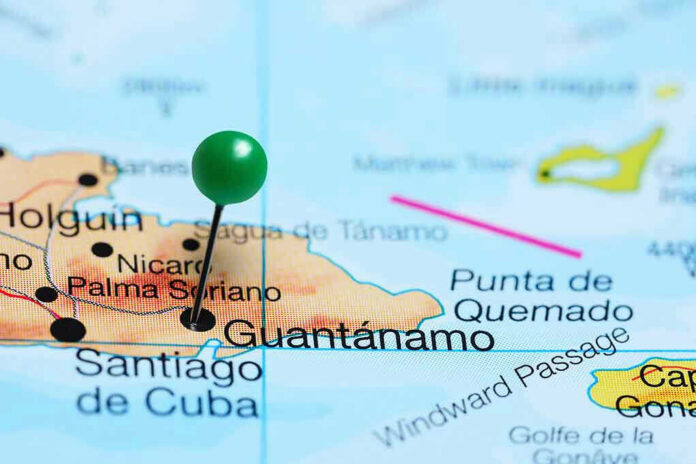
Classified U.S. intelligence says Cuba has amassed more than 300 military drones and discussed striking Guantanamo Bay, U.S. naval vessels, and possibly Key West—an allegation with high-stakes implications and thin public proof so far [1].
Story Snapshot
- Axios cites classified intelligence alleging Cuba secured 300+ military drones and mulled attacks on U.S. targets [1].
- A senior U.S. official calls the buildup an “escalating danger,” tying it to Russian and Iranian networks [1].
- Secondary outlets rapidly amplified the claim, hardening perceptions before verification [2].
- No public evidence yet shows models, capabilities, or procurement records for the drones [1].
What Is Alleged, Who Said It, and Why It Matters Now
Axios reports that U.S. officials say Cuba has acquired more than 300 military drones and recently discussed using them against the U.S. base at Guantanamo Bay, U.S. naval vessels, and possibly Key West, Florida [1]. The outlet attributes the warning to a senior U.S. official who labeled the situation an escalating danger tied to malign actors, including Russia and Iran [1]. Ynetnews and China Global Television Network echoed the central claim, projecting it across audiences that rarely read the same briefings—or the same caveats [2][3].
Axios further reports U.S. officials estimate roughly 5,000 Cuban soldiers participated in Russia’s invasion of Ukraine, potentially importing battlefield drone lessons back to Havana; it also says Cuba requested additional drones and military assets from Russia in the past month [1]. These assertions, if accurate, would align Cuba with the wider spread of low-cost, high-impact one-way attack drones that have redrawn battlefield math from Kharkiv to the Red Sea. Proximity to Florida compresses decision time for U.S. commanders and elevates risk tolerance thresholds.
Where the Evidence Is Thin and How That Shapes Risk
The public record offers no shipping manifests, serial-number imagery, satellite photography of depots, or technical specifications of the alleged drones [1]. The sourcing rests on classified intelligence and unnamed officials, which blocks outside scrutiny. Assertions about drone models, payloads, ranges, and guidance—details that determine whether a system can credibly threaten ships at sea or hardened bases—remain undisclosed [1]. The same opacity surrounds the claim that thousands of Cuban soldiers served in Ukraine, a figure that would ordinarily leave document trails if true [1].
Secondary repetition does not equal corroboration. Ynetnews and China Global Television Network mirror Axios but add no primary evidence [2][3]. The result is a familiar national-security news cascade: specific, alarming claims reach velocity before independent verification catches up. That dynamic raises two simultaneous truths American conservatives know well: deterrence requires acting before threats mature, and prudence requires proof before escalation drains public trust and treasure.
What Cuba Might Want and What Washington Must Guard Against
If Cuba is building a drone force with Russian or Iranian help, several motives fit: coercive leverage against U.S. pressure, a deterrent to overt intervention, or bargaining chips for sanctions relief. A drone magazine of 300 platforms, if even a fraction are one-way attack systems, could saturate point defenses or force U.S. assets to disperse and expend interceptors. If they are mostly reconnaissance or small quadcopters, the threat shifts to intelligence gathering and nuisance harassment rather than strategic strike. Capability clarity drives response discipline [1].
Cuba will fight against the USA in the event of an attack, the country has purchased 300 drones: Ministry of Foreign Affairs of the Republic
Cuba has purchased more than 300 UAVs from Russia and Iran and has already begun discussing plans for attacks on US bases.
— Mossad International (@MossadInterpol) May 18, 2026
U.S. policy should follow a layered playbook grounded in common sense. First, require interagency confidence statements on the record—at least classification-safe summaries that state how many sources, what kinds of collection, and confidence levels in quantity and intent. Second, surge unclassified collection: commercial satellite passes, maritime and air radar mapping of launch sites, and electromagnetic signatures around suspected storage points. Third, lean on sanctions and interdiction targeting the alleged Russian and Iranian supply chains if and only if specific entities can be named with evidence [1].
Red Lines, Realistic Deterrence, and Avoiding Narrative Traps
Congress should demand closed-door briefings with releasable summaries, then tie any new authorities or spending to verification milestones. The Pentagon should harden Guantanamo Bay and Florida Keys infrastructure now—passive defenses, counter-drone sensors, and rules of engagement—without broadcasting sensitive capabilities. The White House should articulate a narrow red line: any attack on U.S. territory or forces triggers decisive, proportional response against the responsible Cuban military assets, and any external state enablers face targeted penalties—contingent on confirmed evidence and attribution [1].
Media consumers should hold two ideas at once. The drone threat landscape is real; small, cheap systems can deliver military-grade effects at short range. Simultaneously, policy made on headlines and anonymous quotes can overreach. The prudent path is Reaganite: trust but verify, fortify defenses now, and insist on evidence before escalation. If subsequent disclosures validate the core claims, the response should be swift and overwhelming. If they do not, restraint will have preserved credibility and options for the next real crisis [1][2][3].
Sources:
[1] Web – Exclusive: U.S. eyes attack-drone threat from Cuba – Axios
[2] Web – US examining threat from Cuba, which has acquired over 300 drones
[3] Web – CUBA HAS ACQUIRED MORE THAN 300 MILITARY DRONES …