
A loaded shotgun and a sprint toward the U.S. Capitol ended in seconds, and that blunt fact tells you more about modern Washington than a year of speeches.
Story Snapshot
- U.S. Capitol Police arrested 18-year-old Carter Camacho after he ran toward the Capitol’s West Front carrying a loaded shotgun.
- Officers stopped him before he reached the building; he complied when ordered to drop the weapon.
- Police reported tactical gear on the suspect and additional ammunition on his person, sharpening questions about intent.
- Chief Michael Sullivan tied the outcome to visible staffing and recent active-shooter drills in nearly the same spot.
The Midday Run That Tested Capitol Security in Real Time
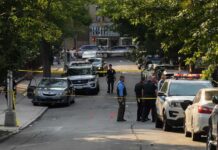
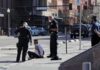
U.S. Capitol Police faced the kind of scenario every federal security team dreads but trains for: an armed person moving fast toward a symbolic target. Just after noon on Tuesday, February 17, 2026, police say Carter Camacho, 18, parked a white Mercedes SUV on Maryland Avenue Southwest and ran toward the Capitol’s West Front holding a shotgun. Officers intercepted him before he reached the building and took him into custody.
The first critical detail wasn’t the weapon. It was distance and timing. The West Front is public-facing, visually open, and hard to “lock down” without turning the Capitol into a fortress. That openness invites normal civic life and, occasionally, people who want to turn a public space into a stage. Officers positioned in the right place can decide an outcome before it becomes a headline with casualties, and this time they did.
Tactical Gear and a Loaded Shotgun: Why the Details Matter
Police described Camacho as wearing tactical equipment: a tactical vest, Kevlar helmet, gas mask, and gloves. That gear matters because it signals preparation, not impulse. A loaded shotgun and extra rounds also matter because they narrow the margin for error for responding officers and bystanders. Investigators said they were still working to determine motive, including whether members of Congress were a target, even though Congress was not in session.
The conservative, common-sense takeaway does not require guessing motive: preparation plus proximity equals risk. Americans can debate gun policy for the next century, but no reasonable person believes a sprint toward the Capitol with a loaded long gun and protective gear qualifies as benign behavior. The public deserves answers rooted in evidence: where he got the weapon, whether anyone encouraged him, and whether warning signs were missed before he arrived in Washington.
The Part of the Story That Should Make Taxpayers Relieved
Chief Michael Sullivan pointed to a factor most people never notice unless it’s absent: officers already standing where they needed to be. He also said the department had recently run active-shooter drills in nearly the same location. Drills can sound like bureaucratic box-checking until the day they become muscle memory. In this incident, the sequence looked like training working as designed: challenge, command, compliance, custody.
That’s not a victory lap; it’s the baseline the public pays for. Security at the Capitol carries a unique burden because it has to protect people and maintain public access to the seat of representative government. Overreaction hardens the place into a bunker and punishes ordinary Americans who want to tour, petition, or simply walk the grounds. Underreaction gambles with lives. The narrow path is competence, and competence often looks boring right up until it saves everyone.
Charges, Closures, and the Unseen Costs of “No One Was Hurt”
After the arrest, police closed Maryland Avenue between First and Third Streets Southwest during the investigation. That kind of closure ripples outward: commuters reroute, visitors get turned around, nearby workers lose time, and the city absorbs another reminder that high-profile institutions attract high-risk behavior. Authorities said they did not see an ongoing threat or additional suspects at the time, a key point for public safety and for avoiding panic-driven misinformation.
Camacho faced charges that included unlawful activities, carrying a rifle without a license, and possessing an unregistered firearm and ammunition. Those specifics matter because they shape what prosecutors can prove without relying on speculation about intent. Charges tied to possession and licensing often become the scaffolding that holds a case together while investigators determine whether larger offenses apply. Due process also matters here; the public can demand accountability and still insist the courts do it cleanly.
The Open Question: Motive, Copycats, and What Security Can’t Solve
Capitol Police said they had video and asked the public for additional footage. That request sounds routine, but it reflects the modern reality of investigations: dozens of camera angles can reconstruct a timeline down to seconds and steps. It can also identify whether someone scouted the area, communicated with others, or staged the event for attention. In a country where notoriety spreads instantly, investigators have to consider copycat dynamics without feeding them.
Gunman Arrested Outside the US Capitol… https://t.co/756GatpE43
— TalkRadio 77 WABC (@77WABCradio) February 17, 2026
Security can stop a sprint, but it can’t fix whatever pushes an 18-year-old to gear up and run toward the Capitol with a loaded gun. That work sits upstream: families, schools, local law enforcement, and cultural guardrails that treat violence as disgraceful, not glamorous. The strongest conservative instinct here is not hysteria; it’s standards. Enforce the law, protect public spaces, and demand facts before narratives harden into propaganda.
Sources:
Police Arrest Man Who Ran Toward the US Capitol Building Holding a Shotgun
Police respond to security concern at US Capitol
Police respond to security concern at US Capitol
Person with what appears to be a gun arrested outside US Capitol, police