
whatnewsdaily.com — The president says the bombers can launch “at any moment” — but he also says he hopes they never fly again.
Story Snapshot
- A major U.S. strike on Iran was planned, then abruptly delayed after calls from Gulf leaders, according to President Trump [3].
- Trump insists the pause is conditional: Iran must never get a nuclear weapon, or the attack is back on the table [3].
- Critics warn that delay may embolden Tehran and undercut American deterrence [5].
- Whether combat resumes depends on one thing: can “pressure plus pause” actually force a real deal with Iran [1][3]?
What Actually Happened To The “Major Attack” On Iran
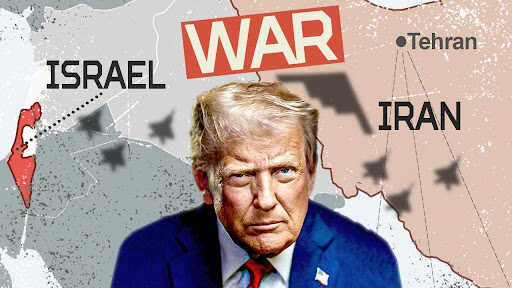
President Donald Trump told Americans that the United States had a “very major attack” on Iran queued up, scheduled as early as the next day, and then he put it on hold [3][5]. He credits rulers in Qatar, Saudi Arabia, and the United Arab Emirates with asking for a brief delay because they believed a diplomatic deal with Tehran was close [3]. The military, he said, was ordered to stand down while remaining ready for a full-scale assault if talks collapsed [5].
Reports from outlets in the United States, Europe, and the Gulf region largely match that public storyline: a target package focused on Iranian military assets and command nodes, a firm presidential intent to strike, and then a pause triggered by regional appeals for diplomacy [1][2]. What is missing from the public record is the operational paperwork. No declassified order number, no released execution timeline, and no Pentagon directive confirms how close the jets truly were to takeoff [1][3]. That gap leaves room for spin from every side.
Why Gulf Leaders Wanted Washington’s Finger Off The Trigger
Leaders in Saudi Arabia, Qatar, and the United Arab Emirates live within missile range of Iran. They sit on oil and gas infrastructure that has already been attacked in previous crises. According to Trump’s own account, they told him “serious negotiations” were underway and that a strike right then could blow up the last bridge to a bargain [5]. Their calculation is straightforward: if Iran can be boxed out of nuclear weapons through talks, they avoid both war and a nuclear-armed neighbor.
Media summaries say those talks revolve around hard concrete issues, not vague photo-op language: no nuclear weapons for Iran, caps on uranium enrichment, sanctions relief, an end to proxy wars, even debate about compensation for war damage and secure passage through the Strait of Hormuz [1][2]. Iran’s president publicly says “dialogue does not mean surrender” and vows to defend Iran’s “legal rights,” which sounds less like capitulation and more like a haggle between hard-nosed traders . Gulf rulers may bet that a little more time, under heavy pressure, forces Tehran to choose cash over confrontation.
Trump’s Doctrine: Maximum Pressure With A Visible Safety Catch
Trump keeps repeating one line that matters more than the drama: “As long as I am President, Iran will never be allowed to have a nuclear weapon” [3]. Everything else — sanctions, cyber operations, ship seizures, and now this delayed strike — hangs under that umbrella. The pause was sold not as mercy, but as a conditional time-out. Trump openly warned that the United States stands ready for a “full, large-scale assault on Iran” if an acceptable agreement does not materialize [5]. That is classic coercive diplomacy, not pacifism.
On paper, that approach tracks with long-standing American conservative instincts: peace through strength, and strength you are actually willing to use. Trump’s team pairs economic strangulation, explicit threats, and public humiliation of the Iranian regime with a door to negotiation left barely ajar [1][3]. The idea is simple common sense: you squeeze until the other side would rather sign a deal than keep absorbing punishment. The question is whether pausing an advertised strike adds leverage — or leaks it.
Does A Pause Show Restraint Or Weakness To Tehran?
Critics who warn about deterrence see danger in any delay. Representative Don Bacon, a retired general, argued on air that Iran’s “will is not broken” and that it may take “more force to convince Iran to make a deal,” even while acknowledging the United States is ready for a “large-scale assault at a moment’s notice” [5]. That camp worries Tehran reads the pause as proof that Washington’s threshold for all-out war is higher than advertised, encouraging more brinkmanship and more proxy attacks.
🚨 IRAN WAR — DAY 78
Strike paused. Talks restarted. But the region is still on edge.
⚠️ Trump says a planned strike on Iran was called off just hours before launch after calls from Qatar, Saudi Arabia & UAE. Delay: “2–3 days.” pic.twitter.com/3MJxrm2Mrc
— facts with stats (@factswithstatsX) May 19, 2026
Supporters of the pause flip that logic. They argue that striking while serious talks are in motion risks squandering the very leverage a military threat creates [1][2]. The United States has already hammered Iranian forces, sanctioned its economy, and isolated it diplomatically. In that view, calling off one wave of strikes for a few days does not suddenly make America look weak; it makes America look controlled, rational, and therefore more believable when it says it might eventually go further. Tehran must ask: if this is restraint, what does “no more restraint” look like?
So Will Combat Operations Resume Or Not?
Nothing in the public evidence guarantees either outcome. There is no signed framework, no published draft agreement, no joint communiqué that proves a deal is “close” in any formal sense [1][2]. At the same time, there is also no sign Trump has taken the option of renewed strikes off the table. He talks about hoping the attack is delayed “maybe forever, but possibly for a little while,” which is the opposite of a peace declaration [3][5]. In plain language: the gun is holstered, not unloaded.
Whether those bombers launch again will come down to verifiable behavior, not speeches. If Iran keeps pushing the nuclear envelope and fueling terror proxies, a president who ran on strength and “America First” will face immense pressure to show that American red lines still mean something. If Iran blinks at the last moment and trades enrichment for survival, the pause will look like a tough-minded play that avoided another Middle East war. Until the documents are signed and the inspectors are counting centrifuges, combat operations in Iran are not over. They are just on a hair-trigger standby.
Sources:
[1] Web – Trump cancels Iran strikes at last minute as Gulf allies say deal is …
[2] Web – Trump Delays Military Strikes on Iran Following Request from Gulf …
[3] YouTube – Trump Delays ‘Major Attack’ on Iran at Gulf Leaders …
[5] YouTube – Trump says Gulf leaders convinced him to ‘hold off’ on new Iran attack
© whatnewsdaily.com 2026. All rights reserved.