

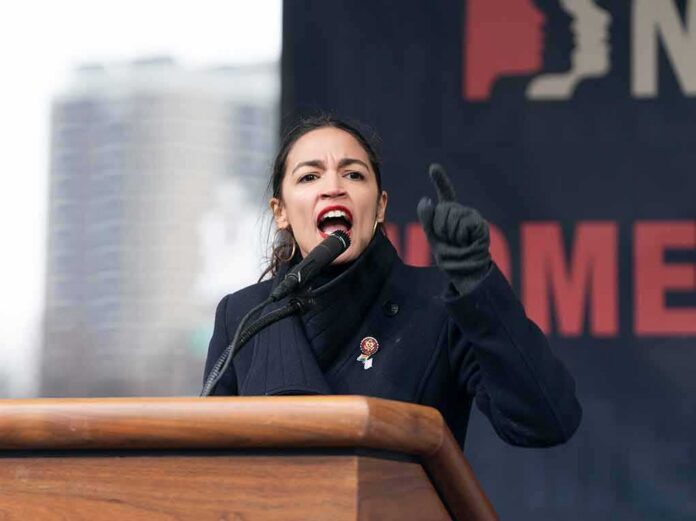
When a leading progressive calls a hardline conservative a “proven bigot and antisemite” while activists beg them to team up, it exposes just how broken Washington’s coalitions have become.
Story Snapshot
- Rep. Alexandria Ocasio-Cortez rejected calls to align with Rep. Marjorie Taylor Greene on Israel–Gaza policy, calling Greene a “proven bigot and antisemite.” [1][2]
- Ocasio-Cortez argued that partnering with figures she associates with white nationalism would undermine her movement, even if they momentarily agree on foreign policy. [2][3]
- Greene fired back that what matters is voting to cut Israel funding, accusing Ocasio-Cortez of choosing rhetoric over results. [1]
- The clash highlights how personality wars and mistrust block cross-party cooperation, even when elites briefly share a policy goal. [1][2][3]
A Rare Cross-Issue Overlap That Turned Into Another Personal Brawl
At a University of Chicago Institute of Politics event on May 11, 2026, Representative Alexandria Ocasio-Cortez was asked about calls from parts of the left to praise or align with Representative Marjorie Taylor Greene on Israel and Gaza policy. She responded that she does not trust Greene “on the issues of what is good for Gazans and Israelis” and described her as “a proven bigot and antisemite,” making clear she sees any alliance as illegitimate. [1][2]
Ocasio-Cortez’s remarks came in a public, recorded forum, leaving no ambiguity about her language or tone. Video of the event shows her stressing that she believes collaboration with Greene would hurt, not help, the broader movement against certain aspects of United States Israel policy. She framed the issue as one of political hygiene: aligning with someone she links to white nationalism would, in her view, contaminate the cause and confuse voters about what her side stands for. [2][3]
Why Some on the Left Wanted an Unlikely Alliance
The push for cooperation did not come from establishment party leaders but from activists and commentators who noticed that Greene, a staunch Trump-aligned conservative, had introduced proposals to strip United States funding for Israel. They argued that if a Republican was willing to cast disruptive votes against the foreign policy status quo, progressives should seize the opportunity, at least on that narrow issue. Jewish Insider reported that both far-left figures and some more mainstream Democrats floated this idea. [1][3]
For Americans watching Washington fail on everything from border security to the national debt, this argument may sound familiar: if elites briefly agree on reducing overseas commitments, why not take the win? Supporters of a tactical alliance framed it as a way to break the grip of the bipartisan foreign policy consensus that has backed expensive wars and military aid packages for decades, even as ordinary families struggle with inflation, stagnant wages, and unaffordable housing at home. [1][3]
Greene’s Counterattack: Votes Versus Words
Marjorie Taylor Greene responded by reframing the clash around concrete legislative behavior rather than character judgments. She pointed to her own amendment to strip funding for Israel and criticized Ocasio-Cortez for refusing to back it, saying that the Democrat could “run her mouth all she wants but votes are the only thing that matters, not a bunch of words and nasty name calling.” This answer cast Ocasio-Cortez as choosing purity tests over policy outcomes. [1]
The available material does not include the full text of Greene’s amendment, the roll-call vote, or debate transcript, so the specific policy details remain unclear. That gap matters for citizens trying to decide whether this was a serious attempt to change foreign policy or a symbolic gesture designed for clips and fundraising. Without that record, Americans are once again asked to choose sides based largely on personalities and soundbites, not on a transparent accounting of what each proposal would actually do. [1]
Bigotry Labels, White Nationalism, and the Limits of Coalition Politics
Ocasio-Cortez went beyond policy disagreement by warning that aligning “the left with white nationalists” does not help her movement and “does not serve us.” She invoked Greene’s past controversies as justification for drawing a hard line, but, in the sources available here, she did not list specific incidents to substantiate the “proven bigot and antisemite” label. The documentation firmly proves she used those words; it does not, by itself, prove the underlying characterization is factually established. [2][3]
This is a pattern many Americans now recognize: politicians use harsh moral labels that may be partly descriptive but also function as coalition boundaries—signals about who is beyond the pale. In an era when both left and right increasingly believe the federal government serves donors and career insiders before citizens, these boundary fights can obscure shared interests. Voters who want less foreign adventurism, lower spending overseas, and more focus on domestic crises watch leaders attack one another instead of leveraging narrow agreement for tangible change. [1][2]
What This Clash Reveals About a Failing System
The AOC–Greene dispute shows how deeply polarized Washington has become, and how that polarization protects the status quo. On one side, Ocasio-Cortez insists that working with someone she associates with racism would betray her values and mislead supporters. On the other, Greene insists that only votes matter and that anyone serious about changing foreign policy should join her when she targets Israel funding, regardless of previous fights. Each position reflects genuine concerns, yet both also keep the conflict centered on two personal brands. [1][2][3]
For Americans who resent endless wars, elite hypocrisy, and a political class that never seems to solve real problems, this episode reinforces a grim lesson: even when there is a sliver of agreement, the system’s incentives reward outrage over results. Activists on both sides argue about whether to normalize a controversial partner; lawmakers trade insults about bigotry and cowardice; media outlets turn it into another viral feud. Lost in the noise is the basic question working families keep asking: will anyone in Washington actually fix what is broken? [1][2]
Sources:
[1] Web – AOC blasts ‘proven bigot and antisemite’ MTG, earning some far-left …
[2] YouTube – AOC blasts ‘leftist hero’ MTG, calls her ‘proven bigot’
[3] Web – Ocasio-Cortez Rejects Bipartisan Alliance With Marjorie Taylor Greene