
whatnewsdaily.com — U.S. warships under Iranian fire in the Strait of Hormuz have now answered back with “self-defense” strikes on Iranian soil, and the legal and moral questions are only just beginning.
Story Snapshot
- U.S. Central Command says recent strikes on Iranian ports and southern Iran sites were limited self-defense to protect American ships and troops during a fragile ceasefire.
- Iran and critics abroad claim the strikes are unlawful escalation and question whether the mine‑laying and missile threats were proven.
- The clash unfolds under a U.S. naval blockade of Iran and fits a long-running global debate over what counts as legitimate self-defense under international law.
- Conservatives are watching closely to ensure U.S. forces are protected, the Constitution is respected, and America avoids another endless, open‑ended war.
What Happened: U.S. Ships Attacked, Iran Ports Hit In Response
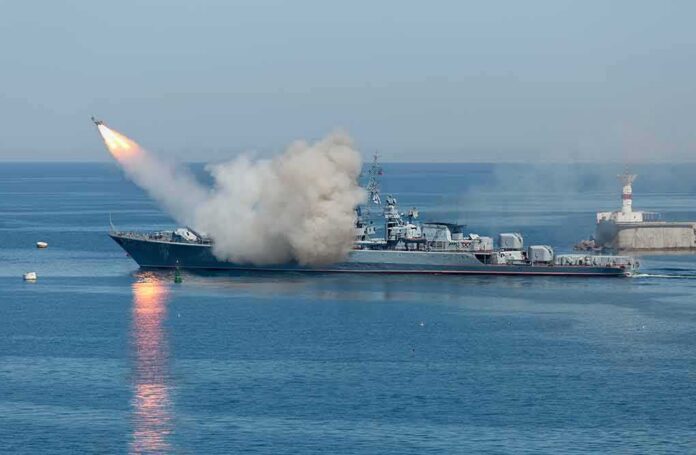
Reporters with access to Pentagon briefings say American destroyers operating near the Strait of Hormuz were attacked by Iranian missiles, drones, and small boats while enforcing the Trump administration’s naval blockade designed to choke off Iranian war financing.[1][5] After this second round of Iranian attacks, U.S. officials confirm that American forces struck two Iranian ports abutting the Strait, as well as missile launch sites and boats allegedly attempting to lay naval mines in southern Iran.[1][4][5] Central Command describes these as specific, tactical strikes, not a broad bombing campaign.
Central Command spokesperson Captain Tim Hawkins told reporters that “U.S. forces conducted self-defense strikes in southern Iran today to protect our troops from threats posed by Iranian forces,” emphasizing that targets included “missile launch sites and Iranian boats attempting to emplace mines.”[1][4] Hawkins also stressed that U.S. forces “will defend our forces while using restraint during the ongoing ceasefire,” underscoring that the administration wants to protect American lives without blowing up fragile negotiations.[1][2][4] Officials frame the action as necessary but limited.
CENTCOM’s Self‑Defense Argument And The Legal Playbook
Central Command’s position follows a familiar legal playbook the United States has used in other maritime flashpoints, such as strikes on Iran-backed Houthi positions in Yemen after repeated attacks on U.S. and allied shipping. Legal analysts note that under the United Nations Charter, a state may use force in self-defense if it faces an “armed attack,” but the response must be necessary and proportionate to stop that attack rather than pursue regime change or open-ended war. Supporters argue that incoming missiles and mine‑laying boats easily meet that threshold.
Scholars at the West Point Lieber Institute point out that the United States and United Kingdom have justified past strikes on missile and drone bases targeting shipping as lawful self-defense to protect warships and commercial traffic. They explain that governments typically ask three questions: Was there an armed attack? Was force necessary to stop it? Was the response proportionate in scale and scope? By publicly limiting targets to launch sites and operational boats, Central Command is signaling it believes it stayed on the right side of those legal lines, even while hitting inside Iran’s territory.
Critics Question Evidence, Proportionality, And Ceasefire Risk
Critics, including some international law experts, counter that the public record does not yet show hard proof that every destroyed Iranian boat was actively laying mines at the moment of impact, or that the threat justified crossing into Iranian territory rather than responding only at sea.[1][4][6] They point out that media reports repeat Central Command’s description of “attempting to emplace mines,” but no targeting imagery, recovered ordnance, or intercepts have been released to independently verify those claims.[1][4] Skeptics warn that secrecy makes it harder for citizens to judge whether this was genuine defense or creeping escalation.
Academic commentary on earlier U.S. and Israeli strikes against Iranian targets has also warned that not every “self-defense” label holds up under scrutiny.[3][6] Some legal scholars argue that past airstrikes on Iranian facilities looked more like preventive efforts to manage long-term strategic threats than responses to truly imminent attacks, which international law does not clearly allow.[3][6] Applied to the current case, they urge Congress and the public to demand evidence that these port and coastal strikes were tightly tied to ongoing attacks, not an open-ended campaign that could undermine the ceasefire and drag America deeper into another Middle Eastern war.
What It Means For Trump’s America‑First Voters And The Path Ahead
The 2026 naval blockade of Iran, imposed after the Islamabad talks failed to end the broader Iran war, already has U.S. warships stretched across dangerous waters where miscalculation can be deadly.[5] Conservative voters who backed President Trump’s promise to stand up to Tehran while avoiding nation-building now face a complex reality: American sailors are under fire, and forceful responses may be necessary, yet every strike risks widening the conflict and giving new ammunition to globalists who prefer endless multilateral entanglements.[5] For many, the priority is clear—protect U.S. forces first, but keep missions clearly defined.
Legal analysts remind Americans that the Constitution divides war powers, requiring robust congressional oversight when presidents order sustained combat operations, even under a self-defense banner. Commentators note that debates over earlier Iran strikes raised hard questions about how far a commander in chief can go without explicit authorization, especially when actions risk full-scale war rather than isolated defensive responses. For constitutional conservatives, the coming weeks should be about two parallel demands: transparency on the facts behind these strikes, and a firm insistence that any broader war decision come through Congress, not by quiet mission creep from the executive branch.
Sources:
[1] Web – U.S. strikes 2 Iranian ports as American warships come under fire
[2] YouTube – US Conducts Strikes Near Iran as Ceasefire Talks Face Fresh Tension
[3] YouTube – US ‘blew up’ 6 Iranian boats, Iran hits navy ships amid fragile …
[4] YouTube – U.S. strikes Iran in ‘self-defense,’ officials say
[5] Web – 2026 United States naval blockade of Iran – Wikipedia
[6] YouTube – US Opens Fire, Disables & Seizes an Iranian Ship Attempting to …
© whatnewsdaily.com 2026. All rights reserved.